Listen to New Voices on Studs Terkel our partnership with 826CHI-here! Read the Story


-

Hume Cronyn and Jessica Tandy discuss the play "Gin Game"
Jun. 1, 1979 Topics of old age, the elderly and retirement homes are all found in the play, "Gin Game, " starring Hume Cronyn and Jessica Tandy. The play, says Cronyn, shows the struggle people have with their own characteristics and their inability to change. This program also includes a couple of excerpts of interviews with Eliot Wiggington.
-
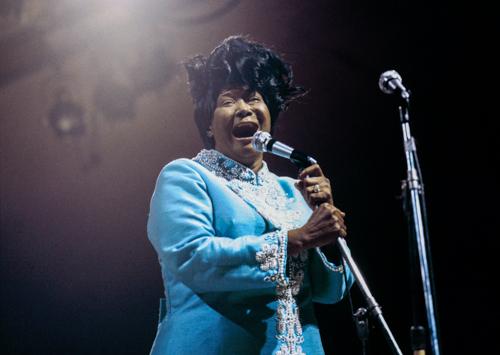
Hugh Wiley Hitchcock and Stanley Sadie discussing the book "The New Grove Dictionary of American Music"
Nov. 4, 1986 Discussing the book "The New Grove Dictionary of American Music". They talk about American music and musicians of all kinds and from different periods. Includes Charles Ive's song "At the River" sung by Cleo Laine in the middle of the program.
-

Hugh Tracey discusses world music and dance
Nov. 16, 1960 *Please note: some sections have been edited out from the original recording due to copyright considerations
-
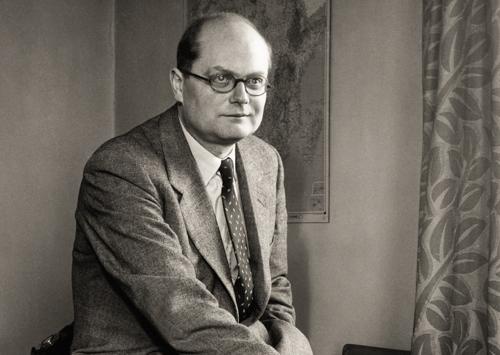
Hugh Carleton Greene discusses the BBC
Nov. 22, 1962 Interviewing Director General of BBC Hugh Carleton Greene while Studs was in England.
-
Howard Vincent discusses foreign languages and Herman Melville
Dec. 22, 1959 Foreign language expert Howard Vincent talks with Studs Terkel about foreign languages, Herman Melville, “Moby Dick,” and other literary works.
-
Howard Schomer, Elsie Schomer and Rabbi Jacob Weinstein discuss their experiences in Vietnam
Jul. 26, 1965 Church leaders Howard Schomer, Elsie Schomer and Rabbi Jacob Weinstein talk about their experiences with the Vietnamese people they encountered. The group determined no matter who they came in contact with, two things were true, they were never told that they should leave Vietnam and that all the Vietnamese people longed for peace.
-
Howard Blum talks about his book "Wanted: The Search for Nazis in America"
Jan. 26, 1977 Discussing the book, "Wanted: The Search for Nazis in America," and interviewing its author Howard Blum.
-
Horton Foote discusses the play "The Young Man From Atlanta"
Jan. 14, 1997 Horton Foote, playwright and screenwriter, and Studs Terkel analyze storylines, conflicts, and characters in Horton’s play "The Young Man From Atlanta." Horton also discusses his earlier work and events that led him to where he is in his career.
-
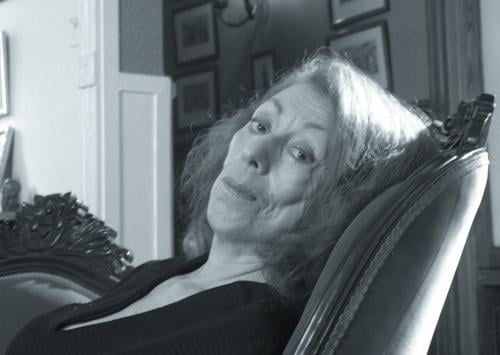
Hortense Calisher discusses her book "Queenie: A Novel"
May. 13, 1971 Hortense Calisher discusses and reads excerpts from “Queenie: A Novel,” a coming-of-age story about Queenie, a teenage girl raised an unorthodox household. Terkel and Calisher discuss reoccurring themes like the relationship between sex and property and the preservation of beauty as one ages. Calisher comments on her unique writing style, and Terkel praises her writing, calling it elegant and euphemistic. The two dance around certain topics and language deemed inappropriate for public broadcast, bringing up the issue of censorship.
-
Horst Voight discusses his background ; part 1
Horst Voight was only eight months old when his father died. Voight looked into and studied letters that his father had written because he wanted to understand how his father could be a soldier and align himself with Adolf Hitler.
-
Horace Cayton discusses is book "Long Old Road" ; part 3
Sep. 7, 1966 Content Warning: This conversation includes racially and/or culturally derogatory language and/or negative depictions of Black and Indigenous people of color, women, and LGBTQI+ individuals. Rather than remove this content, we present it in the context of twentieth-century social history to acknowledge and learn from its impact and to inspire awareness and discussion.
-
Horace Cayton discusses his book "Long Old Road" ; part 2
Sep. 7, 1966 Content Warning: This conversation has the presence of outdated, biased, offensive language. Rather than remove this content, we present it in the context of twentieth-century social history to acknowledge and learn from its impact and to inspire awareness and discussion. Loneliness and hardships of both fitting in and finding a job are covered in the continuation of Horace Cayton's, "Long Old Road: An Autobiography." By living in a middle class home in Seattle with a full time Japanese servant, Cayton was seen as better off than most people.
-
Horace Cayton discusses his book "Long Old Road" ; part 1
Sep. 7, 1966 Content Warning: This conversation includes racially and/or culturally derogatory language and/or negative depictions of Black and Indigenous people of color, women, and LGBTQI+ individuals. Rather than remove this content, we present it in the context of twentieth-century social history to acknowledge and learn from its impact and to inspire awareness and discussion. In "Long Old Road: An Autobiography," Horace Cayton talks about growing up in Seattle in a well to do, mostly white neighborhood. Cayton's grandfather was the first Black man elected to the U.S.
-
Hope Cooke reads from and discusses her book, Time Change
Mar. 12, 1981 The American-born socialite experienced tragedy early in life after her mother was killed in a plane crash. She and her sister were then abandoned by their father and raised by aloof grandparents and a series of nannies. Later, she studied and traveled in Iran and India, married the last Chogyal (King) of Sikkim (northeast India), and wrote an autobiography.*Please note: some sections have been edited out from the original recording due to copyright considerations
-
Holly Near discusses her book "Fire in the Rain--Singer in the Storm: An Autobiography"
Aug. 20, 1990 Singer-songwriter and activist Holly Near discusses her work for fighting for social justice through outlets such as her music. Near a prominent proponent for the LGBTQ community has streamlined her work using folk and protest-inspired songs. Near has been awarded multiple honors from organizations such as the ACLU and the National Organization for Women for her work for social change.