Listen to New Voices on Studs Terkel our partnership with 826CHI-here! Read the Story


Showing 91 - 105 of 558 results
-

Six members of The Klezmorim discuss klezmer music
Apr. 2, 1981 Six members of The Klezmorim discuss their musical upbringings, the history of klezmer music, and explain how song structures work and overlap. Songs played throughout are: "Moldovanke" by The Klezmorim, 2 songs by an unknown klemer band from the mid 1920s,"Papirosn" by The Klezmorim, "A Glezele Vayn (A Little Glass of Wine)" by The Klezmorim, and a live performance of "Papirosn" by The Klezmorim. All music performed by The Klezmorim were prerecorded off site. Music has been removed from this recording for copyright reasons.
-
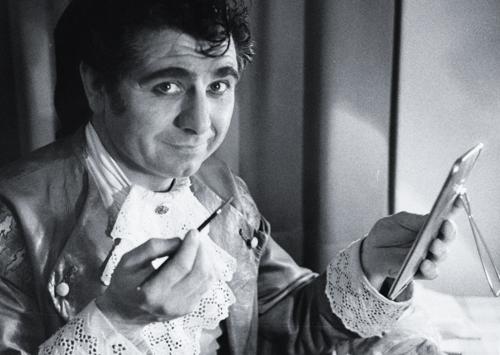
Sir Geraint Evans discusses his career in opera
Dec. 9, 1969 Sir Geraint Evans discusses his career in opera. He also discusses his life in Wales and the Welsh language.
-
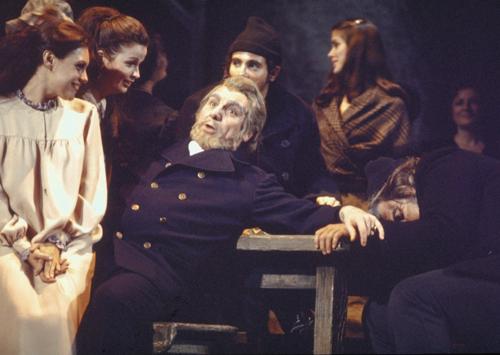
Sir Geraint Evans discusses his career as an operatic performer
Oct. 2, 1974 Sir Geraint Evans discusses opera and his time as a performer. Includes an in-depth discussion of the opera Peter Grimes.
-
Sir Georg Solti talks with Studs Terkel
Feb. 1, 1995 Studs engages the former Chicago Symphony Orchestra conductor, Sir Georg Solti, in a wide-ranging conversation about his life and career. From his early studies in Budapest with Béla Bartók, his string of good-luck opportunities before, during, and after World War II, meeting Toscanini in Lucerne, and starting on top conducting in Frankfurt, London, and finally Chicago. He discusses his many German and European musical influences and contemporaries, and stresses the importance of education, arts funding, and hard work.
-
Singer-songwriters Florence Reece and Pete Seeger discuss writing songs
Mar. 17, 1978 Known for their songs about the working class, both Florence Reece and Pete Seeger talk about how they come about writing the lyrics to songs. Seeger says unbeknownst to them, anyone can write a song. Included within this interview, Seeger plays the banjo and Reece sings a song.
-
Singer Tony Bennett pays tribute to Irving Berlin
May. 10, 1989 On the eve of Irving Berlin's 101st birthday, both Studs Terkel and Tony Bennett talk about his album, "Bennett/Berlin," which is Bennett's tribute to Irving Berlin. When talking about his 90th album, Bennett explained none of Berlin's songs are dated. When asked about his own career, Bennett explained that he's learned more from his failures than he's learned from his successes.
-
Simon Estes, bass baritone opera singer, discusses his life and career in classical opera
Feb. 10, 1982 Simon Estes, bass-baritone opera singer, is in Chicago for four performances of George Fredric Handel's Oratorio "Saul." He talks with Studs about growing up, his education, and his career in classical music and opera. The following songs were removed due to copyright restrictions. "Symphony No.
-
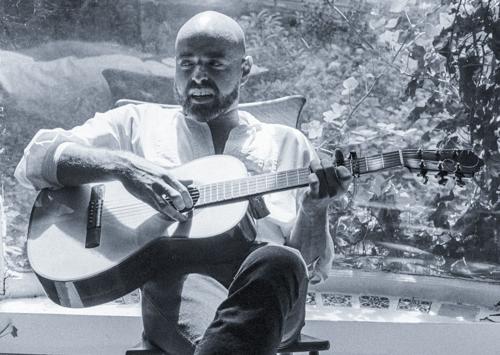
Shel Silverstein discusses his books, children's literature, and art; part 2
Nov. 20, 1961 Shel Silverstein discusses his books and children's literature, and art. Shel Silverstein discusses his contemporaries, art, and life experiences.
-
Sarah Caldwell discusses conducting operas
Aug. 2, 1976 Sarah Caldwell expresses how fortunate she's been in her career as a conductor. This recording also contains an excerpt with opera bass-baritone Donald Gramm.*Please note: some sections have been edited out from the original recording due to copyright considerations
-
Sandy Paton discusses his career in folk music
1961 *Please note: some sections have been edited out from the original recording due to copyright considerations
-
Sam Pilafian and Gerhard Meinl discuss the tuba
Aug. 30, 1991 While in town for the Chicago Jazz Festival, Sam Pilafian and Gerhard Meinl discuss the history of the tuba. With demonstrations on the tuba, they play scales and other short pieces. Gerhard Meinl's family business of making instruments like the tuba has been around since 1810, explained Meinl.
-
Sam Gary and Josh White discuss folk music and their careers
1960 Interviewing singer, guitarist, and civil rights activist Josh White and blues singer Sam Gary about their blues and folk music.
-
Ryland Davies and Margaret Price discuss opera and their performance in Mozart's "Don Giovanni"
1972 Ryland Davies and Margaret Price discuss opera, Welsh art and culture, and their musical upbringings. They discuss various characters and operas they have performed in, including "Don Giovanni" and "Lulu". Music is played throughout the original airing, but has been removed from this recording for copyright reasons.
-
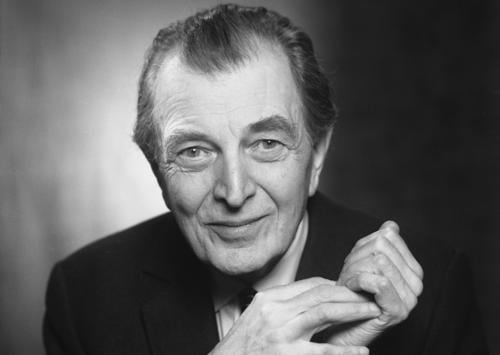
Russian-born composer Alexander Tcherepnin talks with Studs Terkel
Apr. 13, 1965 Studs Terkel and Tcherepnin discuss Tcherepnin's early years in Leningrad, his creative drive and its relation to real-life experiences and the influence of Chicago on his 1953 Op. 87 Suite for Orchestra.
-
Rudolph Ganz discusses his career
Feb. 23, 1964 When Rudolf Ganz was younger, he first played the cello. After his cello broke into 800 pieces, Rudolph Ganz's father told Ganz he had to play the piano. Ganz became a world-renowned pianist and composer. Ganz's attitude toward music: in order to be progressive, one has to respect the past.