Listen to New Voices on Studs Terkel our partnership with 826CHI-here! Read the Story


Showing 181 - 195 of 210 results
-

Claire Bloom discusses her career
Oct. 22, 1991 Being discovered by Charlie Chaplin, Claire Bloom always felt like the luckiest actress around. Bloom's favorite roles were Nora in a "Doll's House" and Hedda in "Hedda Gabler". Mary Tyrone of "Long Day's Journey Into Night" is a part Bloom would like to play in the future.
-

Christopher Durang discusses his play "A History of the American Film" and "Sister Mary Ignatius Explains It All For You"
Dec. 7, 1984 Studs interviews Christopher Durang, playwright, about his plays. "A History of the American Film" is the highlight of the interview, which is playing at the Heron Theater in Chicago. Durang describes parts of the play and it's characters. He explains that it portrays the different eras and famous moments of movies and references real actors and actresses. Durang reads several times from the play, but all musical numbers are removed from this edited version of the original recording.
-
Charles Dance discusses his acting work
1980 Charles Dance, English actor, talks about his work in the British TV show "The Jewel in the Crown," based on the novel series, "The Raj Quartet," by Paul Scott. Dance also discusses his work on the play, "Thunder Rock" and film, "Plenty," and the TV shows, "The Secret Servant," and "Rainy Day Women."
-
Cesare Zavattini discusses his career
1962 Interviewing Cesare Zavattini while Studs was in Italy. Carlo Baldi translates. This is the second half of the interview that starts with Nervi and Nicoletti.
-
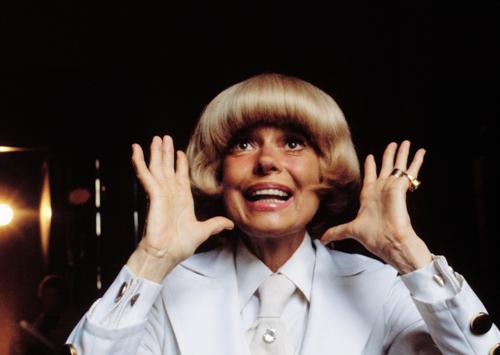
Carol Channing discusses her film and stage career
Jan. 28, 1972 This interview features singer and actress Carol Channing which discusses: the film "Shinbone Alley"; production of "Lorelei"; her grandmother; and her career. It begins with a musical excerpt from the animated movie "Shinbone Alley" featuring Channing singing as the alley cat Mehitabel. It also includes excerpts from the Broadway production called "Lorelei", examples of her character acting/comedy (as Cecilia Sisson), her reading of "Madeline and other Bemelmans", and a portion of the song "So Long Dearie" from the play "Hello, Dolly!".
-
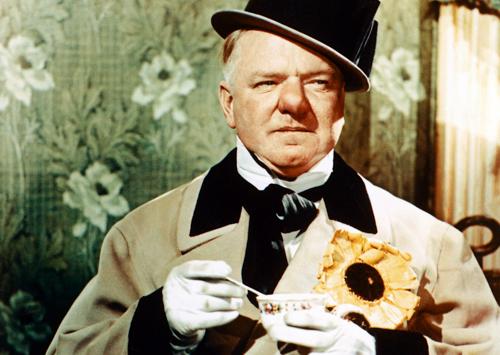
Carlotta Monti discusses W.C. Fields and her book "W.C. Fields & Me"
Jun. 7, 1971 Carlotta Monti discusses W.C. Fields and her book "W.C. Fields & Me".
-
Buzz Hirsch discusses the film "Silkwood"
Jan. 6, 1983 Discussing the film "Silkwood" a movie about Karen Silkwood and the circumstances surrounding her death with movie producer Buzz Hirsch.
-

Buster Keaton discusses the release of "When Comedy Was King"
Sep. 5, 1960 Silent film pioneer Buster Keaton discusses his career following the release of "When Comedy Was King," a compilation of some classic shorts by Keaton, Charlie Chaplin, Harold Lloyd, and others. Keaton reveals how they shot the early silent films, generated material and gags, how they planned big chase scenes, the resurging European interest in silent classics, and more. Studs asks Keaton about the stylistic differences between him and Chaplin, whether he would recreate silent films, and how they compare to today's film-making.
-
Burl Ives discusses his life and music
Burl Ives, actor and singer, discusses his life including childhood, schooling, early career, married life and some of his most popular songs. Ives also talks about his books and writing.
-
Burl Ives discusses his background
Burl Ives was born in Jasper County, IL and he attended Eastern Illinois State Teachers College. While in college, he played some football and then he wanted to become a football coach. Ives spent time in Terre Haute, IN, where he played records and sang songs on the radio. To be a great singer, Ives said he knew he had to add dramatization to certain songs.
-
-
Bob Newhart discusses his comedic craft
Apr. 13, 1960 Comedian and actor Bob Newhart discusses his career and his life before becoming a comedian; excerpt from his stand-up performance is played.
-
-
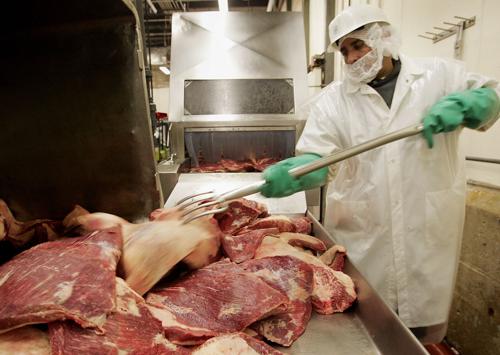
Barbara Kopple discusses her documentary "American Dream"
Mar. 20, 1992 Academy Award winning documentarian Barbara Kopple talks with Studs about her documentary "American Dream" and the battle fought and lost by union workers in Austin, Minnesota during the mid-80s. They set the backdrop in the small, tight-knit community that Hormel Foods had such a profound impact on, how the UFCW international union declined to support the local union, the gripping dynamics between family members who crossed picket lines, and the healing that occurred when the film was screened in the town several years later.
-
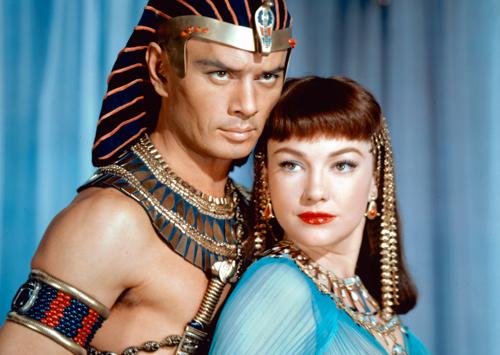
Anne Baxter talks about acting and Frank Lloyd Wright
1970 Anne Baxter discusses acting and her grandfather Frank Lloyd Wright. Interview begins and ends with an excerpt from an interview with Frank Lloyd Wright. Excerpt of Barry Byrne talking about meeting Frank Lloyd Wright (2015846-3-1).