Listen to New Voices on Studs Terkel our partnership with 826CHI-here! Read the Story


Showing 226 - 240 of 352 results
-

George Malko discusses the book "A Certain Art"
1967 Nicolai Malko was a Russian-born American symphonic conductor, who wrote the book, "A Certain Art." According to George Malko, his father's technique in conducting orchestras had nothing to do with showmanship but rather the senior Malko was more concerned with giving his audiences a theatrical experience by conveying the music at hand.
-
Geoffrey Bridson BBC broadcaster and Joyce Bridson public relations at BBC talk about their work in radio through the years
Oct. 30, 1970 Geoffrey Bridson and his wife Joyce, discuss his book "Prospero and Ariel: The rise and fall of radio a personal recollection.", as well as his life and career as a producer/broadcaster for BBC radio. The interview is interspersed with several excerpts from recordings: Excerpt of conversation at the home of Bridsons in England 1962. He talks about the play "Aarons field" and the sequel "Aarons Fallout shelter". Excerpt from Joyce Bridson backstage after the play "Oh what a lovely war" in New York.
-
Gay Talese discusses his book "The Kingdom and the Power"
Jul. 14, 1969 Journalistic responsibility is a major theme of Gay Talese's book, "The Kingdom and the Power: Behind the Scenes at The New York Times, The Institution That Influences the World". Should they print what's true and verifiable or some watered down version of the truth? The New York Times has endured, says Talese because the paper plays it safe, it's never too right or too left.
-
Garrison Keillor discusses his career as a writer and in radio programming
Apr. 28, 1982 Studs interview with Garrison Keillor who discusses his books, "Happy To Be Here" and "True Story Of A Young Person" and his New Yorker story, "My North Dakota Railroad Days." The interviews starts with "The Ballad of Casey Jones" and ends with the hymn, "Will The Circle Be Unbroken." Studs and Keillor read from the "Sam Spade" novel. They also discuss Keillor home of Minneapolis and how his childhood led him to his career.
-
Fred W. Friendly discusses his book "Due to Circumstances Beyond Our Control" and his career, part 1
1968 Fred W. Friendly discusses his book "Due to Circumstances Beyond Our Control" and his career. Fred W. Friendly discusses television and mass media. (Part 1 of 2)
-
Fred W. Friendly discusses his book "Due to Circumstances Beyond Our Control"
1968 Studs Terkel interviews Fred W. Friendly to promote his book "Due to Circumstances Beyond Our Control." Although this interview seems to be the conclusion of a longer discussion, Friendly offers two key points: we should learn from a crisis to better handle the next one and television will shape the world. Duration 1:26. (Part 2 of 2)
-
Fred Morris discusses his time working in the rural churches in Brazil
Nov. 14, 1974 Content Warning: This conversation includes graphic descriptions of physical abuse. A Methodist minister, Fred Morris, talks about the 11 years he lived in Brazil. Morris found it difficult to preach to the poor people whose children were dying of starvation. Morris also talks about the time he was abducted and tortured.*Please note: some sections have been edited out from the original recording due to copyright considerations
-
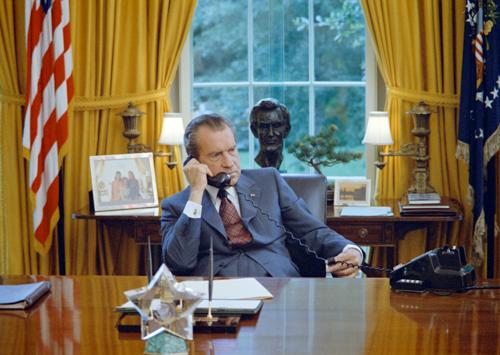
Frank Mankiewicz discusses his book "U.S. v. Richard M. Nixon: The Final Crisis"
Mar. 28, 1975 Frank Mankiewicz discusses the events surrounding the Watergate scandal and his new book, "U.S. vs Richard M. Nixon: The Final Crisis." A major theme of the book is the fact that legal issues were at the heart of the Watergate scandal, but the Nixon administration portrayed it as a public relations issue. Other topics of discussion include investigative journalism and the role of certain individuals in the prosecution of Richard Nixon.
-
Frank Mankiewicz discusses his book "Perfectly Clear"
Dec. 7, 1973 Watergate, wire tapping, and civil disobedience are among the topics covered in Frank Mankiewicz's book, "Perfectly Clear: From Nixon to Whittier to Watergate." According to Mankiewicz, Richard Nixon was involved in additional scandals, for example, how one year he only paid $700 in taxes when employees at the White House paid more than that.
-

Ferdinand Lundberg discusses his book "The rich and the super rich"
1967 Ferdinand Lundberg discusses his book "The rich and the super-rich" and the current state of wealth distribution and political, cultural, and social power in the United States. Topics of discussion include inherited wealth, the wealthy “Eastern Establishment” families compared to wealthy families in the American southwest, wealth and crime, and corporations. Studs reads an excerpt from F. Scott Fitzgerald’s short story “The Rich Boy” at the beginning of the program and an excerpt of an interview Studs conducted with a man who comments on his ability to get rich.
-
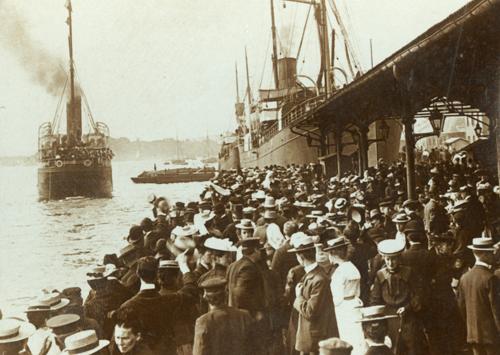
Erik Bye discusses the history of Norwegian immigration to America in the 19th century and his work as a television journalist and singer
Aug. 18, 1975 Studs interviews Erik Bye about Norwegian immigration to America and his music. They discuss the reasons why people left Norway in the 19th century and the conditions they suffered when they settled in New York. Bye explains Norwegian history and why the Norwegians moved from the American east coast to the west. Studs notes that Bye is in Chicago to gather information to produce a Norwegian television documentary about early Norwegian immigrants. Bye shares his interpretations of some of his songs and explains Norwegian music.
-

Erich Lüth talks with Studs Terkel on life under Hitler and its aftermath ; part 2
1968 Studs continues his interview with Erich Luth in Hamburg, Germany. The audio breaks at 25:23 and continues on a Sat at 25:28 till its conclusion at 35:43. Erich Luth conveys stories of humanity by both German prisoners towards Russian prisoners whose treatment was dictated by the Nazi party to not offer any winter clothing or shoes to provide comfort. The German laborers provided a human solidarity that brought them food, clothes, and soap.
-
Emily Kimbrough discusses her book "Forever Old, Forever New"
Jan. 1, 1965 Discussing her travels to Greece and her book "Forever Old, Forever New" with the author Emily Kimbrough.
-
Elsa Knight Thompson discusses interviewing guests
1970 Content Warning: This conversation includes racially and/or culturally derogatory language and/or negative depictions of Black and Indigenous people of color, women, and LGBTQI+ individuals. Rather than remove this content, we present it in the context of twentieth-century social history to acknowledge and learn from its impact and to inspire awareness and discussion. While visiting KPFA, a noncommercial radio station in Berkeley, CA, Studs Terkel was being interviewed by Elsa Knight Thompson about how he goes about interviewing his guests.
-