Listen to New Voices on Studs Terkel our partnership with 826CHI-here! Read the Story


Showing 361 - 375 of 460 results
-

E.Y. (Yip) Harburg discusses songwriting and "Rhymes for the Irreverent"; part 1
Jan. 1966 E.Y. (Yip) Harburg talks about the challenges in writing songs for characters, specifically Og in "Finian's Rainbow". He also discusses the craftsmanship of lyric writing and reads from his book "Rhymes for the Irreverent". Music is heard throughout: "When I'm Not Near the Girl I Love" performed by David Wayne and "The Eagle and Me", performed by Dooley Wilson. Part 1 Music has been removed from this recording for copyright reasons.
-
E. Y. (Yip) Harburg discuss his book "At This Point in Rhyme"
Feb. 18, 1977 E.Y. (Yip) Harburg and Studs Terkel read from the book "At This Point in Rhyme". E.Y. Harburg also discusses his thoughts on humanity, how to properly write a song, and the importance of light verse and humor as a basis for everything he creates. Excerpts of "Somewhere Over the Rainbow" by Judy Garland, "Brother, Can You Spare a Dime" by the Weavers, and a Broadway recording of "How Are Things in Glocca Morra" are played in the original airing but have been removed from this version for copyright reasons.
-

Dudley Moore discusses his background and influences
Jan. 6, 1963 When he was a child, Dudley Moore first wanted to study the violin. He's grateful to his mother for insisting that he first study the piano. Moore said his influences include Bach and Garner. Unlike other musicians, Moore's main focus has always been on the beat, both the cultivation and the presence of the beat of a song and of music.
-
Dr. Samuel Floyd, Jr. discusses Black music, history, and culture
Oct. 11, 1990 Interviewing Dr. Samuel Floyd, author and scholar of Black music. He discusses prominent Black musicians and composers who shaped their perspective genres.
-
Dr. Dalma Hunyadi Brunauer sings and discusses Bulgarian folk music ; part 2
Oct. 16, 1962 *Please note: some sections have been edited out from the original recording due to copyright considerations
-
Dr. Dalma Hunyadi Brunauer sings and discusses Bulgarian folk music ; part 1
Oct. 16, 1962 *Please note: some sections have been edited out from the original recording due to copyright considerations
-
Dr. Carlo Levi discusses Italian literature; Julio & Phillipo sing nursery rhymes, Maria Caniglia discusses opera; part 2
1962 Dr. Carlo Levi talks about the differences in Italian and American literature in the first part. In the second part, children Julio and Phillipo sing Italian nursery rhymes. In the last part, Maria Caniglia and husband Pino Donati discuss opera; part 2.
-
Donald Gramm discusses his career
Oct. 1, 1973 Donald Gramm discusses working with composers and comparing contemporary and classical opera. He also talks about his approaches to different performances and his experiences singing in multiple languages. Music is played throughout the interview and performances include his role as Creon from Stravinsky's "Oedipus Rex"and selections from Ned Rorem's "War Scenes": "As Adam", "O You Whom", "To You", "Look Down, Fair Moon", and "A Night Battle". Next, a performance as Leporello singing "Madamina, il catalogo è questo" from "Don Giovanni" and "Zwei Gesänge, Op. 1: I.
-
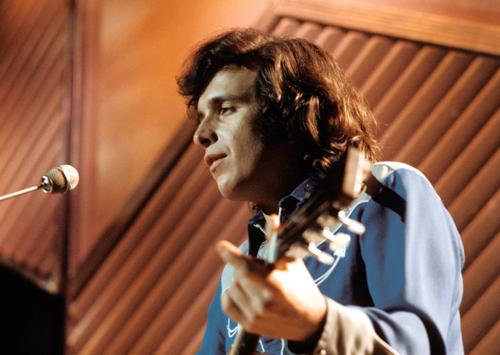
Don McLean discusses his career and his music
1980 Don McLean discusses his career and his music. Don McLean discusses his influences, life experiences, and his songwriting.
-
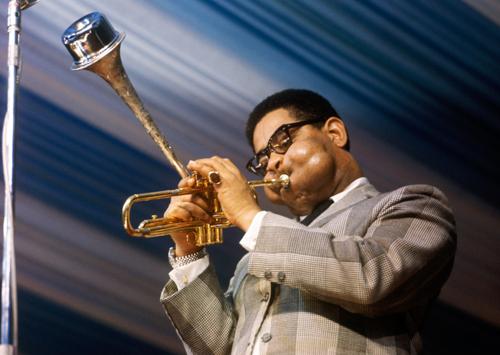
Dizzy Gillespie discusses the art of jazz ; part 2
Mar. 30, 1961 Part 2 of the program continues with Dizzy Gillespie discovering the following: his jazz style; his interactions with other musicians; and his latin musical influences. The following Gillespie musical excerpts are played: "Tin Tin Deo"; "La Lorraine"; and an musical piece (with an undisclosed title) is played to end the program.
-
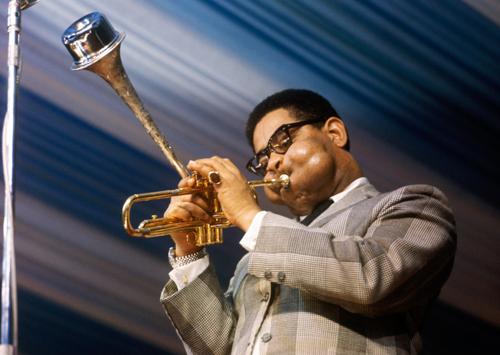
Dizzy Gillespie discusses the art of jazz ; part 1
Mar. 30, 1961 Part 1 of this program begins with Studs Terkel reading an excerpt from the book "Giants of Jazz" , which describes Dizzy Gillespie's early life. Gillespie discusses the following: the state of jazz; his fellow musicians; jazz contributors; jazz fundamentals; and his tours abroad. Gillespie's "Groovin' High" is played towards the end of this part of the program.
-
Disscussing the Balalaika and the Cimbalon with musician Alexander Eppler
Mar. 30, 1984 Eppler plays the cimbalom, an instrument descended from the hand-held hammered dulcimer found in Eastern Europe.
-
-
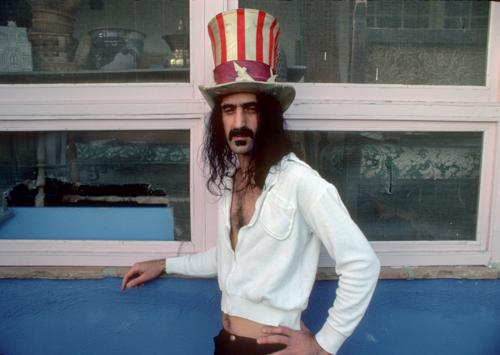
Discussing the music of the Mothers of Invention and interviewing Frank Zappa
Aug. 1, 1970 Discussing the music of the Mothers of Invention and interviewing Frank Zappa. Songs include "Who are the Brain Police," "Brown Shoes Don't Make It," "Concentration Moon," "Mom and Dad," "Bow Tie Daddy," "Harry, You're a Beast," "What's the Ugliest Part of Your Body?" "Trouble Every Day," "Very Distraughtening," "White Ugliness" and "There Will Come a Time."
-
Discussing the music of China with David Golub
Aug. 27, 1981 The American pianist and conductor talks about his cultural exchange visit to China as depicted in the documentary, From Mao to Mozart. Studs plays some recordings of Chinese music from his own trip to China.*Please note: some sections have been edited out from the original recording due to copyright considerations