Listen to New Voices on Studs Terkel our partnership with 826CHI-here! Read the Story


Showing 181 - 195 of 460 results
-

Lotte Lehmann discusses her opera roles and how opera has changed
Apr. 18, 1960 Interviewing Madame Lotte Lehmann about her opera roles and how the genre of opera has changed.
-
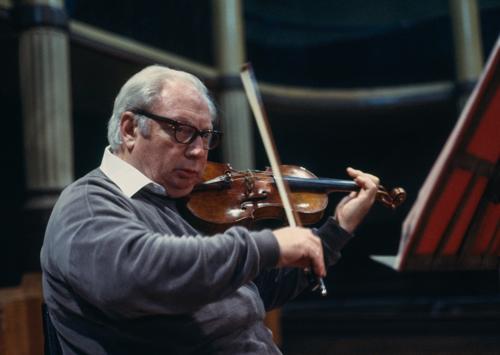
Live musical performance by Isaac Stern
Jan. 20, 1989 Studs Terkel sits down to interview American Violinist Isaac Stern. Stern performs for Terkel on the radio.
-
Lino Chavez and his Mexican Folk Ensemble discuss music, culture and performing
Aug. 12, 1959 Lino Chavez and his Mexican Folk Ensemble discuss, through a translator, Mexican culture and music and perform their song "El Jarabe" at 2:50, "El Tilingo" at 13:50, "Maria Chuchena" at 23:05, "El Cascabel" at 29:31, "La Bamba" at 38:39, and "El Ahualulco" at 47:55. These songs have been removed from this recording.
-
Lincoln Mayorga discusses American popular piano music
May. 30, 1984 Studs Terkel and Lincoln Mayorga discuss the evolution of American popular piano music with Mayorga playing examples.
-
Licia Albanese discusses her opera performances
Feb. 27, 1960 Licia Albanese discusses her performance preparations, advice to young new opera singers, the conductor techniques from Fausto Cleva, and the late Arturo Toscanini.
-
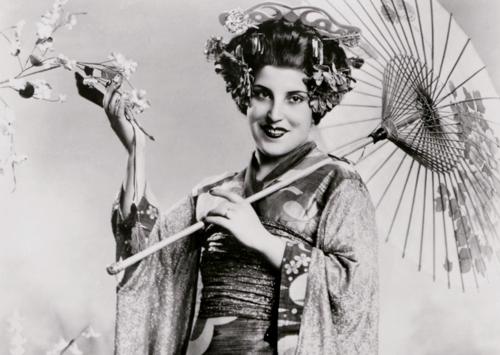
Licia Albanese discusses her opera performances
Feb. 27, 1960 Licia Albanese discusses her performance preparations, advice to young new opera singers, the conductor techniques from Fausto Cleva, and the late Arturo Toscanini.
-
Leonard Sorkin discusses his career as a violinist with the Chicago Symphony Orchestra, the Fine Arts Quartet and as Director of Chamber Music Studies at the University of Wisconsin
Apr. 9, 1982 Studs interviews Leonard Sorkin about his career as a violinist. They discuss his training, which began in early childhood and who he studied under. Sorkin plays a few short tunes to demonstrate his art, and one was his childhood favorite of "Allegro" by Joseph Fiocco. Sorkin names Jascha Heifetz as one who he admired all his life and shares the sounds and names of others who have influenced him. He explains to Studs how the Fine Arts Quartet members change to adapt to new players but the quartet sound remains the same.
-
Lawrence (Bud) Freeman discusses jazz with Studs Terkel
May. 11, 1971 Studs Terkel interviews Lawrence "Bud" Freeman about his career in jazz.
-
Lawrence (Bud) Freeman discusses his career as a tenor sax jazz musician
Dec. 1, 1980 Studs interviews Bud Freeman about his career in Jazz and his book, "Working" as well as his album, "Complete Bud Freeman." Freeman shares stories about his dad and brother during his childhood. He discusses various songs from his album and shares stories about his interactions with other jazz musicians. Studs reads a few passages from Freeman's book. They discuss how Freeman's creative practices and how his music has changed over the years. Musical pieces are removed from this edited version of the original recording.
-
Lawrence (Bud) Freeman discusses his career as a jazz tenor sax player and his album "Complete Bud Freeman"
Apr. 15, 1982 Studs interviews Lawrence Freeman about his career in jazz. Studs notes that he first interviewed Freeman in 1939 as his first guest on his radio program with WGES. Freeman shares the names and events of influences in his life. He describes his interactions with other jazz musicians throughout his career and shares some stories about his brother, father, and childhood. Studs quotes Mark Miller of the Toronto Globe, music critic, for what he notes about Freeman.
-
Larry Heinemann, Chuck Rosenburg, Saul Brody in conversation with Studs Terkel
Aug. 2, 1990 Discussing the songs and music of the Vietnam War with author Larry Heinemann, musician Chuck Rosenburg, and folk singer Saul Brody.
-
Langston Hughes, John Sellers, James Cotton and Otis Spann discuss blues music
Jul. 15, 1960 Langston Hughes, John Sellers, James Cotton, and Otis Spann discuss their origins and blues music. The interview focuses heavily on Langston Hughes and how deeply he is influenced by the blues. Hughes also discusses his upcoming book "An African Treasury" at length. Hughes, Sellers, Spann, and Cotton perform a number of songs during the interview, they have been removed due to copyright.
-
Lakshmi Shankar discusses her career and music
Apr. 30, 1979 Indian singer and Hindustani classical vocalist Lakshmi Shankar discusses different styles of Hindustani classical music and music theory.
-
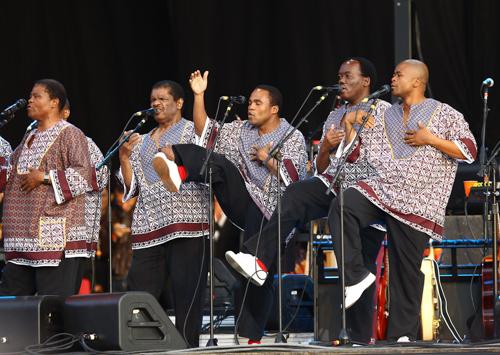
Ladysmith Black Mambazo discusses South African music and South Africa
May. 12, 1992 Ladysmith Black Mambazo discuss South African music and South Africa. Songs that have been removed include those from the play "The Son of Jacob Zulu." that was playing at Steppenwolf Theater. Includes a clip of an interview with the Chief of Durban.
-
Judy Collins discusses songwriting, success, and reproductive rights
1970 Judy Collins discusses how she began writing her own songs; successes in her career; and the fight for abortion rights.