Listen to New Voices on Studs Terkel our partnership with 826CHI-here! Read the Story


Showing 616 - 630 of 1202 results
-

Ina May Gaskin, Norma Swenson in conversation with Studs Terkel
Jun. 18, 1992 Discussing the Chicago community of midwives and the book "The New Our Bodies, Ourselves: a Book By and For Women" (published by Simon & Schuster) with one of the book's authors Norma Swenson and midwife and author Ina May Gaskin.
-
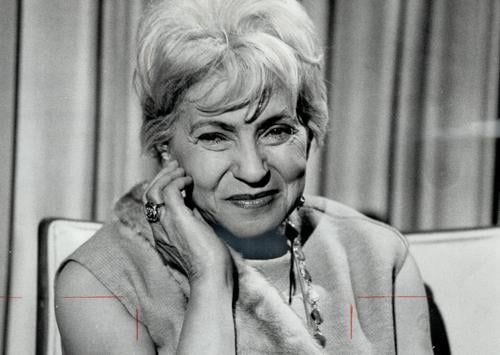
Ida Kaminska discusses her career
Apr. 13, 1966 Through an interpreter, Madame Ida Kaminska discusses her role in the film "The Shop on Main Street." Both her mother and father were actors, too. Madame Kaminska explains she comes from a family of actors from 100 years ago.
-
Hunter S. Thompson discusses his book "Hell's Angels" ; part 2
1967 As a result of writing his book, "Hell's Angels: The Strange and Terrible Saga of the Outlaw Motorcycle Gangs," Hunter S. Thompson said he's become calmer and not so quick to react, in case a fight starts. Thompson believes the reason for the rise in violence is due to pent up anger and hostility. A clip of a former prize fighter describing how he threatens people to repay their debts is played.
-
Humorist and author, Abe Burrows discusses his career
Aug. 1980 As previously presented in Studs Terkel's weekly Almanac program, Abe Burrows, talks about how he got into writing. After the Depression, Burrows explained he had no true goal in mind other than that of simply surviving. Typing out material on a typewriter was when Burrows realized he was good at both writing and comedy.
-
Howard Blum talks about his book "Wanted: The Search for Nazis in America"
Jan. 26, 1977 Discussing the book, "Wanted: The Search for Nazis in America," and interviewing its author Howard Blum.
-
Horton Foote discusses the play "The Young Man From Atlanta"
Jan. 14, 1997 Horton Foote, playwright and screenwriter, and Studs Terkel analyze storylines, conflicts, and characters in Horton’s play "The Young Man From Atlanta." Horton also discusses his earlier work and events that led him to where he is in his career.
-
Hope Cooke reads from and discusses her book, Time Change
Mar. 12, 1981 The American-born socialite experienced tragedy early in life after her mother was killed in a plane crash. She and her sister were then abandoned by their father and raised by aloof grandparents and a series of nannies. Later, she studied and traveled in Iran and India, married the last Chogyal (King) of Sikkim (northeast India), and wrote an autobiography.*Please note: some sections have been edited out from the original recording due to copyright considerations
-
Holly Near discusses her book "Fire in the Rain--Singer in the Storm: An Autobiography"
Aug. 20, 1990 Singer-songwriter and activist Holly Near discusses her work for fighting for social justice through outlets such as her music. Near a prominent proponent for the LGBTQ community has streamlined her work using folk and protest-inspired songs. Near has been awarded multiple honors from organizations such as the ACLU and the National Organization for Women for her work for social change.
-
Hildegard Knef discusses her book, "The Gift Horse: Report on a Life" and the experiences of her life in Nazi Germany and as an actress in America post World War II
1971 Studs interview with Hildegard Knef, actress and writer. They discuss her life in Nazi Germany during the war and her experience as an actress when she came to America. Studs and Hildegard read together from her book, "The Gift Horse." Knef describes her family, Nazi Germany, survival, and her experience as a German in American post WWII. Her husband, David Anthony Palastanga, also reads an excerpt from her book.
-
Hilda Bernstein discusses her life and exile from South Africa
May. 21, 1975 Hilda Bernstein tells Studs about her and her husband's activism in South Africa, apartheid, and the Sharpville demonstration. Includes an excerpt from the program with Chief Albert John Luthuli (Wav ID 1895817-6-1).
-
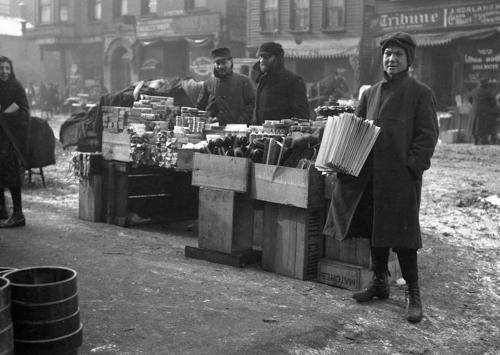
Herman and Rick Kogan discuss their book "Yesterday's Chicago"
Oct. 15, 1976 Herman and Rick Kogan give a brief overview of the history of Chicago (1816-1955) by discussing their book "Yesterday's Chicago".
-
Herbert Mitgang discusses his book "Mister Lincoln"
Feb. 11, 1982 Having been a Lincoln biographer for a quarter of a century, Herbert Mitgang felt the importance of writing the play "Mister Lincoln: A Drama in Two Acts". Lincoln's rich language can be heard through Mr. Mitgang''s dramatic interpretation of Lincoln's life.
-
Herbert Kohl discusses Myles Horton and the book "The Long Haul: An Autobiography"
Apr. 5, 1990 Progressive educator Herbert Kohl discusses educator and founder of the Highlander Folk School Myles Horton and the book about him, "The Long Haul: An Autobiography." The book was written by Herbert Kohl and his wife, Judith Kohl.
-
Herbert Block, known as "Herblock," discusses his drawings as an editorial cartoonist and the new book "Straight Herblock"
Nov. 13, 1964 Herblock and Studs talk about his newest book "Straight Herblock." They talk about some of his most acclaimed drawings and the social/political questions they pose.
-
Herbert Blau discusses the play "The Donner Party, Its Crossing"
Aug. 2, 1974 Herbert Blau’s KRAKEN experimental group performed, “The Donner Party, Its Crossing,” at the at the Body Politic Theatre. Blau shares his thoughts on the theatre and his approach to theatre. Blau believed there was always a story to be told, and that an audience would only understand the true story of people’s hardships by telling and re-telling a story over and over again. The program also includes an excerpt of a George Keithly interview at 5:40 to 7:40.