Listen to New Voices on Studs Terkel our partnership with 826CHI-here! Read the Story


Showing 16 - 30 of 158 results
-
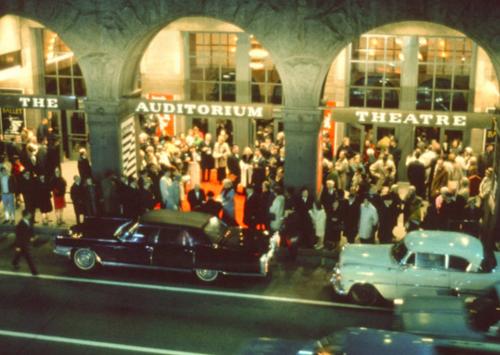
Studs Terkel discusses the Auditorium Theater with friends ; part 2
Jun. 1, 1967 Studs Terkel sits down with three guests who convey their memories of the Auditorium Theater in Chicago. Mary Garden, John Glickman and architect Harry Weese all agree that the theater's acoustics were extraordinary and there wasn't a bad seat in the house. Weese helped Chicago rediscover the Auditorium.
-
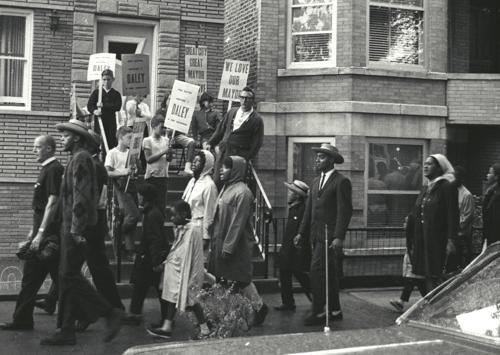
Studs Terkel discusses race relations and economic disparity with four Chicago area women ; part 2
Jan. 27, 1965 Studs discusses race relations and economic disparity with four Chicago area women in a program entitled "Each of us can act". This recording was the last of a 6-part series, "Rearing the Child of Good Will", broadcast under the auspices of the National Conference of Christians and Jews.
-
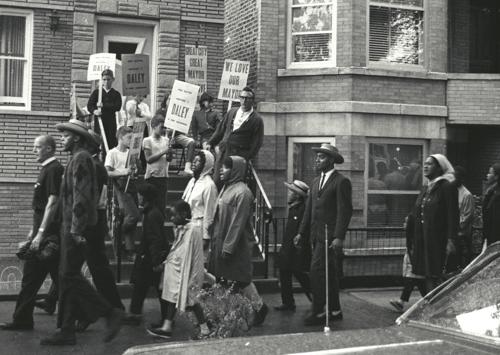
Studs Terkel discusses race relations and economic disparity with four Chicago area women ; part 1
Jan. 27, 1965 Studs discusses race relations and economic disparity with four Chicago area women in a program entitled "Each of us can act". This recording was the last of a 6-part series, "Rearing the Child of Good Will", broadcast under the auspices of the National Conference of Christians and Jews. The series focused on prejudice, race, religion, and community. Interviewees are: Madeline Bonsigniore of Chicago's south suburbs, Naomi Brodky of the Marynook neighborhood of Chicago, Lynn Williams of Winnetka, and Harriet White of the NCCJ.
-
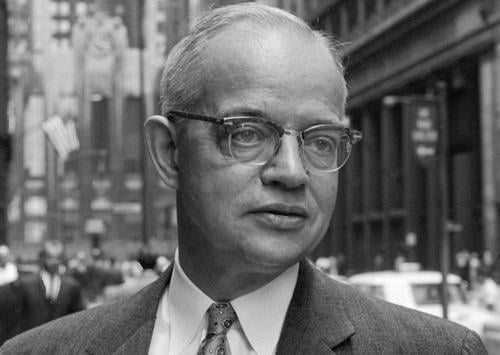
Studs Terkel discusses church architecture with William Cooley and Martin Marty
Apr. 27, 1965 Studs Terkel discusses church architecture William Cooley, a church architect, and Martin E. Marty, a theologian and scholar at the University of Chicago.
-
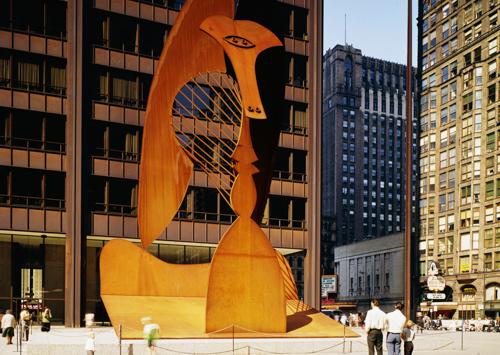
Studs Terkel comments and presents Picasso unveiling ceremony on its 30th anniversary
Aug. 15, 1997 Presenting at the Picasso unveiling: dedication ceremony and comments 30th anniversary.
-
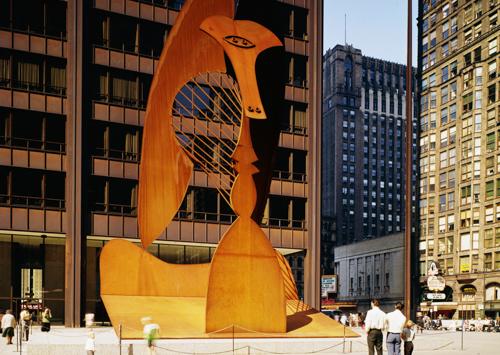
Studs Terkel comments and presents Picasso unveiling ceremony
Aug. 15, 1967 Studs Terkel presents the unveiling of the Chicago Picasso on August 15th, 1967, asking bystanders for their opinion on the new sculpture.
-

Stephen Deutch in conversation with Studs Terkel
Nov. 13, 1989 Discussing the book "Stephen Deutch, Photographer: From Paris to Chicago, 1932-1989" (published by the Tri-Quarterly) with photographer Stephen Deutch.
-
-
Sibyl Moholy-Nagy discusses the art of her husband, Laszlo Moholy-Nagy
Jun. 10, 1969 On the day before the opening at the Museum of Contemporary Art, Sibyl Moholy-Nagy, talks about the art of her husband, Laszlo Moholy-Nagy. Mrs. Moholy-Nagy said her husband believed in self discipline and the sacrifice to learn. In addition, she explained that her husband didn't believe in focusing on one type of material for his art but rather he worked with different types of materials like oil on canvas, steel, and plexiglass.
-
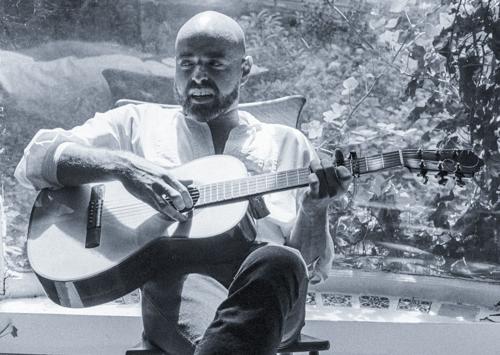
Shel Silverstein discusses his books, children's literature, and art; part 2
Nov. 20, 1961 Shel Silverstein discusses his books and children's literature, and art. Shel Silverstein discusses his contemporaries, art, and life experiences.
-
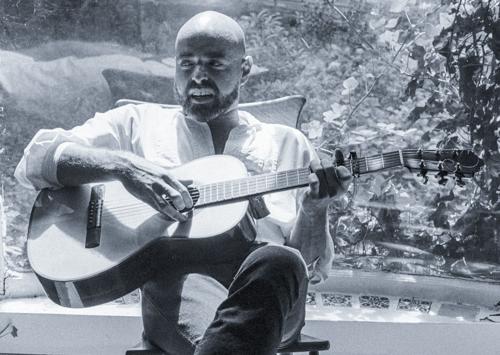
Shel Silverstein discusses his books, children's literature, and art; part 1
Nov. 20, 1961 Shel Silverstein discusses his books "Lafcadio: The Lion Who Shot Back" and "Uncle Shelby's ABZ Book".. Shel Silverstein discusses his books, children's literature, and cartoonists.
-
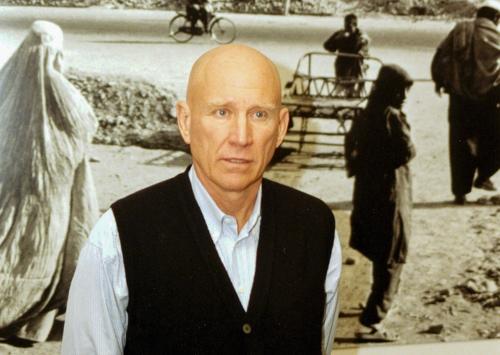
Sebastiao Salgado discusses the book "Workers: An Archaeology of the Industrial Age"
Sep. 27, 1993 Sebastiao Salgado, a Brazilian documentary photographer and photojournalist, converses with Studs about his book "Workers: An Archaeology of the Industrial Age". Mr. Salgado shares stories with Studs of the people he has photographed, and the things he has learned about the perseverance of human nature. Several songs are interspersed;
-
Roger G. Kennedy in conversation with Studs Terkel
May. 6, 1986 Discussing the book "Architecture, Men, Women and Money in America, 1600-1860" (published by Random House) with the author, historian Roger Kennedy.
-
Robert Twombly discusses the biography “Louis Sullivan: His Life and Work”
Mar. 24, 1986 Architectural historian Robert Twombly discusses the biography “Louis Sullivan: His Life and Work.” Referred to by Studs as the architect that most symbolizes Chicago architecture, Louis Sullivan, this program outlines Sullivan’s life as a prominent architect who was one of the first to incorporate nature, or "the organic", into architecture, and who ended his life in poverty. This program includes a clip from 1956 of Frank Lloyd Wright speaking to his contemporaries, indignant, asking what took them so long to recognize Louis Sullivan and his genius in the architectural field?
-
Robert Del Tredici discusses his book "At Work in the Fields of the Bomb"
Jun. 6, 1988 Robert del Tredici photographer, artist, and author discusses the history of nuclear weapon production plants around the United States and the effects of nuclear radiation.