Listen to New Voices on Studs Terkel our partnership with 826CHI-here! Read the Story


Showing 541 - 555 of 5186 results
-

Stuart Brent discusses the demise of the independent bookseller
Mar. 31, 1980 Stuart Brent believes people are totally indifferent to reading. He has come to the realization that, for some, material rewards are more important than cultural activities and as a result, culture is dying. But he is puzzled as to why readers would want to shop at big conglomerate stores like Kroch's and Brentano's when his store offers a personal, caring nature to its customers. This recording includes two excerpts from interviews with British booksellers Una Dillon and Handasyde Buchanan.
-
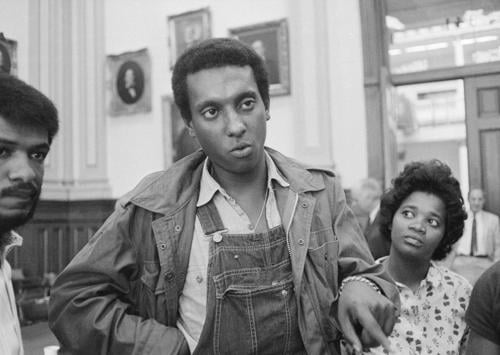
Stokely Carmichael, Charlie Cobb, and Courtland Cox discuss the SNCC ; part 2
Jul. 23, 1965 Stokely Carmichael, Charlie Cobb, and Courtland Cox discuss civil rights and African Americans in politics. Discussing the philosophy of SNCC.
-

Stokely Carmichael, Charlie Cobb, and Courtland Cox discuss the SNCC ; part 1
Jul. 23, 1965 Stokely Carmichael, Charlie Cobb, and Courtland Cox discuss civil rights and African Americans in politics. Discussing the philosophy of SNCC.
-
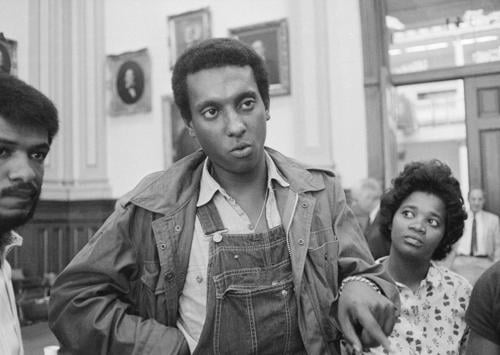
Stokely Carmichael, Charlie Cobb, and Courtland Cox discuss the philosophy of the SNCC ; part 2
1968 Stokely Carmichael, Charlie Cobb, and Courtland Cox discuss civil rights and African Americans in politics. Discussing the philosophy of SNCC. Includes Charlie Cobb reading his poem. Duplicate of 1916310-3-2.
-
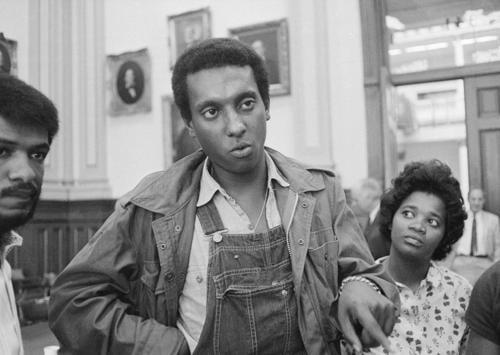
Stokely Carmichael, Charlie Cobb, and Courtland Cox discuss the philosophy of SNCC ; part 3
Jul. 23, 1965 Stokely Carmichael, Charlie Cobb, and Courtland Cox discuss civil rights and African Americans in politics. Discussing the philosophy of SNCC.
-
Steve Neal discusses his book "Dark Horse"
Feb. 7, 1984 Steve Neal's book, "Dark Horse: A Biography of Wendell Willkie," covers the story of a man who ran for president with no political experience. As explained by Neal, Wendell lost the election but he was still very popular with celebrity status. Wendell believed a chapter ended in his life so that a new chapter could begin.
-
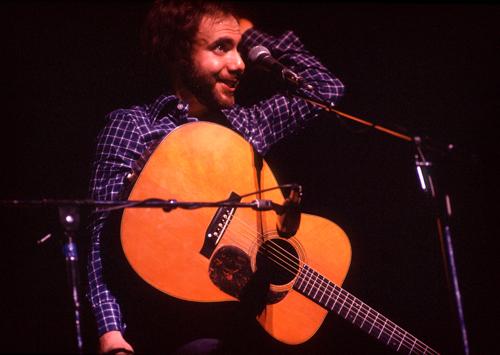
Steve Goodman discusses his album "Words We Can Dance To"
Apr. 30, 1976 Studs Terkel presents a “musical portrait” of Steve Goodman with the musician joining him in the studio to discuss, listen to, and play songs from his album “Words We Can Dance To.” Goodman begins by performing the blues song “Glory of Love,” and Terkel plays a clip from Big Bill Broonzy’s rendition of the song; Goodman cites Big Bill as one of his many influences. Goodman also plays an old jazz song called “When the Red, Red Robin,” with Terkel connecting that song to his first memories of jazz.
-
Sterling "Red" Quinlan discusses the book "The Hundred Million Dollar Lunch"
Jul. 30, 1974 Mr Quinlan a pioneering Chicago TV executive and one time general manager of Chicago's ABC affiliate WBKB, discusses the book "The Hundred Million Dollar Lunch." Mr Quinlan and Studs converse about the trials against RKO General/General Tire, a struggle that lasted 15 years. Includes an excerpt of an interview with Denis Mitchell.
-

Sterling "Red" Quinlan discusses his book "Inside ABC"
Oct. 18, 1979 Sterling "Red" Quinlan discusses his book "Inside ABC: American Broadcasting Company's Rise to Power". Quinlan was a pioneering Chicago TV executive who worked for ABC (which later became WLS-Ch. 7), WFLD-TV, and WTTW, Chicago's public television station.
-
Steppenwolf Theatre members discuss the play "The Caretaker”
Sep. 24, 1985 Interviewing producer Harold Pinter and actors Jeff Perry and Gary Sinise. They discuss their careers and present excerpts from Steppenwolf Theatre’s production “The Caretaker.”
-
Stephen T. Sohmer talks with Studs Terkel
Aug. 31, 1966 Stephen T. Sohmer discusses his first novel, "The Way It Was," a cynical commentary on his generation's struggle to develop stable relationships. In the context of stoic upper-middle-class conservatism, the novel chronicles how discontent can brew into rage beneath the veneer of social expectation.
-
Stephen Spender discusses his literary career
Dec. 4, 1975 The English poet and novelist joins Studs before a Poetry Magazine lecture event at Chicago's St. James Cathedral. A clip of an earlier interview with the poet and playwright Louis MacNeice is included.*Please note: some sections have been edited out from the original recording due to copyright considerations
-
Stephen R. Roszell discusses his documentary film "Other Prisoners"
Sep. 21, 1987 Studs interviews Stephen R. Roszell about the time he spent in the Louisville, Kentucky prison to interview and observe inmates and guards for his documentary film "Other Prisoners." Roszell describes his relationship with the inmates during his work and the prison environment. Roszell shares interesting insights to prison life for inmate and guard. Parts of the soundtrack recordings are removed from this edited version of the original.
-
Stephen Langfur discusses his book "Confession from a Jericho Jail"
Jun. 17, 1992 The Israeli Army is the backbone of Israel and refusing to serve is something worse than taboo, according to Stephen Langfur's "Confessions from a Jericho Jail: What Happened When I Refused to Fight the Palestinians". While sentenced to jail for 21 days, he witnessed guards deprive prisoners of water, and he questioned what had made these Israeli guards become so inhumane.
-
Stephen Deutch in conversation with Studs Terkel
Nov. 13, 1989 Discussing the book "Stephen Deutch, Photographer: From Paris to Chicago, 1932-1989" (published by the Tri-Quarterly) with photographer Stephen Deutch.