

-

Stephen R. Roszell discusses his documentary film "Other Prisoners"
Sep. 21, 1987 Studs interviews Stephen R. Roszell about the time he spent in the Louisville, Kentucky prison to interview and observe inmates and guards for his documentary film "Other Prisoners." Roszell describes his relationship with the inmates during his work and the prison environment. Roszell shares interesting insights to prison life for inmate and guard. Parts of the soundtrack recordings are removed from this edited version of the original.
-
Joshua Rubenstein discusses his book Tangled Loyalties: The Life and Times of Ilya Ehrenburg"
Sep. 25, 1996 Joshua Rubenstein discusses his book "Tangled Loyalties: The Life and Times of Ilya Ehrenburg" and the importance of Ehrenburg during the Stalin regime.
-
Wolfgang Rubsam discusses his career as an organist and Associate Professor of church music at Northwestern University
Mar. 1, 1984 Studs interviews Wolfgang Rubsam who is performing at the St. Clements Catholic Church in Chicago. They discuss the sounds of the harpsichord, piano, and organ. Rubsam explains how the organ builder and the acoustics in a church affects the sound of the organ. Rubsam talks a little about various teachers he has had and the things he learned from each. The musical numbers are removed from this edited version of the original recording.
-
-
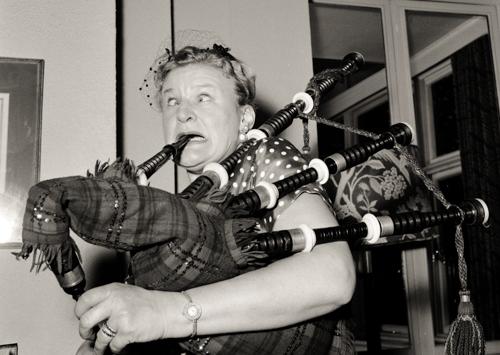
Discussing Soviet avant garde music with Joel Sachs
May. 12, 1982 Joel Sachs discusses Russian avant-garde music and Soviet Union artists.
-
Discussing Ukrainian music with Oleh Saciuk
Oct. 25, 1979 Studs Terkel discussing Ukrainian music with Oleh Saciuk. Includes instrumental music excerpts.
-
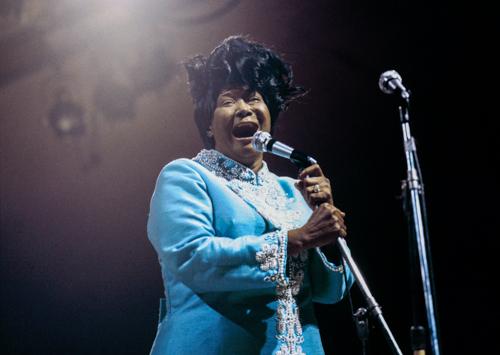
Hugh Wiley Hitchcock and Stanley Sadie discussing the book "The New Grove Dictionary of American Music"
Nov. 4, 1986 Discussing the book "The New Grove Dictionary of American Music". They talk about American music and musicians of all kinds and from different periods. Includes Charles Ive's song "At the River" sung by Cleo Laine in the middle of the program.
-
Susan Salm discusses her career as a cellist
Oct. 26, 1977 Susan Salm discusses her career as a cellist, the cello, and classical music. Includes an earlier interview with a younger Susan Salm and her mother. Includes an announcer's comments from the BBC at the end of the program.
-
Red Saunders discusses jazz music and jazz musicians
Mar. 16, 1978 Red Saunders discusses jazz music and jazz musicians.
-
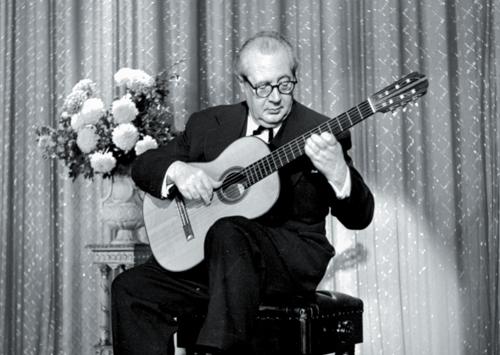
Andres Segovia discusses his life and career as a classical guitarist
Feb. 2, 1978 Studs interview with Andres Segovia about his life in Grenada and how he came to play the guitar as an orchestra instrument. Segovia speaks to the history of the guitar and other instruments as classical musical instruments. They discuss Segovia's choice of instrument, how he gives back to his genre, how he stays vibrant at his age, and how he and his audiences relate. Segovia explains his desires for the guitar in the philharmonic world. Studs notes how Segovia has had to teach composers how to write for guitars.