

-

Sally Trench discusses her book “Bury Me in My Boots” ; part 1
1968 Humanitarian and author Sally Trench discusses her book “Bury Me in My Boots,” her work with the homeless communities in England, her journeys, and her belief in self-help with Studs Terkel. Terkel reads an excerpt from Trench’s book “Bury Me in My Boots.”
-
Sally Trench discusses her book “Bury Me in My Boots” ; part 2
1968 Humanitarian and author Sally Trench discusses her book “Bury Me in My Boots,” her work with the homeless communities in England, her journeys, and her belief in self-help with Studs Terkel. Both Trench and Terkel read an excerpt from Trench’s book “Bury Me in My Boots.”
-
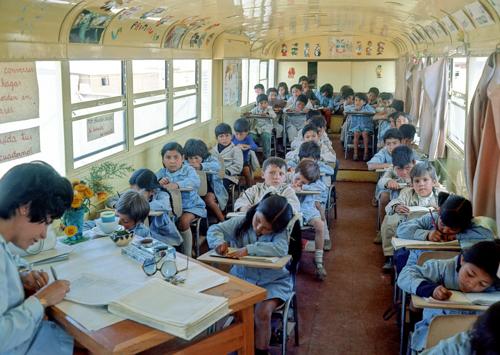
A panel of academics discuss education
Jun. 18, 1982 Studs Terkel leads a panel discussion on global education and the issues immigrants face in the American educational system. Panel members include Marilyn Turkovich, Dennis Brutus, Joe Elder, Daphne Maijorca, and Liu Zongren.
-

Discussing the book "The Mountain People" with the author, anthropologist Colin Turnbull ; part 2
Mar. 15, 1973 Studs Terkel continues his discussion with Colin Turnbull and expands upon the effect that colonial powers redrawing boundary lines had upon the Iks. The Iks refusal to move created a loveless environment for the Iks in one generation. This is made clear when Turnbull describes a dying man's request of Turnbull for a cup of tea and the tea is stolen from the man's hands by a family member for the taste of tea and the earthenware.
-
Mrs. Bailey Bishop and Edith Neisser talk about education of children, part 2
1965 Part 2 of a series sponsored by the national conference of Christians and Jews. Includes "Rearing the Child of Good Will" and "The Child and the Changing World." Mrs. Bailey Bishop and Ms. Neisser discuss the importance of an open mind and a accepting environment in education and at home, and how this helps the children to accept change as it happens.
-
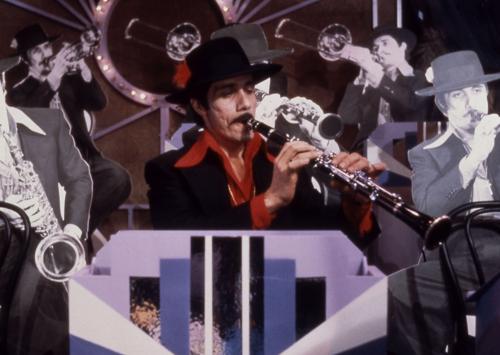
Luis Valdez discusses his career
Jun. 4, 1982 Luis Valdez, author of the play, "Zoot Suit," and editor of "Aztlan: An Anthology of Mexican American Literature," discusses the Chicano experience; music by Mexican-American artists is played and discussed throughout the program.
-

Robert Vaughn talks with Studs Terkel
1970 Robert Vaughn takes time out from his Drury Lane appearance in "Tender Trap" to discuss his new book "Only Victims" with Studs Terkel. The discussion spans the years 1938 when Martin Dies became the first House Committee on Unamerican Activities (HUAC) chairman to Vice President Spiro Agnew's condemnation of the "New York Times" and "Washington Post". Vaughn created the title of his book "Only Victims" from a Dalton Trumbo speech that reflected back on the era of HUAC as being one where there were no heroes, no villains, only victims.
-
Jean Vilar discusses French Theater
1965 French actor and director Jean Vilar discusses French Theater and the Théâtre National Populaire.
-

Gore Vidal discusses his book “Myra Breckinridge”
Apr. 3, 1968 Writer Gore Vidal discusses his book “Myra Breckinridge,” the central characters of the book, and some of his previous work. Vidal reads excerpts from “Myra Breckinridge.” The songs “Crucifixion” by Jim & Jean and “Prisoner Numero 9” by Volutia are played. Additionally, Lily Kraus performs the 3rd Movement from Mozart’s Allegro number 15.
-
Jean Vilar and Eugène Ionesco discuss French theater
1968 In the first part of this program Studs Terkel discusses French theater with critic Jean Vilar. In the second part, Studs and Eugène Ionesco discuss Ionesco’s work and the Theater of the Absurd.