

-

Lawrence (Bud) Freeman discusses his career as a jazz tenor sax player and his album "Complete Bud Freeman"
Apr. 15, 1982 Studs interviews Lawrence Freeman about his career in jazz. Studs notes that he first interviewed Freeman in 1939 as his first guest on his radio program with WGES. Freeman shares the names and events of influences in his life. He describes his interactions with other jazz musicians throughout his career and shares some stories about his brother, father, and childhood. Studs quotes Mark Miller of the Toronto Globe, music critic, for what he notes about Freeman.
-

Mirella Freni discusses her career
Oct. 10, 1979 Mirella Freni discusses her career, her colleagues, and opera.
-
John Eliot Gardiner discusses his career in Baroque music as conductor of the Monteverdi Choir and the English Baroque Soloist
Feb. 20, 1989 Studs interviews John Eliot Gardiner about his career in baroque music and his background and interests. Studs announces that Gardiner is performing at Orchestra Hall in Chicago. Gardiner explains the instruments that his group uses and how they are different and capture the original sounds of pieces. He also describes the history and time period of baroque music. Gardiner explains various pieces that the choir performs such as Handel's "Israel in Egypt" and Henry Purcell's "King Arthur." The musical numbers are removed from this edited version of the original recording.
-
Phyl Garland discusses themes from her book "Sound of Soul" and the black influence on music ; part 1
Nov. 25, 1968 Studs interviews Phyl Garland about her book "Sound of Soul." They discuss the history of music and how black music influenced white music. Studs reads a quote from her book where she quoted Lerone Bennett. Garland also reads from her book a few times. They discuss how music changed over time for blacks from spirituals to slave songs to the blues because it was a reflection of their lives. Garland explains how blacks used music to help them through their trials and frustrations.
-
Phyl Garland discusses her book "Sound of Soul" and the history of black music in America ; part 2
Nov. 25, 1968 Studs interviews Phyl Garland about her book "Sound of Soul." They discuss various musicians that she mentions in her book and their influence on black music. Garland explains the music of young black artists and how commercialization of music gave blacks an opportunity that they would not have had otherwise. Garland talks about how Fannie Lou Hamer used music to express her message in the Civil Rights Movement and as a women's rights activist. Studs and Garland discuss various black female artists and their music.
-
Oscar Ghiglia discusses the history of classical guitar music in different cultures
Feb. 14, 1977 Oscar Ghiglia discusses studying under Andres Segovia and reviews different types of guitars and composers through history, including Weiss, Villa-Lobos, and Scarlatti. Music is played throughout: "Prelude, Fugue and Allegro in E-Flat Major, BWV 998 (Arr. for Guitar) : I. Prelude" composed by J.S. Bach, "Canarios (Air De Danse)","La Maja De Goya", "Fantasia in E-Minor" composed by S.L. Weiss, "Five Preludes, W. 419: No. 1 in E Minor (Andantino expressivo)" composed by Heitor Villa-Lobos, "Sonata In G, L.79" composed by Domenico Scarlatti, and "Tarantella, Op.
-
Ralph Gleason discusses jazz, jazz artists, and jazz festivals ; part 1
Jul. 31, 1971 Studs interviews jazz and pop critic, and founding editor of "Rolling Stone" magazine, Ralph Gleason while in Berkeley, California (3 parts). Topics include the history of jazz, blues, and jazz culture, and how race played in the development and distribution of the music. Songs include Louis Armstrong's "(I'll Be Glad When You're Dead) You Rascal You."
-
Ralph Gleason discusses jazz, jazz artists, and jazz festivals ; part 2
Jul. 31, 1971 In Berkeley, Calif., Ralph Gleason, jazz and pop critic, and founding editor of Rolling Stone, talks with Studs about the history of jazz and jazz artists. They talk in depth about Billie Holiday, white performers who imitated the style of black jazz singers, and jazz festivals. Songs include Holiday's "Them There Eyes" and "God Bless the Child."
-
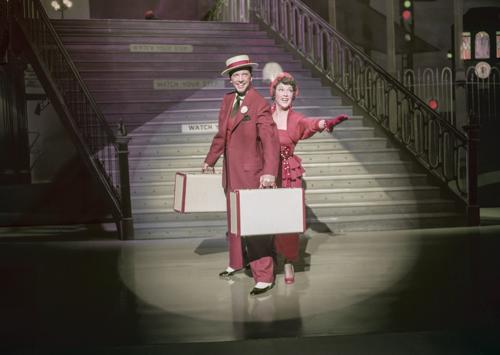
Martin Gottfried discusses his book "Broadway Musicals"
Nov. 15, 1979 Martin Gottfried discusses his book "Broadway Musicals" and the history of the musicals by evaluating the different big name composers, lyricists, and directors of Broadway.
-
William Brashler talks about his book "Bingo Long's Traveling All-Stars and Motor Kings"
Dec. 10, 1973 Mr. Brashler converses with Studs about his research for the novel and the players he had spoken with to gather information for the book. The novel tells the story of a baseball team that revolts from a tyrannical Negro League owner and spends the 1939 season barnstorming around the Midwest. Includes two excerpts of a Cool Papa Bell interview talking about their travel as "barnstormers". Studs and Mr. Brashler read several exchanges of dialogue from the book.