

-
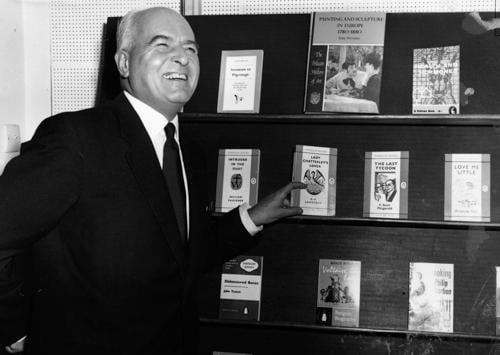
Interview with Sir Allen Lane
1962 Studs discusses labor with Sir Allen Lane's driver, Clifford Bosley, while Studs was visiting the UK in 1962. Studs and Bosley discusses life in Wales for coal mining families. Topics include literacy, camaraderie, singing, health concerns, and culture amongst colliers and their families.
-
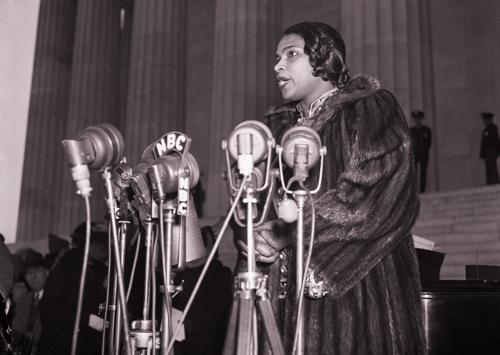
Marian Anderson and James DePreist discuss their experiences in music ; part 1
1966 Marian Anderson recalls singing on stage for the first time at the Metropolitan Opera House in 1957 and how it was the realization of a dream come true. Marion's nephew, James DePreist remembers being able to conduct a piece of music he had never conducted before because his aunt Marion had exposed him to it when he was a child. James said when his aunt Marion sung spirituals, he couldn't help but feel religious and he's an atheist.
-
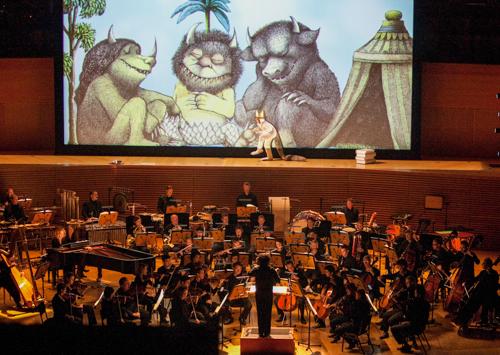
Composer Oliver Knussen discusses his opera adaptation of "Where the Wild Things Are"
Dec. 13, 1988 Oliver Knussen discusses his adaptation of "Where the Wild Things Are", which was beginning production at the Chicago Opera Theater, Chicago.
-

Easley Blackwood, David Schrader and Ramon Salvatore in discussion with Studs Terkel about music
Apr. 14, 1993 Presenting music published by Chicago record label Cedille Records including the music of composer and pianist Easley Blackwood along with David Schrader and Ramon Salvatore.
-
Harrison E. Salisbury discusses his book on the 1917 Russian revolution, "Black Night, White Snow"
Feb. 2, 1978 Studs Terkel talks to New York Times journalist Harrison E. Salisbury about his book on the Russian Revolution of 1917 entitled, "Black Night, White Snow", detailing the roles of the SR's, Lenin and the Bolsheviks, the Mensheviks, the Narodniks, Kerensky, Kropotkin, Stalin, Zinoviev and more.
-
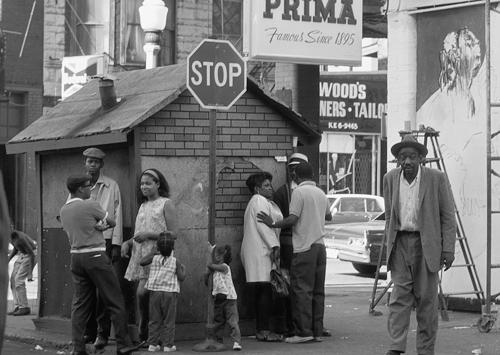
Studs Terkel interviews Curtiss Brooks, Jane Weston and Philip Hauser on the status of Blacks and housing, jobs and education in Chicago ; part 4
1965 Discussing "Discrimination in metropolitan Chicago" with Curtiss Brooks, employment specialist, Chicago Urban League, Jane Weston, housing specialist, American Friends Service Committee, and Philip Hauser, Sociology Department of University of Chicago. Brooks, Weston and Hauser provide data, reports and statistics to debunk the myths concerning the Black market for housing in Chicago. Weston states that public attitudes have changed and Real Estate must listen and accommodate open occupancy. Another myth that is discussed is that property values will go down if Blacks move in.
-
-
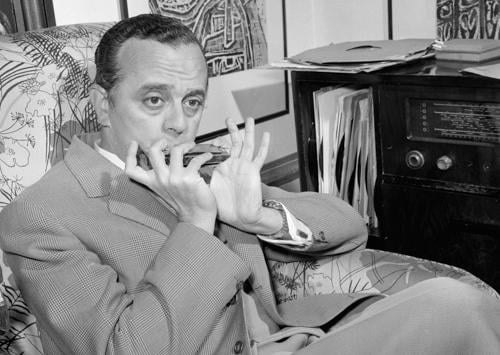
Laurie Anderson discusses her album "Big Science"
Laurie Anderson discusses her album "Big Science" and talks about he creative process. Talks briefly about her transition from plastic arts to performance artist and her perspective of the world after World War II and her collection of short stories and songs called "United States"
-
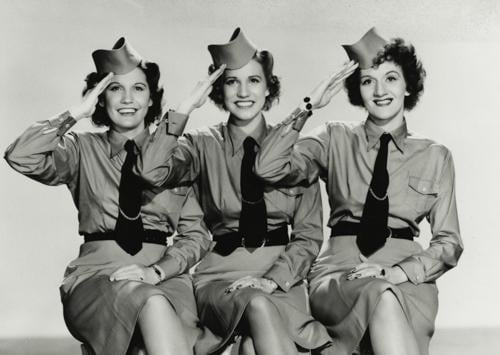
Terkel interviews Maxene Andrews of The Andrews Sisters
Aug. 23, 1982 Maxene Andrews reminisces over Andrews Sisters songs with Studs Terkel. She acknowledges the heavy influence the Boswell Sisters played in the creation of their image. She relays musical stories surrounding songs in Abbott and Costello such as "Bugle Boy" from their movie "Buck Privates". How they found the song "Mir Bist Du Schon" and Sammy Cahn and Saul Chaplin helped with the lyrics. How song pluggers brought The Andrews Sisters "Tip-Pi-Tin". How "Apple Blossom Time" helped an injured soldier at Oak Knoll Hospital upon his return to the states.
-
Terkel interviews Jim Beebe and presents trombone music
Jan. 5, 1983 Presenting trombone music and interviewing trombone player Jim Beebe.