

-

Mildred Loomis discusses the green revolution and the back to the land movement ; part 1
Mar. 6, 1968 Discussing the green revolution and the "modern homestead" and interviewing Mildred Loomis. Mildred Loomis discusses the back to the land movement.
-
Mildred Loomis discusses the green revolution and the back to the land movement ; part 2
Mar. 6, 1968 Discussing the green revolution and the "modern homestead" and interviewing Mildred Loomis. Mildred Loomis discusses the back to the land movement.
-
Discussing the opposition to nuclear power and the Clamshell Alliance with Sam Lovejoy
Dec. 5, 1977 Sam Lovejoy discusses the opposition to nuclear power, the Clamshell Alliance, politics, environmental concerns, and anti-nuclear sentiments and movements.
-
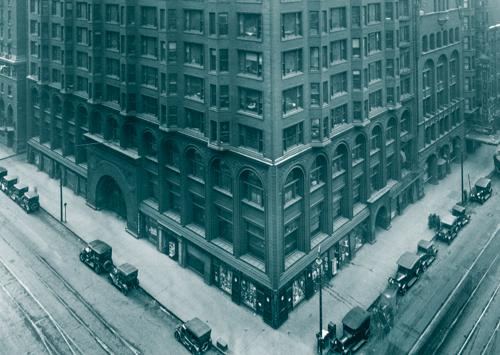
David Lowe discusses his book "Lost Chicago"
Dec. 8, 1975 Discussing the book "Lost Chicago" with the author David Lowe.
-
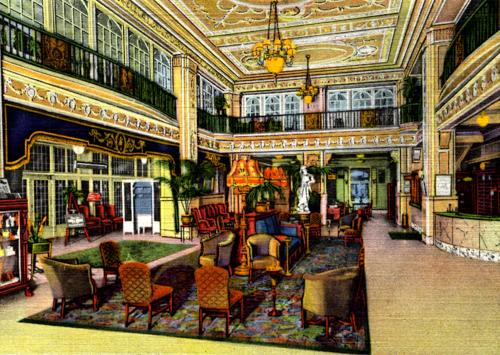
David Lowe discusses the history and story behind the architecture of Chicago from his book "Chicago Interiors"
Nov. 7, 1979 Studs interviews David Lowe about his book, "Chicago Interiors." Studs begins the interview with John Carpenter’s “Skyscrapers.” Studs leaf’s through the book as they discuss various photos and Lowe describes the history of various structures from the book that includes Chicago history. They discuss the history of architecture in Chicago and highlight various famous architects. Lowe explains how the industrial revolution, foreign countries and the Chicago fire all influenced Chicago architecture.
-
Don Luce talks with Studs Terkel
Feb. 1, 1973 Terkel comments and presents Don Luce reading poetry
-

Anne Baxter talks about acting and Frank Lloyd Wright
1970 Anne Baxter discusses acting and her grandfather Frank Lloyd Wright. Interview begins and ends with an excerpt from an interview with Frank Lloyd Wright. Excerpt of Barry Byrne talking about meeting Frank Lloyd Wright (2015846-3-1).
-
Interview with Friedrich Luft
1968 Interviewing Friedrich Luft while Studs was in Germany.
-
Studs Terkel interviews Friedrich Luft in the home of Dr Erich Heller of Northwestern University
1968 Friedrich Luft, Chief Drama Critic for Die Welt discusses German theater and Bertolt Brecht as well as new playwrights such as Peter Weiss. Unlike American theaters, Germany has over 200 theaters that are subsidized and each town of 50,000 has a theater. Just like the days of The People's Stage (which still exists) the grocer and cobbler of Germany enjoy the theater. They are as devoted to the theater as going to a museum or church. They are treated to 12 to 16 new or old plays from Sophocles to Sartre or Pinter.
-
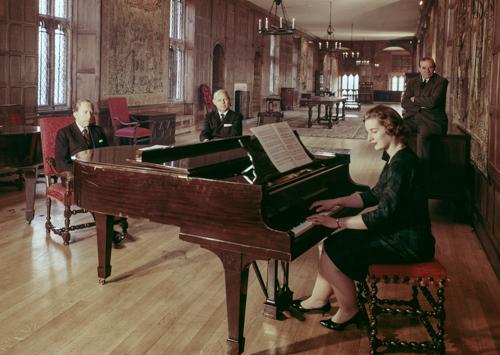
Ferdinand Lundberg discusses his book "The rich and the super rich"
1967 Ferdinand Lundberg discusses his book "The rich and the super-rich" and the current state of wealth distribution and political, cultural, and social power in the United States. Topics of discussion include inherited wealth, the wealthy “Eastern Establishment” families compared to wealthy families in the American southwest, wealth and crime, and corporations. Studs reads an excerpt from F. Scott Fitzgerald’s short story “The Rich Boy” at the beginning of the program and an excerpt of an interview Studs conducted with a man who comments on his ability to get rich.