Listen to New Voices on Studs Terkel our partnership with 826CHI-here! Read the Story


-

Gilbert Moses discusses The Free Southern Theater and his play "Blues for Mister Charlie" with Studs Terkel ; part 2
Aug. 10, 1966 Studs interviews Gilbert Moses about his play, "Blues for Mister Charlie" and The Free Southern Theater. They discuss a variety of plays that include, "White America," "Roots," and "Blues of Mister Charlie."
-
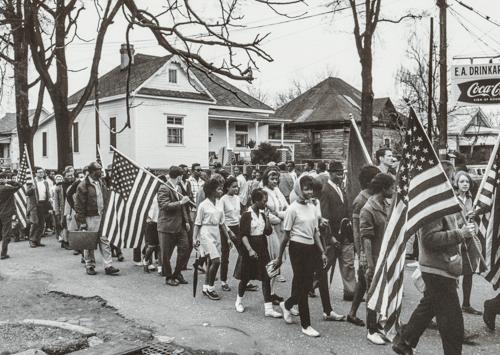
Margaret Long talks with Studs Terkel
1965 Margaret Long discusses the relationship between African Americans and white southerners that live in Montgomery, Alabama. She discusses the reactions to the changes in civil rights laws.
-
Auburn University student discusses the Civil Rights march on campus and his involvement
1965 Studs interviews a white student on the Auburn University campus after a Civil Rights march. The student explains that he is there to be sure a white face is present and to stand up for democracy. He describes the event and speaks to his family background. The student expresses the experience of black students on the integrated campus and how it has changed. (Tape 6, part 2)
-
Jane Kennedy talks about her anti-war activism, crimes and experience in prison
Nov. 6, 1975 Jane Kennedy (part of the group Beaver 55) went to prison for the scrambling of magnetic tapes at the Dow Chemical napalm producing plant in Midland, Michigan, and, a week later, the destruction of draft files in Indianapolis, Indiana. Both companies were profited from the Vietnam War.
-
Jessica Mitford discusses her book "Kind and Usual Punishment: The Prison Business"
Sep. 14, 1973 Jessica Mitford an English born author, investigative journalist, and civil rights activist discusses her book "Kind and Usual Punishment: The Prison Business,". Ms Mitford and Studs discuss her finding that prisoners were used as test subjects for drug trials and other medical research, and slave labor. Ms Mitford's book makes the argument that prisons are a governments means to making money from the prisoners they have punished. They speak about reform needed in the laws and decriminalization of many things and the abolishing of prison altogether. Ms.
-
Henry Fonda and John Houseman discuss the play "Clarence Darrow"
Henry Fonda and John Houseman talk about working with one another on "Clarence Darrow: A One-Man Play". Houseman is in awe of Fonda's portrayal of Clarence Darrow, explaining that in the play, the audience can really see the growth of Clarence Darrow, from a young lawyer to an experienced, wise one. Fonda talks about the opening scene when Darrow recalls his father talking to him when he was a young boy. Fonda reflects on times when his father talked to him. Fonda recalls being taught not to hate individuals.
-
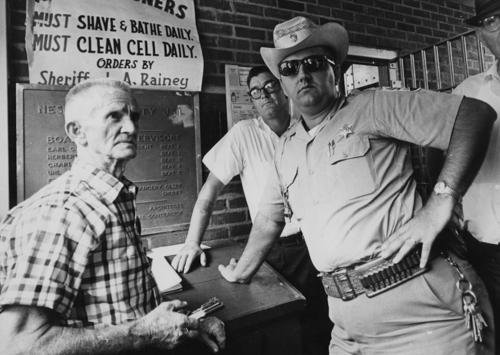
William Bradford Huie discusses his book "Three Lives for Mississippi"
May. 20, 1965 Author William Bradford Huie discusses his book "Three Lives for Mississippi;" reads passages from book.
-
Lillian Smith discusses reactions to her books and writings
Lillian Smith explores the responses she received from her books that address racial prejudice and discrimination, especially in the south.
-
Horace Cayton discusses his book "Long Old Road" ; part 1
Sep. 7, 1966 Content Warning: This conversation includes racially and/or culturally derogatory language and/or negative depictions of Black and Indigenous people of color, women, and LGBTQI+ individuals. Rather than remove this content, we present it in the context of twentieth-century social history to acknowledge and learn from its impact and to inspire awareness and discussion. In "Long Old Road: An Autobiography," Horace Cayton talks about growing up in Seattle in a well to do, mostly white neighborhood. Cayton's grandfather was the first Black man elected to the U.S.
-
Horace Cayton discusses is book "Long Old Road" ; part 3
Sep. 7, 1966 Content Warning: This conversation includes racially and/or culturally derogatory language and/or negative depictions of Black and Indigenous people of color, women, and LGBTQI+ individuals. Rather than remove this content, we present it in the context of twentieth-century social history to acknowledge and learn from its impact and to inspire awareness and discussion.