Listen to New Voices on Studs Terkel our partnership with 826CHI-here! Read the Story


Showing 11 - 20 of 20 results
-

Interviewing political activist Frank Wilkinson, chairman of the National Committee Against Repressive Legislation (NCARL)
Mar. 7, 1984 NCARL was formed to fight the McCarthyism of the 1950s and 1960s, and today continues to work to protect civil liberties.
-

Clifford Burke, Marilyn Nelson and Earl Doty discuss young people ; part 1
1968 Talking to Earl Doty, Clifford Burke, Marilyn Nelson, and West Side kids after the 1968 Chicago Riots. Clifford Burke had already retired from the CTA. As president of the Mile Square Federation, he talks about the youth community of the West side of Chicago, and the need for recreation opportunities for them. Marilyn Nelson is a student from California working in west-side Chicago as an advocate for the community. Studs also talks to Earl Doty, while riding in a car, about the neighborhood youth. There are sounds of hydrants being opened and the children playing.
-
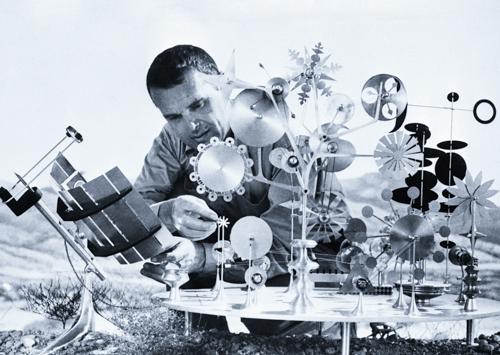
Charles Eames discusses his life of travel and his study of design and architecture, part 1
Oct. 1, 1965 Charles Eames, an architect, designer, artist, filmmaker and student of human nature, talks with Studs about his years of travel in India and Europe. He discusses studying architecture and working as an architect and the nature of his film making. (Part 1 of 2)
-
Discussing civil liberties in Chile
Sep. 1, 1978 Discussing civil liberties in Chile with Isabel Letelier and Michael Moffitt, the authors of a report for the Institute for Policy Studies: "Human Rights, Economic Aid, and Private Banks: The Case of Chile."
-
John Bernard discusses his life, politics and his work with the Farmer Labor Party
Aug. 1, 1977 Interviewing labor organizer, civil rights activist, and former Congressman John Bernard. Bernard was elected as a Farmer-Labor candidate to the U.S. House of Representatives and served from 1937-1939.
-
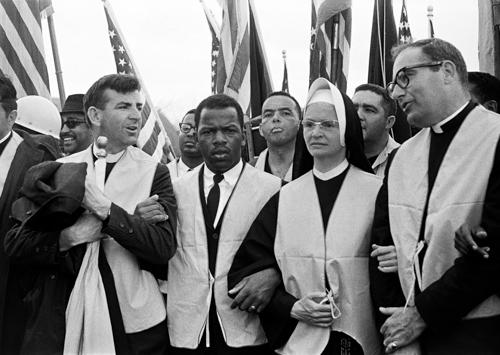
John A. McDermott and Sister Mary Peter discuss Catholic Church's Participation in Civil Rights Movement
Sep. 15, 1965 John A. McDermott and Sister Mary Peters discuss Catholic Church's Participation in Civil Rights Movement. Includes interview with unknown Catholic man opposed to nuns' and priests' involvement. Includes song "It Isn't Nice" by Judy Collins.
-
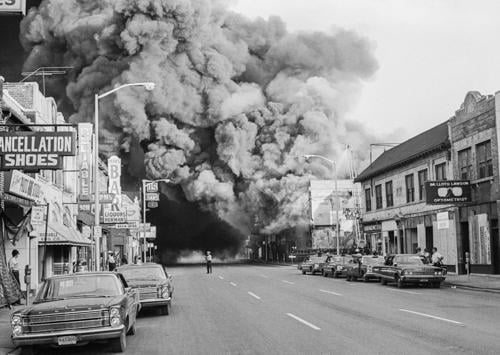
Nancy Milio reads from and discusses her book "9226 Kercheval"
Jun. 13, 1970 Nancy Milio's book, "9226 Kercheval: The Storefront That Did Not Burn," is about community health services offered in a ghetto on the south side of Detroit, Michigan. As a nurse, Milio knew how important it was to offer quality health services to poor and uneducated individuals. With their real names changed, Milio talks about her experiences with Mrs. Watkins, Johhnie West and others at the center.
-
LaDonna Harris discusses Native American history and her work with Americans for Indian Opportunity
Oct. 2, 1992 LaDonna Harris, Comanche social activist and politician, talks about Native American history and her work towards reforming the view of Native Americans. She talks about expanding the education about Native American cultures and her work with Americans for Indian Opportunity. Topics such as Columbus, Trail of Tears, religion, and civil rights are discussed.
-
Dave Dellinger discusses his book, "More Power Than We Know: The People's Movement Toward Democracy"
Jun. 27, 1975 Dave Dellinger, activist, discusses his book, "More Power Than We Know: The People's Movement Toward Democracy." Dillinger describes his thoughts and past experiences with non-violent protesting. He recalls his experiences with the police during Vietnam War protests and the Trialrial of the Chicago . He also discusses Dr. Martin Luther King Jr. and other well-known protesters.
-
Robert Borisage and Richard Criley discuss secrecy vs. the Constitution
1975 Robert Borisage, founder of the Center for National Security Studies, and Richard Criley, part of the Alliance to End Repression, talk about government spying on citizens and the constitutionality of it. The pair talk about corruption in the CIA and FBI and how new laws can help curb the issues. They also explain the S.1 - Criminal Justice Reform Act 94th Congress (1975-1976).