Listen to New Voices on Studs Terkel our partnership with 826CHI-here! Read the Story


Showing 261 - 270 of 365 results
-

Chicago area college teachers discuss recent grievances
1969 Discussing the role of the teacher and the Chicago Junior College teachers' grievances with Dr. Mary Mainwaring, Gordon Murray, Dr. Peter Senn and Dr. Morris Springer.
-
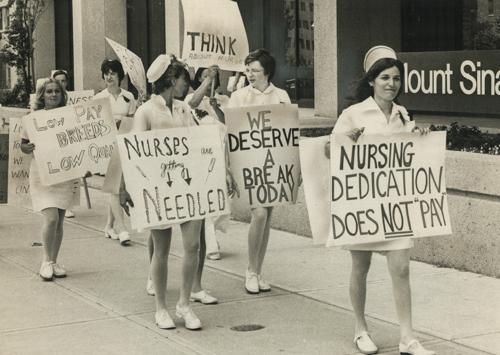
Mary Runyon and Kathy Ann Keller on the Ashtabula, OH nurses' strike ; part 1
1982 Interviewing an organizer of a nurse's strike in Ashtabula, Ohio, which was the longest nurses' strike in U.S. history (July 21, 1980-Feb. 8, 1982): Kathy Keller and Mary Runyon (tape 1 of 2).
-
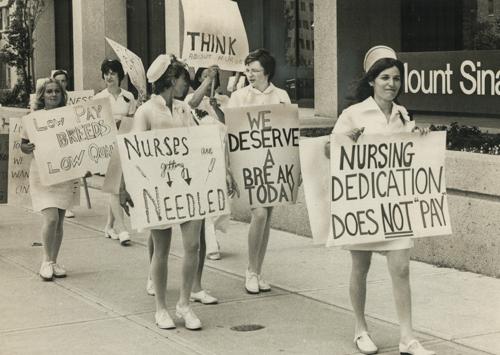
Mary Runyon and Kathy Ann Keller on the Ashtabula, OH nurses' strike ; part 2
1982 Interviewing an organizer of a nurse's strike in Ashtabula, Ohio, which was the longest nurses' strike in U.S. history (July 21, 1980-Feb. 8, 1982): Kathy Keller and Mary Runyon (tape 2 of 2).
-
A conversation with Lloyd Morain
Oct. 4, 1976 The businessman and author expounds on the concepts introduced in his book, The Human Cougar. He and Studs talk about the lives of working drifters and the American ideal of personal independence. (Recording engineer's note: some dropout and ambient noise)*Please note: some sections have been edited out from the original recording due to copyright considerations
-
Ann Banks in conversation with Studs Terkel
Feb. 2, 1981 The journalist, writer, and editor discusses her book, First Person America, which documents over 80 oral histories from the time of the Federal Writers' Project, which was part of the Works Progress Administration.*Please note: some sections have been edited out from the original recording due to copyright considerations
-
Herbert Kohl discusses Myles Horton and the book "The Long Haul: An Autobiography"
Apr. 5, 1990 Progressive educator Herbert Kohl discusses educator and founder of the Highlander Folk School Myles Horton and the book about him, "The Long Haul: An Autobiography." The book was written by Herbert Kohl and his wife, Judith Kohl.
-
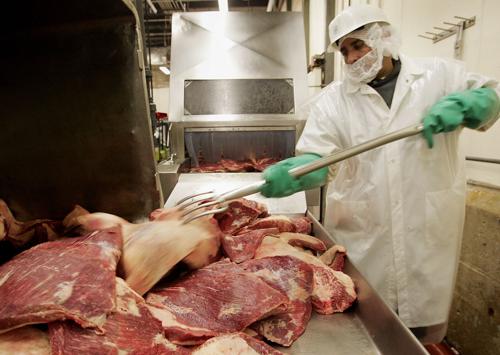
Barbara Kopple discusses her documentary "American Dream"
Mar. 20, 1992 Academy Award winning documentarian Barbara Kopple talks with Studs about her documentary "American Dream" and the battle fought and lost by union workers in Austin, Minnesota during the mid-80s. They set the backdrop in the small, tight-knit community that Hormel Foods had such a profound impact on, how the UFCW international union declined to support the local union, the gripping dynamics between family members who crossed picket lines, and the healing that occurred when the film was screened in the town several years later.
-

Loren Baritz discusses the relationship between education and work
Jul. 31, 1974 Loren Baritz, Executive Vice President of Empire State College (part of the State University of New York), discusses the purpose of higher education and the relationship between higher education and work. Topics of discussion include the current state of student apathy driven by economic insecurity, vocationalism, the structure of higher education institutions, and how the generation gap affects learning. Baritz also discusses the redefining of work in American culture and ideas for making liberal arts education more relevant to work.
-
A conversation with John and Karen Hess
Mar. 10, 1977 The investigative journalist and culinary historian talk about how the pleasures of eating have been affected not just by packaging and mass production, but also by the fanciful tastes of television chefs. They discuss with Studs their book, The Taste of America.*Please note: some sections have been edited out from the original recording due to copyright considerations
-
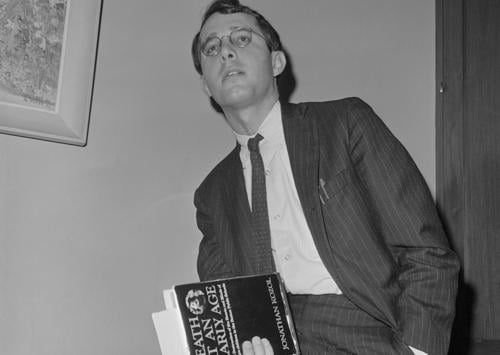
Jonathan Kozol discusses his book "Children of the Revolution: A Yankee Teacher in the Cuban Schools"
Nov. 10, 1978 Studs has a spirited discussion with Jonathan Kozol who shares his adventures and learnings in Cuba that formed the basis of his book "Children of the Revolution: A Yankee Teacher in the Cuban Schools." Kozol explains the ambitious Cuban Literacy Campaign begun in the 1960s that aimed to educate the entire population, tells of children teaching adults in remote villages by lantern light, and the unity and national pride that resulted. He and Studs explore the idea of generative words in literacy education and contemplate Kozol's hope to adapt a similar approach to American education.