Listen to New Voices on Studs Terkel our partnership with 826CHI-here! Read the Story


Showing 21 - 30 of 30 results
-
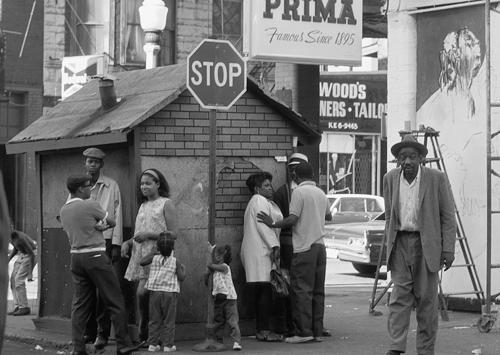
Jan Hestor, Curtiss Brooks and Dr. Philip Hauser discuss racial discrimination in Chicago ; part 5
1965 The discussion of discrimination in metropolitan Chicago continues with Jan Hestor, Curtiss Brooks and Dr. Philip Hauser talking about bigotry, prejudices, open occupancy and education. Included in this part of the interview is an excerpt of 17 year-old Jimmy talking about how his grandmother would rather work than be on welfare.
-

Dick Gregory discusses American politics
Dec. 17, 1964 This interview begins with a clip of one of Dick Gregory’s performances, where he talks about nonviolence and Native Americans. Studs Terkel introduces his guest as an observer, explaining that comedians are the best observers in society. Gregory offers extended analogies to communicate his views on a variety of topics, including the Vietnam War, race relations, segregation, human rights, and urban renewal. [The date is unclear, but it has to be after 1970, since the Kent State Shootings were mentioned]
-
Interview with North Carolina labor organizers
1960 Discussing "The Story of 77" with Oliver Harvey, Mary Ellen Kent, Lucy Bug and Pete Brandon.
-
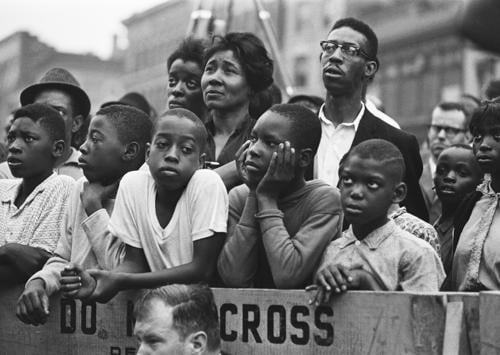
Studs Terkel interviews Professor Charles V. Hamilton on his book written with Stokely Carmichael entitled "Black Power: Politics of Liberation in America" ; part 1
Nov. 21, 1967 Using the backdrop of James Baldwin's "Nobody Knows My Name" and Baldwin's feelings that Blacks were ashamed of where they came from, Terkel interviews Professor and Chairman of the Political Science Department of Roosevelt University on his book coauthored with Stokely Carmichael entitled" Black Power: Politics of Liberation in America". Hamilton states that Blacks were taught to hate themselves and leave school believing that. Institutional racism and the deliberate oppression it creates, holds blacks back. Blacks are left out of crucial decision making processes that concern them.
-
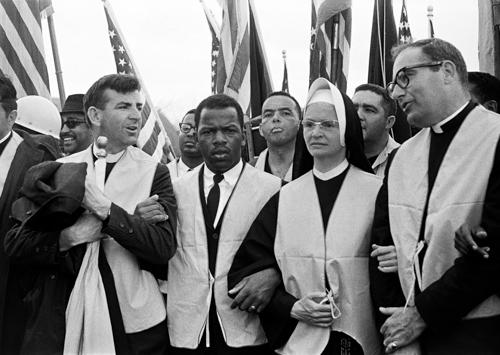
John A. McDermott and Sister Mary Peter discuss Catholic Church's Participation in Civil Rights Movement
Sep. 15, 1965 John A. McDermott and Sister Mary Peters discuss Catholic Church's Participation in Civil Rights Movement. Includes interview with unknown Catholic man opposed to nuns' and priests' involvement. Includes song "It Isn't Nice" by Judy Collins.
-
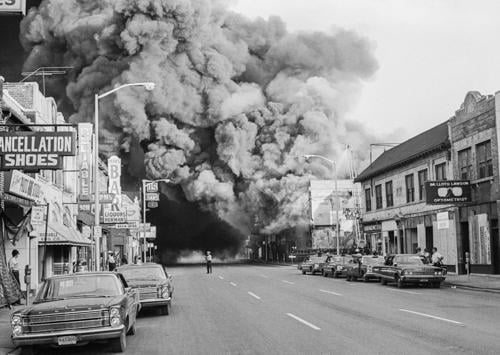
Nancy Milio reads from and discusses her book "9226 Kercheval"
Jun. 13, 1970 Nancy Milio's book, "9226 Kercheval: The Storefront That Did Not Burn," is about community health services offered in a ghetto on the south side of Detroit, Michigan. As a nurse, Milio knew how important it was to offer quality health services to poor and uneducated individuals. With their real names changed, Milio talks about her experiences with Mrs. Watkins, Johhnie West and others at the center.
-
Auburn University student discusses the Civil Rights march on campus and his involvement
1965 Studs interviews a white student on the Auburn University campus after a Civil Rights march. The student explains that he is there to be sure a white face is present and to stand up for democracy. He describes the event and speaks to his family background. The student expresses the experience of black students on the integrated campus and how it has changed. (Tape 6, part 2)
-
Jessica Mitford discusses her book "Kind and Usual Punishment: The Prison Business"
Sep. 14, 1973 Jessica Mitford an English born author, investigative journalist, and civil rights activist discusses her book "Kind and Usual Punishment: The Prison Business,". Ms Mitford and Studs discuss her finding that prisoners were used as test subjects for drug trials and other medical research, and slave labor. Ms Mitford's book makes the argument that prisons are a governments means to making money from the prisoners they have punished. They speak about reform needed in the laws and decriminalization of many things and the abolishing of prison altogether. Ms.
-
Richard "Skip" Richeimer discusses the Free Speech Movement
1964 Discussing UC Berkeley's Free Speech Movement with Richard "Skip" Richeimer. There is no free speech at UC Berkeley and the university is no longer concerned with the students and the faculty on this matter. Richeimer says the main problem is whether the administration of the university has the right to control the content of speech.
-
Studs Terkel interviews Professor Charles V. Hamilton on his book written with Stokely Carmichael entitled "Black Power: Politics of Liberation in America" ; part 2
Nov. 21, 1967 Using the backdrop of James Baldwin's "Nobody Knows My Name" and Baldwin's feelings that Blacks were ashamed of where they came from, Terkel interviews Professor and Chairman of the Political Science Department of Roosevelt University on his book coauthored with Stokely Carmichael entitled" Black Power: Politics of Liberation in America". Hamilton states that Blacks were taught to hate themselves and leave school believing that. Institutional racism and the deliberate oppression it creates, holds blacks back. Blacks are left out of crucial decision making processes that concern them.