Listen to New Voices on Studs Terkel our partnership with 826CHI-here! Read the Story


Showing 11 - 20 of 212 results
-

Reporter and author John L. Spivak talks with Studs Terkel ; part 1
1967 Studs and Spivak talk all things labor: unions, strikes, and spies. Spivak's work reporting on Fascism and Socialism is also discussed.
-
Reporter and author John L. Spivak talks about his autobiography with Studs Terkel ; part 2
1967 Several aspects of Spivak's career are discussed in detail, including his exposure of chain gangs, a Depression-era Communist forgery, investigating the anti-Nazi underground in Germany and how to exploit the insecurities of vigilantes.
-
Chicago residents Alice and Bob Taylor talk with Studs Terkel
1970 Recorded in the Taylor's home against a backdrop of sounds created by a nine-children family, Studs, Alice and Bob discuss aspects of a white family living in a predominately African-American amidst an exodus of the white, Christian community. Includes a performance of "Onward, Christian Soldiers" by the family around their piano, and "Jesus Loves Me" by two of the children.
-
Educator Harold Taylor talks with Studs Terkel ; part 1
1965 Harold Taylor and Studs look in-depth at the definition of what it means to be a "student," including on-campus protests, gaining life experience by teaching and challenging the mainstream social order. Includes a brief reading from Taylor's speech, "Preparation of American Teachers in the Field of World Affairs."
-
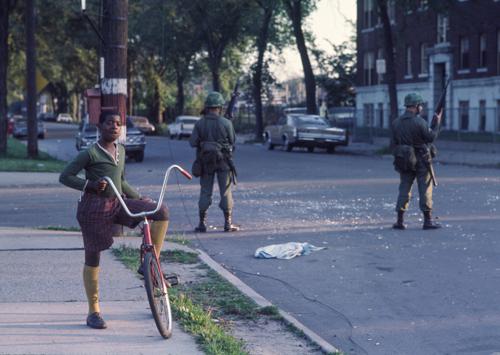
Rita Buscari interviews inner-city youth in Chicago
1968 Rita Buscari interviews inner-city youth in Chicago in the aftermath of the 1968 riots. Several pre-teen and teenaged African American youth are featured, discussing their experiences during the Chicago riots of April 1968. Topics include: Relationships between children and adults, relationships between police and civilians, relationships between blacks and whites, and the impact that Martin Luther King Jr.
-
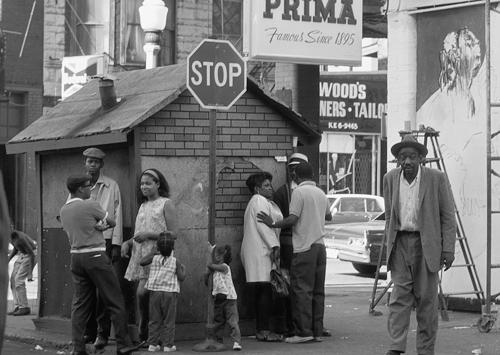
Studs Terkel interviews Curtiss Brooks, Jane Weston and Philip Hauser on the status of Blacks and housing, jobs and education in Chicago ; part 4
1965 Discussing "Discrimination in metropolitan Chicago" with Curtiss Brooks, employment specialist, Chicago Urban League, Jane Weston, housing specialist, American Friends Service Committee, and Philip Hauser, Sociology Department of University of Chicago. Brooks, Weston and Hauser provide data, reports and statistics to debunk the myths concerning the Black market for housing in Chicago. Weston states that public attitudes have changed and Real Estate must listen and accommodate open occupancy. Another myth that is discussed is that property values will go down if Blacks move in.
-
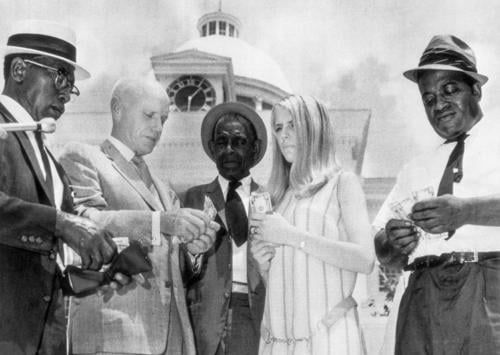
William Bradford Huie talks with Studs Terkel
Mar. 29, 1967 William Bradford Huie discusses his novel The Klansman. Includes recordings of interviews from Rev. Paschal Carlton, an unknown Alabama cab driver, and an unknown woman of Birmingham, Alabama.
-
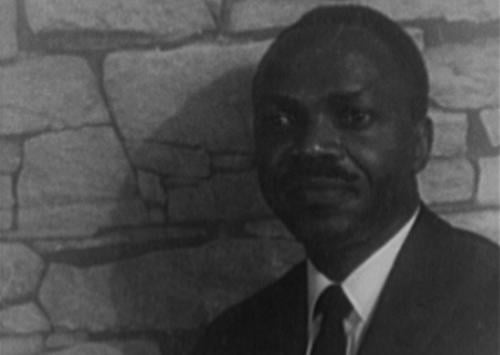
E.R. Braithwaite discusses his career and the book "Reluctant Neighbors"
1972 E.R. Braithwaite, Guyanese-born British-American novelist, writer, teacher and diplomat discusses his writing and career. The interview opens with Mr. Braithwaite, reading from his book "Reluctant neighbors".
-
William Brashler talks about his book "Bingo Long's Traveling All-Stars and Motor Kings"
Dec. 10, 1973 Mr. Brashler converses with Studs about his research for the novel and the players he had spoken with to gather information for the book. The novel tells the story of a baseball team that revolts from a tyrannical Negro League owner and spends the 1939 season barnstorming around the Midwest. Includes two excerpts of a Cool Papa Bell interview talking about their travel as "barnstormers". Studs and Mr. Brashler read several exchanges of dialogue from the book.
-
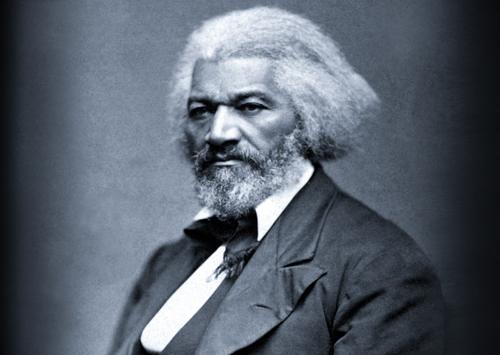
Studs Terkel presents a program in honor of the birthday of abolitionist and African American leader Frederick Douglass
Feb. 15, 1971 Studs Terkel presents a program in honor of the birthday of abolitionist and African American leader Frederick Douglass, including excepts from Terkel's 1964 interview with African-American scholar, author and social historian Lerone Bennett. Terkel reads at length from Douglass' autobiography, "My Bondage and My Freedom," focusing on Douglass' interactions with slave owners Hugh and Sophia Auld.