Listen to New Voices on Studs Terkel our partnership with 826CHI-here! Read the Story


Showing 41 - 50 of 422 results
-

Dale Clevenger discusses his career as a Jazz musician and member of the Chicago Symphony Orchestra
May. 13, 1980 Studs interviews Dale Clevenger about his music with the Chicago Symphony and his jazz group, Ears, playing at Orphans in Chicago. Clevenger discusses his work with the symphony. He explains why he credits David Amram for his interest in Jazz music. He names artists like Billie Holiday, Jack Teagarden, and Clark Terry as musical influences in his life. The music is removed from this edited version of the original recording.
-
Carlo Curly discusses the history and future of the organ as an instrument and his career as a classical organist
Dec. 15, 1983 Studs interviews Carlo Curly, a RCA recording classical organist. Includes an interview from two years earlier with Curly giving a commentary about Virgil Fox, his greatest influence. Curly describes his family background in music. He explains in great detail the history of the organ, how it is made, and the music written for it. He explains the difference in music between pipe organs and electronic organs. Curly talks about his experience playing in Japan. He speaks of Bach and Mendelson and their influence on the organ as a classical instrument.
-
Ryland Davies and Margaret Price discuss opera and their performance in Mozart's "Don Giovanni"
1972 Ryland Davies and Margaret Price discuss opera, Welsh art and culture, and their musical upbringings. They discuss various characters and operas they have performed in, including "Don Giovanni" and "Lulu". Music is played throughout the original airing, but has been removed from this recording for copyright reasons.
-
Stafford Dean and Catherine Malfitano discuss opera and "The Marriage of Figaro"
Nov. 6, 1975 Stafford Dean and Catherine Malfitano analyze their characters in "The Marriage of Figaro" and aspects of opera. They also discuss their upbringings, musical influences, and the future of opera. The original show opened with a recording of the Overture from "The Marriage of Figaro", which has been removed from this recording for copyright reasons.
-
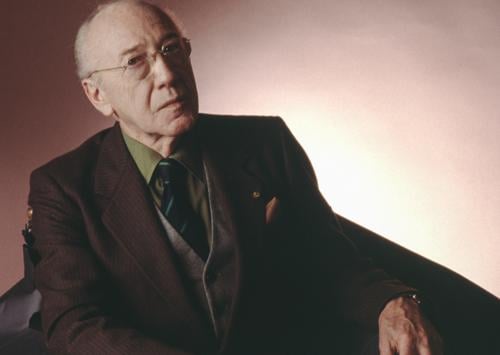
David Diamond discusses his training, influences and work as a classical composer
May. 28, 1975 Studs interviews David Diamond who is in Chicago for a concert at Thorn Hall. Diamond reflects on his family background and his exposure to diverse theater and movies of a variety of cultures that influenced his music. He explains his training and how he uses emotion and then structure to create his work. Studs and David discuss McCarthyism and its affect on performers and the personal affect it had in Diamond's life. The musical pieces are removed from this edited version of the original recording.
-
Mattiwilda Dobbs discusses her career as coloratura soprano opera singer
Mar. 14, 1975 Studs interview with Mattiwilda Dobbs, first female and black to perform at La Scala. Dobbs describes her musical beginning as a child within a musical family in Atlanta, Georgia. She explains her training and professional background with various opera houses and theaters. The musical pieces are removed from this edited version of the original recording.
-
George Esteves discusses the music that will be performed by the Chicago Chamber Choir in the Mother's Day concert
Apr. 17, 1980 Studs interviews George Esteves, the director of the Chicago Chamber Choir. They discuss the musical numbers that the choir will perform in their Mother's Day concert. Dexter Bailey will accompany. Esteves reads the lyrics in Italian of "Ecco Mormorar L'Onde" a Torquato Tasso poem, and Studs reads it in English. Esteves also reads some lyrics of the "Contate Irene Kiesewetter" by Schubert Franz. Esteves shares how members of the choir are recruited. Esteves names all the soloist members of the choir.
-
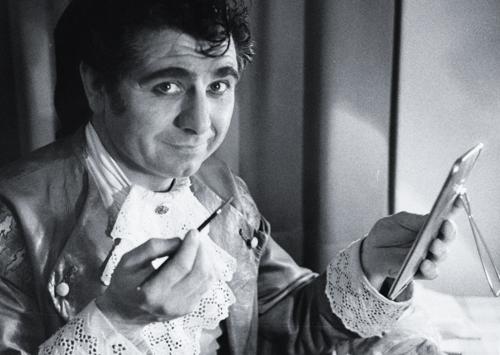
Sir Geraint Evans discusses his career in opera
Dec. 9, 1969 Sir Geraint Evans discusses his career in opera. He also discusses his life in Wales and the Welsh language.
-
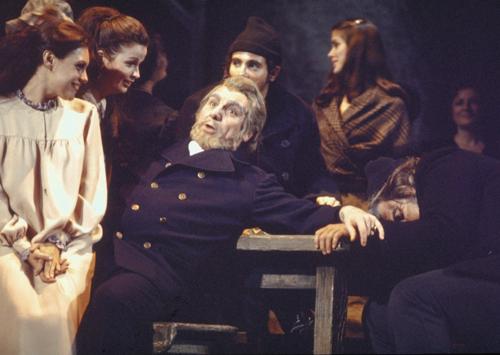
Sir Geraint Evans discusses his career as an operatic performer
Oct. 2, 1974 Sir Geraint Evans discusses opera and his time as a performer. Includes an in-depth discussion of the opera Peter Grimes.
-
Lukas Foss discusses his career as a composer of classical music and conductor of the Milwaukee Symphony Orchestra
Mar. 14, 1983 Studs interviews Lukas Foss about his career as a classical composer and conductor. Foss talks about his work with the Milwaukee Symphony Orchestra. He reflects on how teachers influenced his career and how he learns from each orchestra that he works with. He shares his love for poetry and explains how he makes music from poems and uses "Thirteen Ways of Looking at a Blackbird," a poem by Wallace Stevens, to illustrate. They discuss how Foss composes and how it is very similar to the way Jazz is composed with improvisation.