Listen to New Voices on Studs Terkel our partnership with 826CHI-here! Read the Story


Showing 41 - 50 of 241 results
-

Henry Threadgill, Fred Hopkins, and Steve McCall discuss their trio jazz group, Air
Sep. 4, 1981 Studs interview of Air jazz trio with Henry Threadgill - reeds, Fred Hopkins - bass, and Steve McCall - percussion. They discuss their individual careers and the people who have influenced them. Studs quoted Nelson Algren. Studs explores the evolution of their music and how the three came together. They discuss various pieces of their music and the instruments they use. Pauses were taken for musical numbers but none were played on this recording.
-
Brick Top discusses her career, her colleagues, and the jazz scene
May. 6, 1975 Brick Top discusses her career, her colleagues, and the jazz scene.
-
Jimmy McPartland and Buddy Tate discuss their careers as jazz musicians
Sep. 13, 1977 Jimmy McPartland and Buddy Tate share stories of working with different musicians throughout their career and explain why Kansas City musicians are recognizable from other musicians. Music is played throughout from both of the musicians: "Logan Square"- Jimmy McPartland & Art Hodes, "When I'm Blue"- Buddy Tate, "I'm Coming Virginia"- Jimmy McPartland, "Kansas City Joys"- Buddy Tate, "Singin' the Blues Till My Daddy Comes Home"- Jimmy McPartland, "Tickle Toe"- Buddy Tate, "Riverboat Shuffle"- Jimmy McPartland, "Sunday"- Buddy Tate.
-
John Hammond and John McDonough discuss music
1970 Music producer John Hammond and jazz critic for Down Beat magazine John McDonough discuss: Hammond's career; the artists he worked with; the artists he was the first to sign; social reform; and more. The following musical excerpts are played: "7 Come 11"; "Sauce"; "Talking Union"; "Blowing In the Wind"; "Today I Sing The Blues"; and "Live Embers".
-
John Hammond and John McDonough discuss music and their careers
Sep. 11, 1975 Presenting music with music producer (impresario) John Hammond. The following topics were discussed: various recordings; his encounters with famous jazz musicians; the first time he met Billie Holiday; the song "Strange Fruit"; improvisation; racial reform; Bessie Smith's death; and uniting rural and urban artists. The following musical excerpts were played and have been removed for copyright reasons: "7 Come 11"; "This Years Kisses"; "Lady Be Good"; "Young Woman's Blues"; "What More Can Jesus Do"; and "Piney Brown Blues".
-
Earl "Fatha" Hines and John McDonough discuss jazz music
Sep. 8, 1976 Earl "Fatha" Hines discusses various musicians he's worked with including Louis Armstrong, Charlie Parker, and Dizzy Gillespie. He remembers that bands became bigger after needing to add members to play bigger venues because people liked to dance. He also talks about how he liked to work to create shows and his approach to jazz composition. Music is played throughout: "Weather Bird" with Louis Armstrong, "My Monday Date", "Cavernism", "Boogie Woogie On St. Louis Blues", "Rosetta", and "Second Balcony Jump". Music has been removed from this file for copyright reasons.
-
Art Hodes discusses his career as a jazz and blues pianist
Jun. 17, 1981 Art Hodes discusses his history and influences on his career as a jazz and blues pianist. He tells stories of musicians he has worked with and how he keeps his performances fresh after playing for so many years. Music by Art Hodes is played throughout: "Chimes Blues", "Tennessee Waltz", "Grandpa's Spells", "Just a Closer Walk with Thee","Cakewalkin' Babies from Home", "Blues 'N Booze", and "Riverside Blues".
-
Helen Humes discusses her career
Jun. 29, 1977 Helen Humes discusses her career and touring with Count Basie and his orchestra. John McDonough is present for the interview and contributes. Songs sung by Helen are played throughout the interview: "He May Be Your Man", "Song of the Wanderer", "If I Could Be with You for One Hour Tonight" (2 recordings- one from 1940 and one from 1977), "Unlucky Woman", "They Can't Take That Away From Me", "Today I Sing the Blues", and "They Raided the Joint". Music has been removed for copyright reasons.
-
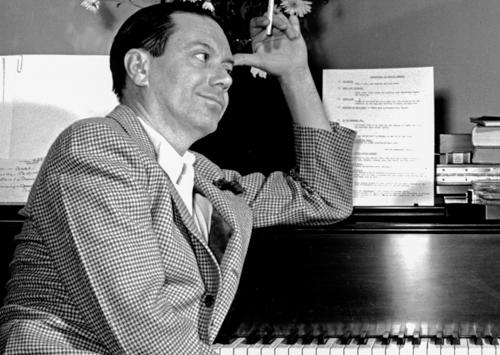
Discussing Cole Porter's work and the book "Cole" and interviewing its author Robert Kimball
1970 Cole Porter biographer Robert Kimball talks with Studs about his book "Cole" and his subject's life and work as they listen to classic performances of some of his most beloved songs. They marvel at how Porter perfectly captured the zeitgeist of the times in his lyrics, his lyrical influences, his unique method of outside-in composing lyrics and music simultaneously, Bobby Short's masterful interpretations, controversies over some of his works, and how well his material holds up.
-
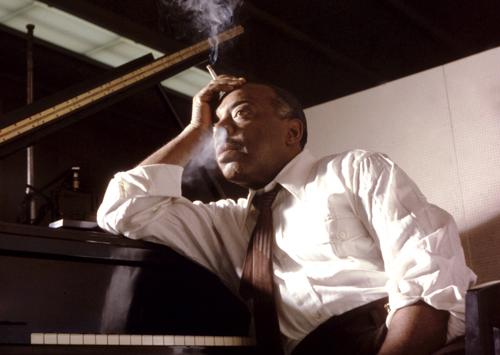
Studs Terkel and William (Bill) Leonard discuss their favorite memories of Frank Holzfeind and the Blue Note Jazz Club in Chicago
Jan. 9, 1975 Studs Terkel and William (Bill) Leonard share memories of the Blue Note Jazz Club as a tribute to Frank Holzfeind. Music is played throughout the episode: "After You've Gone" by the Benny Goodman Sextet, "The Flat Feet Floogie" by Slim and Slam, "How High the Moon" by Sarah Vaughan, "Destination K.C." by Count Basie, "West End Blues" by Louis Armstrong, "Lil' Augie Is A Natural One Man" by Chet Roble, and "Rock Skippin' at the Blue Note", Duke Ellington. Songs have been removed for copyright reasons.