Listen to New Voices on Studs Terkel our partnership with 826CHI-here! Read the Story


Showing 1 - 10 of 116 results
-

Father Daniel Berrigan discusses his life
Jun. 1, 1972 Fr. Daniel Berrigan speaks about his early life, and relationship with his family, on his becoming a priest, and on being an anti-Vietnam War activist.
-
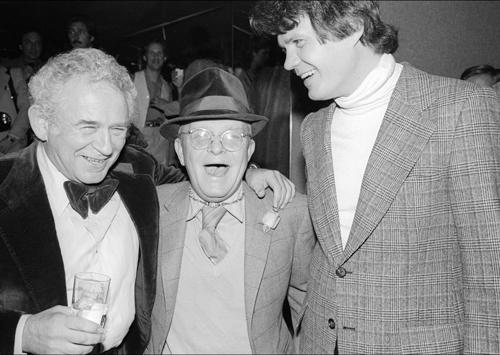
Dotson Rader discusses his book "I ain't marchin'anymore" with Studs Terkel
Feb. 26, 1971 The program starts with a short clip of Studs Terkel interviewing Peggy Terry talking about The Great Depression and American propaganda during Vietnam War. After that clip. Dotson Rader starts to talk about his book "I ain't marchin' anymore"
-
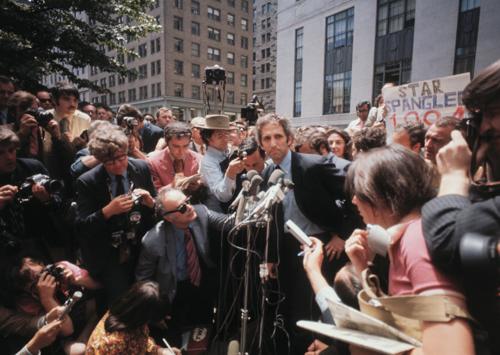
Eqbal Ahmad, Daniel Ellsberg, Anthony Lukas and Anthony Russo talk with Studs Terkel ; part 2
Jun. 9, 1972 Daniel Ellsburg, Eqbal Ahmad, Anthony Lukas, and Anthony Russo discuss Anthony Russo's time in jail, the leak of the Pentagon Papers, Vietnam War, torture of Vietnam prisoners being ignored, corruption in politics, and working for Rand.
-
Harrison Evans Salisbury discusses his book "A Time of Change"
Mar. 18, 1988 His experiences as a journalist are what's covered in Harrison Evans Salisbury's book, "A Time of Change: A Reporter's Tale of Our Time". Salisbury believed as a reporter, one truly needed to be at the event, in order to obtain the true story. Once Salisbury questioned if he was living in America because he was asked to switch rooms at a hotel in Birmingham, only to find out later that there were special, bugged rooms for reporters.
-
Robert Scheer talks with Studs Terkel
Jun. 25, 1965 Discussing Vietnam and interviewing Robert Scheer.
-
Studs Terkel interviews author-dramatist Frank Norman at his Bloomsbury Square Hotel ; part 1
1968 Terkel delves into the life of Frank Norman, a London ex-con who turned his life around and became a novelist and playwright by writing on his experiences. He wrote "Bang to Rights" shortly after his prison release which brought him great fame. He followed that with "The Monkey Pulled it's Hair" that had a U.S. release under the name "Don't Darling Me Darling". Norman opened up to Terkel discussing his illegitimacy, his illiteracy till age 14, his institutionalization in an orphanage which he turned into the novel "Banana Boy".
-
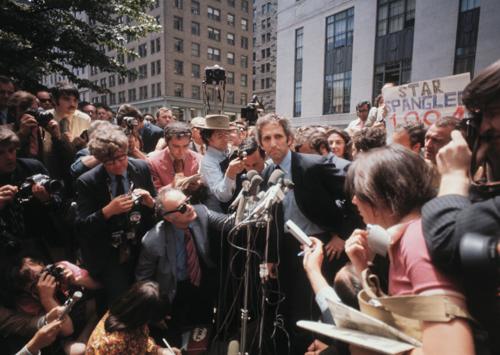
Eqbal Ahmad, Daniel Ellsberg, Anthony Lukas and Anthony Russo talk with Studs Terkel ; part 3
Jun. 9, 1972 Eqbal Ahmad, Daniel Ellsberg, Anthony Lukas and Anthony Russo discuss Anthony Russo's trial and treatment he endured during his time from conviction to release in federal prison compared to the treatment of prisoners tortured in Vietnam.
-
Neil and Susan Sheehan discuss journalism
Jun. 9, 1972 Studs Terkel talks with journalists Neil and Susan Sheehan about objective and responsible journalism, as well as what can influence a news story. A sound bite of photographer Jerome Zerbe is played where Zerbe discusses taking photos of the upper class during the Great Depression. Another sound bite is played of a man named Joe Begley discussing how laws created during the Great Depression should have met the needs of the people better.
-
David Scherman discusses “The Best of Life,” a book he edited
Oct. 12, 1973 Photographer David Scherman talks with Studs Terkel about the stories that photos can tell, famous photographers, and the book “The Best of Life,” which Scherman edited. A recording of the song “Brother, Can You Spare a Dime?” by the Weavers is played.
-
Three Vietman War veterans, Robert Black, Robert Johnson, Dr. Gordon Livingston, and Steve Perriman discuss the war, part 2
Nov. 13, 1973 Robert Black, Robert Johnson, Dr. Gordon Livingston, and Steve Perriman talk about the Vietnam War. All three are officers in the military and veterans of the Vietnam War. They discuss their lives before and after the war and the contradiction and changes that came after seeing the horrors of the Vietnam War.