Listen to New Voices on Studs Terkel our partnership with 826CHI-here! Read the Story


Showing 11 - 20 of 34 results
-
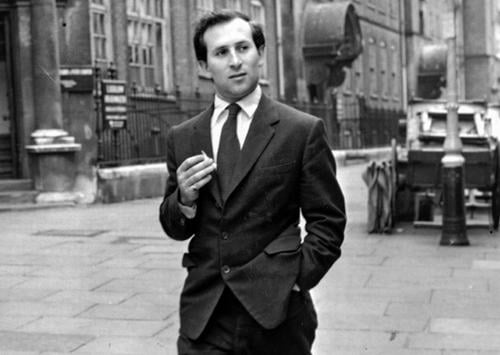
Arnold Wesker, english writer and playwright discusses his life and work.
1962 Arnold Wesker, English playwright and writer in several genres discusses scenes from the play "Roots". Mr Wesker further discusses his plays and the current cast traveling around England performing several of his plays. The interview tape ends and Studs recalls the remainder of the interview alone as a postscript.
-

Ivy Compton-Burnett discusses her life and work while Studs is in London, England ; part 1
1962 The tape begins with Studs speaking with Christopher Sykes, a friend and producer, Studs is getting information how to behave and what to expect. Studs meets Ms. Compton-Burnett at a flat in Cornwell Gardens, London, England and they discuss her life and work as a novelist and writer. Ms Compton Burnett discusses London and class structure. End of tape 1
-
Ivy Compton-Burnett discusses her life & work ; part 2 and Peter Hall discusses the theater ; part 1
1962 Ivy Compton-Burnett continues the discussion of class structure in England. Ms. Compton-Burnett states that she has never been a actor but she had always been an observer, to which Studs agrees that her writing reflect her statement accurately. He ends the interview by telling Ms. Compton-Burnett that she is a true original and that he greatly admires her individuality. Interview ends at 13:00. (part 2) Studs then begins an interview with Peter Hall at Aldwych theater office London, England. Mr.
-
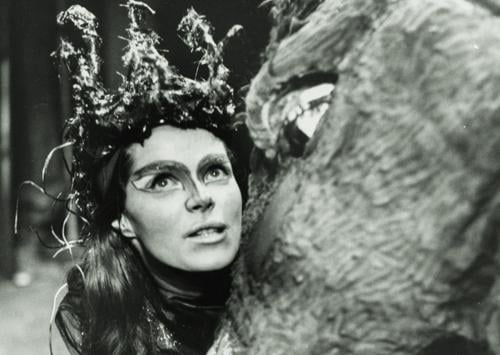
Studs Terkel dscusses the current British arts scene with Kenneth Allsop
Nov. 16, 1962 Kenneth Allsop, literary critic for the Daily Mail, BBC host of Tonight and author of "The Bootleggers and Their Era" sits down with Studs Terkel to discuss everything from the Social Realism of Arnold Wesker, Allen Sillitoe, and Shelagh Delaney known as the Backstreet Kids to the class warfare of "The Fourth of July" author David Benedictus. The two key groups of theater, the Royal Court led by George Devine and the Theater Workshop led by Joan Littlewood is also discussed.
-
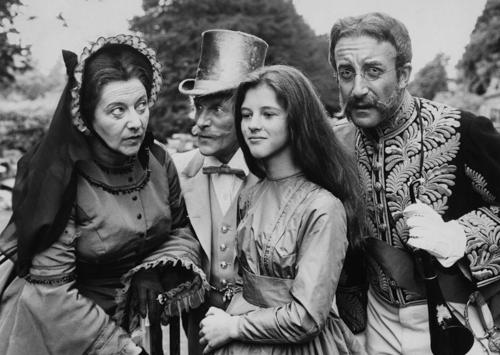
Studs Terkel discusses childhood, imaginiation, science, social history, politics, medicine and theater with Jonathan Miller in London, England
Jonathan Miller reminisces about his childhood in Regent Park, London and offers his opinion on philosophy and the changing English class structure with the loss of the Indian empire. His remake of "Alice in Wonderland" for BBC 1 is reviewed and he states he is most interested in the human imagination.
-
Jonathan Raban reads from and discusses his book "Hunting Mr. Heartbreak"
May. 15, 1991 With his book, "Hunting Mr. Heartbreak: A Discovery of America," Jonathan Raban wanted to see if, in the 20th century, a man could have a new life in America. Raban traveled to New York City, to the deep south in Alabama, to Seattle and finally to the Florida Keys.
-
-
Ronald Blythe discusses the village of Akenfield ; part 1
1968 Ninety five miles outside of London, Ronald Blythe has interviewed residents of the village of Akenfield for his next book, "Akenfield: A Portrait of an English Village." Blythe said what surprised him most of all was that newspapers and TV didn't have much effect on this little village. Blythe also learned that the village people would take part in political conversations with one another but they'd never let on as to which political party they were apart of.
-
Albert Alvarez discusses his book "Beyond All This Fiddle: Essays, 1955-1967," [part 1] and Jack LaPorte [part 2]
1972 Part 2 of a discussion with Jack LaPorte while Studs was in England. Conversation cuts out at 05:06 and begins the coversation with Al Alvarez. Albert Alvarez, poet, writer and critic, discusses how technology advancement is changing society. He specifically discusses war in general, the Holocaust and advancements in destructive weapons. He speaks fondly of Sylvia Plath, and discusses his current book, "Beyond All This Fiddle: Essays, 1955-1967."
-