Listen to New Voices on Studs Terkel our partnership with 826CHI-here! Read the Story


Showing 61 - 70 of 227 results
-

Sergeant Garland Davis discusses his profession ; part 1
An officer with the Chicago department, Sergeant Garland Davis, talks about his presence in the community, in hoping that some of the young people he works with see him as a friend and not solely as a cop. Davis also talks about the priority being helping the youth before their lives take a wrong turn into a life of crime.
-
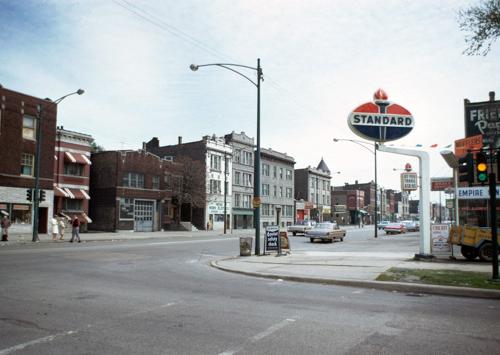
Judy Hough, Lily (Rose Rigsby) Lowell and Jimmy White talk with Studs Terkel Part 1
1968 Discussion of Division Street: America
-
Judy Hough, Lily (Rose Rigsby) Lowell and Jimmy White talk with Studs Terkel Part 2
1968 Discussion of Division Street: America
-
Discussing the book "Guardian Angel" with Sara Paretsky
Jan. 29, 1992 A conversation about the seventh installment in the V.I. Warshawski mystery series.*Please note: some sections have been edited out from the original recording due to copyright considerations
-
Kenneth and Sarah Vaux discuss landscape architect Calvert Vaux
Mar. 19, 1982 Kenneth and Sarah Vaux discuss the father of landscape architecture Calvert Vaux and his influence on other landscape architects including Frederick Law Olmsted. Kenneth and Sarah focus their discussion on public parks and how these parks were a response against industrialization and served to provide a space for the working class to gather in nature. This program includes an excerpt of an interview with labor activist Edward Sadlowski discussing the working class’ interest in nature, books, theater, and music.
-
Richard Cahan and John Vinci discuss architectural preservation
Oct. 10, 1994 Authors Richard Cahan and John Vinci discuss architecture and photography in Chicago, focusing on the works of Richard Nickel and Louis Sullivan. Includes an interview with Richard Nickel.
-
David Farber discusses his book "Chicago '68"
May. 16, 1988 David Farber discusses his book “Chicago ‘68” and reflects on the 1968 Democratic Convention in Chicago. Studs plays “I Ain’t Marching Anymore” - Phil Ochs (1965) and “Days of Decision” - Phil Ochs (1965). This interview features a clip of a previous interview Studs had with an unnamed Chicago police officer who describes his opinion on police brutality.
-
Discussing the young vs. adults with teenagers at Saint Timothy Elementary School
1970 Studs Terkel presents a roundtable conversation with children ranging from ages 13-17. They discuss relationships with their family members, other students, growing up in Chicago, and race relations in the U.S.
-
-
Barry Byrne discusses architecture of Chicago ; part 1
1970 Barry Byrne, architect, recalls his life and how architecture has changed in his lifetime. He discusses his childhood, the death of his father, the Prairie School, and his time working under Frank Lloyd Wright. Byrne also touches on how Chicago's cityscape has changed such as the disappearance of small neighborhoods.