Listen to New Voices on Studs Terkel our partnership with 826CHI-here! Read the Story


Showing 11 - 20 of 54 results
-
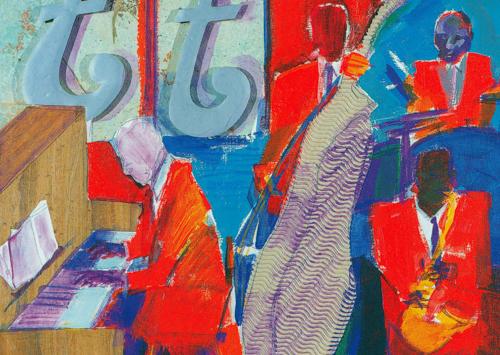
Discussing the book "Jazz Piano: History and Development" with Billy Taylor
Nov. 16, 1982 Studs Terkel and Billy Taylor discuss the book "Jazz Piano: History and Development". They discuss jazz musicians and the history of jazz music. Includes excerpts of drums, piano, and orchestra playing in the background.
-

Virgil Thomson discusses his career as a music composer for opera and film
Jul. 24, 1973 Studs interview with Virgil Thomson about his career as a music composer. Thomson shares his work with Gertrude Stein in operas "Mother of Us All" and "Four Saints In Three Acts." He discusses his preference for black artists. Thomson describes his work in documentary films such as "Plow That Broke the Plains." He also shares information about the cajun music "Squeeze Box" in the film "Louisiana Story." This edited version does not include the music pieces.
-
Max Morath discusses his career and jazz music
Jun. 18, 1970 Max Morath discusses his career, jazz music, and history.
-
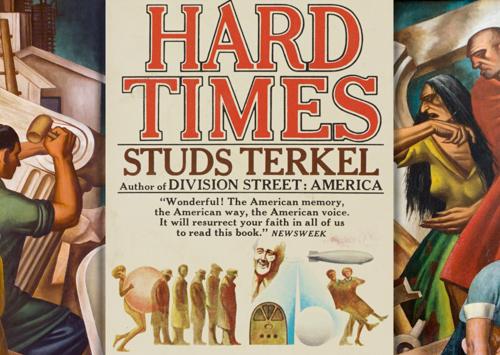
Terkel comments and presents "Hard Times: an Oral History of the Great Depression"; Chapter 3
1971 Presenting "Hard Times: An Oral History of the Great Depression" Chapter 3: Big Business & A Portrait of Two Women. William Benton credits Pepsodent's survival of the Great Depression to Amos 'n Andy. Arthur Robertson talks about the initial aftermath of the 1929 crash as a Wall Street businessman. Sidney Weinberg discusses the confusion on Wall Street after the crash and praises FDR's programs. Jimmy McPartland talks about the importance of working and the success of WPA to boost morale.
-
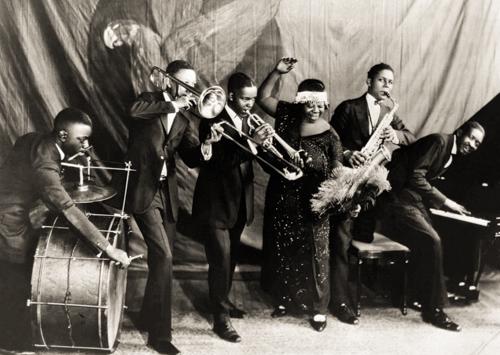
Sandra Lieb discusses the book "Mother of the Blues: A Study of Ma Rainey"
Jan. 12, 1982 Sandra Lieb discusses the book "Mother of the Blues: A Study of Ma Rainey." Includes songs sung by Ma Rainey such as "Runaway Blues," "See See Rider," "Moonshine Blues," and "Oh, Papa Blues." Includes poem "Ma Rainey" by Sterling Brown. Includes "Oh, Daddy," by Ethel Waters. Includes "Young Woman's Blues" by Bessie Smith.
-
Terkel comments and presents "A search for innocence" a monologue with Rose a teenager of St. Timothy Episcopal Church, Chicago
1970 Studs Terkel discusses life in the Vietnam era with children from Father Charles Pond's St. Timothy Episcopal Church Parish in Chicago. Rose is the featured speaker at 16 years of age she is no longer in school but is very well spoken. Acknowledging that people with mental illnesses are not always able to make sound decisions which are needed for individuals to make group decisions. She sees one of the problems in the world being that people are losing their individuality to a group mentality.
-
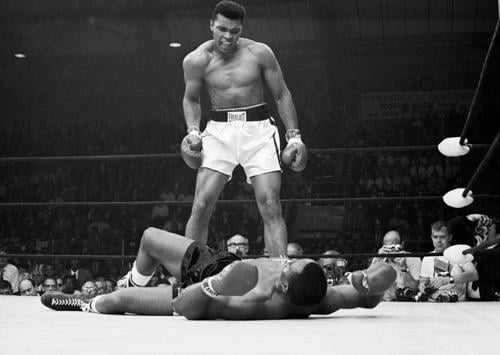
Muhammad Ali discusses his book "The Greatest: My Own Story"
Nov. 26, 1975 Content Warning: This conversation includes racially and/or culturally derogatory language and/or negative depictions of Black and Indigenous people of color, women, and LGBTQI+ individuals. Rather than remove this content, we present it in the context of twentieth-century social history to acknowledge and learn from its impact and to inspire awareness and discussion. Muhammad Ali discusses his book "The Greatest: My Own Story," touching on topics including his childhood and family, conversion to Islam, stance on the Vietnam War, and experiences in jail.
-
Dr. Samual Floyd talks with Studs Terkel
Mar. 17, 1988 Interviewing author and scholar of Black music Dr. Samuel Floyd, Jr.
-
-