Listen to New Voices on Studs Terkel our partnership with 826CHI-here! Read the Story


Showing 1 - 10 of 18 results
-

Harrison Evans Salisbury discusses his book "A Time of Change"
Mar. 18, 1988 His experiences as a journalist are what's covered in Harrison Evans Salisbury's book, "A Time of Change: A Reporter's Tale of Our Time". Salisbury believed as a reporter, one truly needed to be at the event, in order to obtain the true story. Once Salisbury questioned if he was living in America because he was asked to switch rooms at a hotel in Birmingham, only to find out later that there were special, bugged rooms for reporters.
-
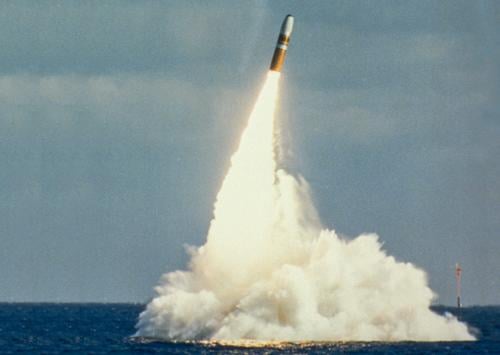
Discussing a rebuttal to editorials opposing the nuclear arms freeze
Oct. 27, 1982 Presenting a rebuttal to editorials opposing the nuclear arms freeze with Dr. Jack Geiger, Dr. George Kistiakowsky, Dr. Herbert (Peter) Schoville and Dr. Kosta Tsipis of MIT.
-
Andrew Patner discusses his book, "I.F. Stone: A Portrait" and Stone's career as a newspaper man
Mar. 10, 1988 Studs Terkel interview with Andrew Patner about his book, "I.F. Stone: A Portrait" that speaks to the life of newspaper man Izzy Stone. Patner describes his preparation and efforts to interview Stone. They discuss Stones incredible work in spite of the fact that he was nearly blind and deaf. Both Studs and Patner read excerpts from the book. They discuss Stones knowledge of literature, Greek philosophy, the Vietnam War, and his ability to speak French. Studs quotes a review of Patner's book from a newspaper. Patner also quotes Izzy Stone comments about Socrates.
-
Dr. Helen Caldicott discusses the ill-effects of a nuclear bomb going off
Apr. 7, 1981 The world spends 600 billon dollars on the arms race, which is rather puzzling to Dr. Helen Caldicott when 2/3 of the world's children are starving. Caldicott explained if a bomb went off in Chicago, there'd be a crater a half a mile wide and 300 feet deep. In addition, 90% of the people will be dead, some from being vaporized.
-
Gordon Adams discusses his book, "The Iron Triangle: The Politics of Defense Contracting"
Nov. 1, 1981 Gordon Adams, political scientist, discusses his book, "The Iron Triangle: The Politics of Defense Contracting." He explores the military budget how it is a drain on the taxpayer's money. Adams explains how private contractors, such as Rockwell Corporation, enter into defense contracts and make money off the government's dependence on the military weapons.
-
Discussing the book "The American inquisition: justice and injustice in the cold war" with the author Stanley Kutler
Dec. 16, 1982 Discussing the book "The American inquisition: justice and injustice in the cold war" with the author Stanley Kutler.
-
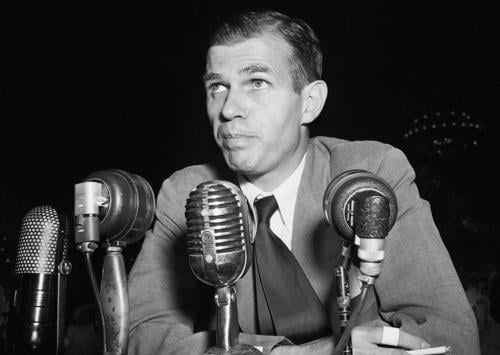
Tony Hiss discusses his book "Laughing Last"
Mar. 14, 1977 Content Warning: This conversation includes racially and/or culturally derogatory language and/or negative depictions of Black and Indigenous people of color, women, and LGBTQI+ individuals. Rather than remove this content, we present it in the context of twentieth-century social history to acknowledge and learn from its impact and to inspire awareness and discussion. The book, "Laughing Last: Alger Hiss" is the biography of Tony Hiss' father. Although Alger Hiss was convicted of perjury and did time in prison, Tony Hiss said his father, Al, was doing all right.
-
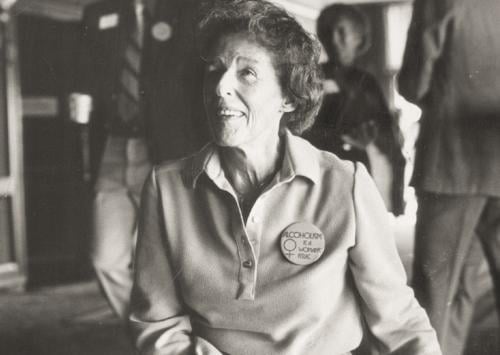
Susan Brownell Anthony discusses her book "The Ghost in My Life"
Oct. 29, 1971 Ms. Anthony, the grand-niece of Susan B. Anthony, comments on the women's liberation movement, her personal political life and her view of Christian life.
-
David Halberstam discusses his book, "The Fifties"
Jun. 11, 1993 David Halberstam, writer and historian, talks about his book, "The Fifties." The conversation includes Brown v. Board of Education, atomic weapons, the Cold War, the Korean and Vietnam Wars, consumerism, birth control, suburbs, television and the start of the counterculture. Halberstam reads several passages from his book.
-
Hamilton Fish III discusses American history
Colonel Hamilton Fish III discusses American history. Major topics include The Great Depression, Franklin D. Roosevelt, World War II, and Communism. Fish also reads a personal letter sent to him from Martin Dies, Jr. Content Warning: This conversation has the presence of outdated, biased, offensive language. Rather than remove this content, we present it in the context of twentieth-century social history to acknowledge and learn from its impact and to inspire awareness and discussion.