Listen to New Voices on Studs Terkel our partnership with 826CHI-here! Read the Story


Showing 11 - 20 of 64 results
-
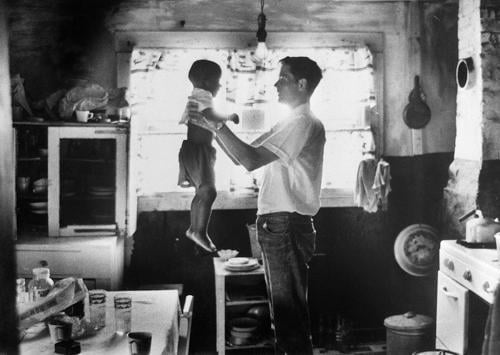
Paul Cowan discusses his book "The Making of an UnAmerican", part 2
May. 4, 1970 Writer and activist Paul Cowan discusses the Peace Corps and his book "The Making of an UnAmerican", part 2
-
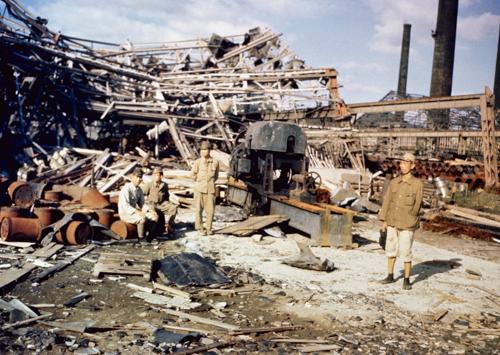
William Craig talks to Studs Terkel
William Craig discusses his book "The Fall of Japan: The Final Weeks of World War II In the Pacific." He speaks mostly on the atomic bombings of Hiroshima and Nagasaki. Includes several excerpts from the book.
-
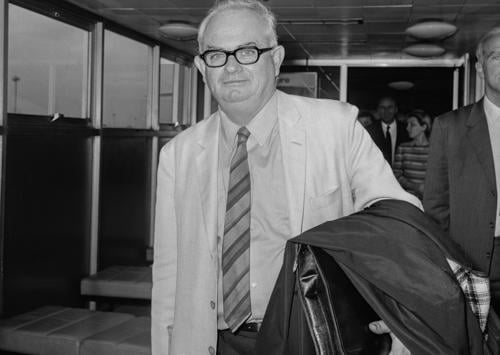
Wilfred Burchett discusses about his career on journalism
Oct. 24, 1977 Wilfred Burchett (an Australian journalist) discusses his journalism career. He was reporting conflicts in Asia (North Korea, Vietnam, China and Japan) and their Communist supporters. He speaks briefly about his experiences in Nazi Germany and concentration camps. Towards the end of the interview he talks about his interest in learning and reporting more about the new euro-communism (prominent in Italy, Spain and France).
-

William Shirer discusses his book “Twentieth Century Journey: 1930-1940: Volume II”
Jun. 1, 1984 Discussing the book "Twentieth century journey: 1930-1940" with the author William Shirer.
-
Fred Freed discusses the atom bomb
Author Fred Freed discusses the history of the atom bomb, its impact on the world, and the scientists involved in its making. He also touches on Japan during World War II and the bombings of Hiroshima and Nagasaki.
-
John Tateishi talks about his book "And Justice for All"
Jun. 22, 1984 Tateishi discusses his collection of oral histories by Japanese-Americans who were interned in 1942. Includes excerpts from Minoru Yasui, Yoriko Hohri (featured in "The Good War"), Peter Ota and a friend of Studs' who was ordered to terrorize Japanese-Americans as part of his military duty.
-
Father Roy Bourgeois discusses why the School of the Americas must be closed down
Mar. 24, 1994 Father Roy Bourgeois travels the country, talking to groups of people who aren't aware that their tax dollars go to fund the School of the Americas. Bourgeois discovered that money provided was for military weapons & for the training of soldiers to torture and to kill people of Latin American countries.
-
Raymond Bonner discusses his book "Waltzing with a Dictator: The Marcos and The Making of American Policy"
May. 21, 1987 Interviewing author Raymond Bonner on American foreign policy, America’s relationship with dictators, and the rise of the Marcos family. Includes a test tone lasting about 30 seconds. Content Warning: This conversation includes racially and/or culturally derogatory language and/or negative depictions of Black and Indigenous people of color, women, and LGBTQI+ individuals. Rather than remove this content, we present it in the context of twentieth-century social history to acknowledge and learn from its impact and to inspire awareness and discussion.
-
George Feifer discusses his book “Tennozan”
Jun. 30, 1992 Journalist, novelist, and historian George Feifer discusses his book “Tennozan,” focusing on Okinawa Island during World War II and the impact of the atomic bomb. Includes a 20 second test tone. Content Warning: This conversation includes racially and/or culturally derogatory language and/or negative depictions of Black and Indigenous people of color, women, and LGBTQI+ individuals. Rather than remove this content, we present it in the context of twentieth-century social history to acknowledge and learn from its impact and to inspire awareness and discussion.
-
Laurence Shoup discusses his book, "The Carter Presidency and Beyond: Power and Politics in the 1980s"
1970 Author Laurence Shoup discusses his book, "The Carter Presidency and Beyond: Power and Politics in the 1980s," and explains how President Carter came to be elected. He describes the Trilateral Commission and other groups created by corporations and the richest American families to lobby. the government. He also discusses the Carter presidency and his double-dealing with major issues such as unions and regulating big businesses.