Listen to New Voices on Studs Terkel our partnership with 826CHI-here! Read the Story


Showing 111 - 120 of 182 results
-

A conversation with May Sarton
Dec. 29, 1976 A 1976 interview with the feminist novelist and poet is rebroadcast after her passing in 1995.*Please note: some sections have been edited out from the original recording due to copyright considerations
-
Jane Kennedy talks with Studs Terkel
Oct. 14, 1971 Jane Kennedy talks about her political views and her view of society as a whole. She also discusses her experience in an all women's prison and how the prison system dehumanizes the inmates.
-
Jane Kennedy talks about her anti-war activism, crimes and experience in prison
Nov. 6, 1975 Jane Kennedy (part of the group Beaver 55) went to prison for the scrambling of magnetic tapes at the Dow Chemical napalm producing plant in Midland, Michigan, and, a week later, the destruction of draft files in Indianapolis, Indiana. Both companies were profited from the Vietnam War.
-
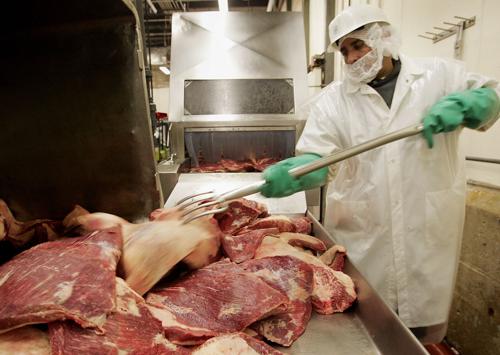
Barbara Kopple discusses her documentary "American Dream"
Mar. 20, 1992 Academy Award winning documentarian Barbara Kopple talks with Studs about her documentary "American Dream" and the battle fought and lost by union workers in Austin, Minnesota during the mid-80s. They set the backdrop in the small, tight-knit community that Hormel Foods had such a profound impact on, how the UFCW international union declined to support the local union, the gripping dynamics between family members who crossed picket lines, and the healing that occurred when the film was screened in the town several years later.
-
Juliet Mitchell discusses women, family, and oppression
Apr. 25, 1971 An interview with teacher and lecturer, Juliet Mitchell, who is a Marxist. She shares her support for the women's movement and talks about issues that affect women especially gender inequality. Juliet also refers to some comparisons between British and American women's movement.
-
William Stringfellow discusses politics, race, and theology
Interviewing William Stringfellow, American lawyer and activist. He discusses various topics including religion, social issues, and activism. Includes an interview with Cora Weiss. Content Warning: This conversation has the presence of outdated, biased, offensive language. Rather than remove this content, we present it in the context of twentieth-century social history to acknowledge and learn from its impact and to inspire awareness and discussion.
-
Lillian Smith discusses reactions to her books and writings
Lillian Smith explores the responses she received from her books that address racial prejudice and discrimination, especially in the south.
-
-
Studs Terkel discusses songs about domestic violence against women
Aug. 5, 1981 Terkel presents songs that discuss the subject of domestic violence against women. Songs range from ballads in musicals, to jazz torch songs, to popular music at the time.
-
Dr. Beatrice Tucker, Sheri Daniels, and Barbara Brasa discuss issues of training and legality in the midwifery profession
Mar. 15, 1978 CONTENT WARNING: This conversation has the presence of outdated, biased, offensive language. Rather than remove this content, we present it in the context of twentieth-century social history to acknowledge and learn from its impact and to inspire awareness and discussion.