Listen to New Voices on Studs Terkel our partnership with 826CHI-here! Read the Story


Showing 11 - 20 of 20 results
-

Jill Tweedie discusses and reads from her book “In the Name of Love” with Alan Brien
British feminist and journalist Jill Tweedie discusses and reads from her book “In the Name of Love” with British journalist and humorist Alan Brien. Tweedie explores the scientific and psychological nature of what it means to “love” and how this differs from passion and romance. Studs plays "Loveless Love" - Billie Holiday (1940) and "Douce Dame Jolie" - Roland Hayes (1966).
-
William Gibson discusses writing plays
1969 Now being a professional playwright, William Gibson talked about being able to write one of his plays in 8 days. A lot of the discussion is about his play, "The Miracle Worker". After reading one of Annie Sullivan's letters, and learning about a battle royale that Sullivan had with Helen Keller, Gibson envisioned what that battle royale would look like. It became a now famous part of the play.
-
Christine Fox, Annie Merrill and Jennie Wilkes discuss their work and upbringing in England
1970 Christine Fox, Annie Merrill and Jennie Wilkes discuss sexism in the television industry, their upbringings, and what life is like in England for young women. This is the first of two interviews, four years apart, with these women. 1965631-3-1 is the follow up.
-
Ellen Goodman and Betty Friedan discuss the women's movement and feminism
Oct. 15, 1981 Discussing the women's movement, feminism, and the books, "At Large," with its author, journalist Ellen Goodman, and "The Second Stage" with its author, feminist Betty Friedan.
-
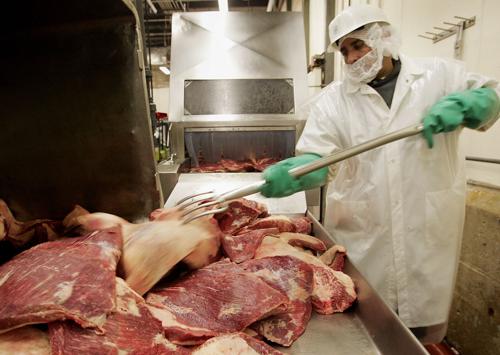
Barbara Kopple discusses her documentary "American Dream"
Mar. 20, 1992 Academy Award winning documentarian Barbara Kopple talks with Studs about her documentary "American Dream" and the battle fought and lost by union workers in Austin, Minnesota during the mid-80s. They set the backdrop in the small, tight-knit community that Hormel Foods had such a profound impact on, how the UFCW international union declined to support the local union, the gripping dynamics between family members who crossed picket lines, and the healing that occurred when the film was screened in the town several years later.
-
Juliet Mitchell discusses women, family, and oppression
Apr. 25, 1971 An interview with teacher and lecturer, Juliet Mitchell, who is a Marxist. She shares her support for the women's movement and talks about issues that affect women especially gender inequality. Juliet also refers to some comparisons between British and American women's movement.
-
A conversation with Shana Alexander
Nov. 30, 1976 The journalist discusses her career in magazines and her time on the 60 Minutes debate segment, Point-Counterpoint. She goes on to discuss how being a woman has informed her professional life, further explored in her book, Talking Woman.*Please note: some sections have been edited out from the original recording due to copyright considerations
-
-
Grace Halsell discusses her books "Soul Sister" and "Bessie Yellowhair"
Dec. 21, 1973 With both books "Soul Sister" and "Bessie Yellowhair" , Grace Halsell shares her experiences when she posed as both a Black woman and a Navajo Indian. According to Halsell, the only differences between white and Black people, were the color of people's skin. Halsell also explained that it was psychologically harder to be play the part of a Navajo Indian being a servant to a white family.
-
Helen Vlachos discusses her career and her book "House Arrest"
1970 In 1967, because Helen Vlachos spoke freely and called someone in the junta a clown, she was placed under house arrest. Artists took part in a type of silent resistance, as there was no new music, no new paintings, no new poems or writings that were created. Freedom isn't allowed, explained Vlachos, as people aren't allowed to use their own minds.