Listen to New Voices on Studs Terkel our partnership with 826CHI-here! Read the Story


Showing 171 - 180 of 271 results
-

Interview with Johnny, Frankie, Paul and Fred Christy ; part 1
1968 Interviewing Johnny, Frankie, Paul and Fred Christy. This interview is done in two parts.
-
Interview with Johnny, Frankie, Paul and Fred Christy ; part 2
1968 Interviewing Johnny, Frankie, Paul and Fred Christy. This interview is done in two parts.
-
Interviewing ex-convict turned probation officer, writer and lecturer Albert Race Sample
Dec. 4, 1984 Discussing the book "Race hoss: big Emma's boy" with the author Albert Race Sample. Includes Sample reading a section of the book.
-
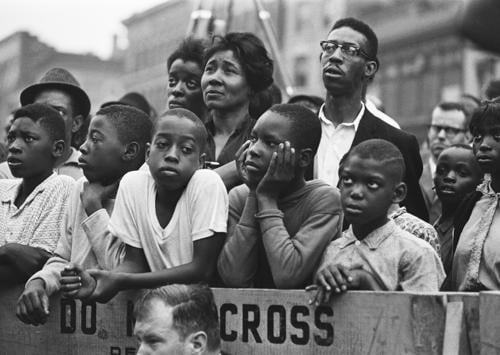
Studs Terkel interviews Professor Charles V. Hamilton on his book written with Stokely Carmichael entitled "Black Power: Politics of Liberation in America" ; part 1
Nov. 21, 1967 Using the backdrop of James Baldwin's "Nobody Knows My Name" and Baldwin's feelings that Blacks were ashamed of where they came from, Terkel interviews Professor and Chairman of the Political Science Department of Roosevelt University on his book coauthored with Stokely Carmichael entitled" Black Power: Politics of Liberation in America". Hamilton states that Blacks were taught to hate themselves and leave school believing that. Institutional racism and the deliberate oppression it creates, holds blacks back. Blacks are left out of crucial decision making processes that concern them.
-
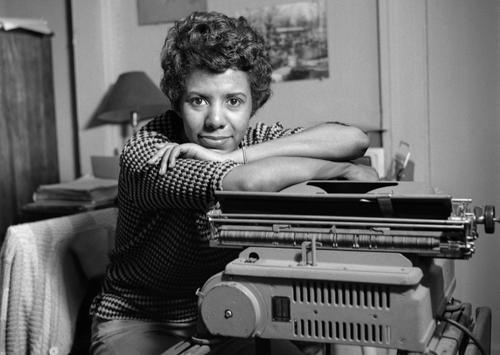
Lorraine Hansberry discusses her play "A Raisin in the Sun"
May. 12, 1959 Playwright Lorraine Hansberry discusses her play "A Raisin in the Sun" and theater in general; last 10 minutes is a reading of "Chicago: South Side Summers" from "To Be Young, Gifted, and Black." Orginal air date is 05/12/1959
-
-
-
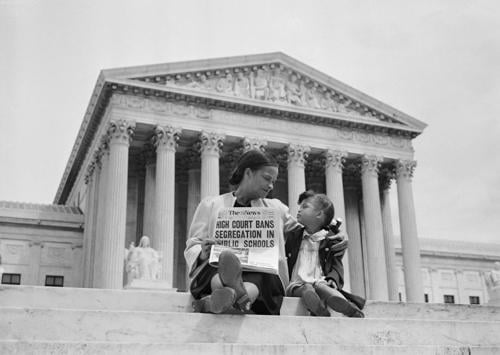
Ira B. Harkey discusses the south, civil rights, race relations, racism, his newspaper, and his career ; part 1
1966 Ira B. Harkey discusses the south, civil rights, race relations, racism, his newspaper, and his career. Includes Ira Harkey reading his writing from his newspaper the Mississippi "Chronicle-Star."
-
James McPherson discusses his book "Battle Cry of Freedom: The Civil War Era" ; part 1
Jun. 6, 1989 Historian James McPherson discusses the his book, "Battle Cry of Freedom: The Civil War Era." McPerson explores the American Civil War and talks about some Civil War music. He also discusses the reasoning behind the Civil War and some of the key figures during that time and how many songs came to be written about the battles and leaders.
-
James McPherson discusses his book "Battle Cry of Freedom: The Civil War Era" ; part 2
Jun. 6, 1989 Historian James McPherson discusses the his book, "Battle Cry of Freedom: The Civil War Era." McPerson explores the American Civil War and introduces some Civil War music. He talks about black soldiers, photography, and reconstruction. Content Warning: This conversation has the presence of outdated, biased, offensive language. Rather than remove this content, we present it in the context of twentieth-century social history to acknowledge and learn from its impact and to inspire awareness and discussion.