Listen to New Voices on Studs Terkel our partnership with 826CHI-here! Read the Story


Showing 21 - 30 of 117 results
-
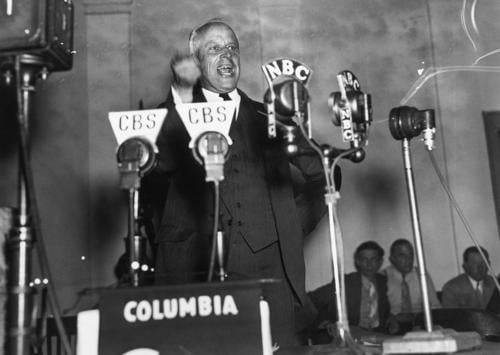
Norman Thomas discusses social progress ; part 2
Dec. 30, 1964 Socialist Party leader and Presbyterian minister Norman Thomas discusses social progress, his political views, and where society is headed with Studs Terkel. This is the final part of his interview.
-

Gordon Zahn discusses his book "In Solitary Witness" ; part 2
Jan. 15, 1965 Gordon Zahn continues to talk about his book, "In Solitary Witness: The Life and Death of Franz Jagerstatter". When doing his research for the book, it puzzled Zahn to find out that very few young people in Jaggerstatt's home village knew who Franz Jaggerstatt was. Zahn explained Jaggerstatt knew he was doing the right thing by objecting to Hitler's army because a Catholic priest had done the same thing.
-
Joshua Rubenstein discusses his book Tangled Loyalties: The Life and Times of Ilya Ehrenburg"
Sep. 25, 1996 Joshua Rubenstein discusses his book "Tangled Loyalties: The Life and Times of Ilya Ehrenburg" and the importance of Ehrenburg during the Stalin regime.
-
Discussing Ukrainian music with Oleh Saciuk
Oct. 25, 1979 Studs Terkel discussing Ukrainian music with Oleh Saciuk. Includes instrumental music excerpts.
-

Alexander Tcherepnin discusses his career
Nov. 10, 1959 Russian composer Alexander Tcherepnin discusses his early upbringing, training, and composing bagatelles in Saint Petersburg, as well as the influence of his composer father, Benois family relatives, Russian/Asian/European cultural influence, electronic music.
-
Studs Terkel discusses "How I Won the War" with the film's creator, Richard Lester, in London, England
Studs Terkel and Richard Lester discuss the impact of "How I Won the War" on both audiences and critics. Insight is offered on the unjustness of even just wars like World War Two. The film offers insight into the mindless acceptance of death. Terkel then closes the show with his impressions of London during his stay that includes a mention of race, culture, nightlife, and sports.
-
-
-
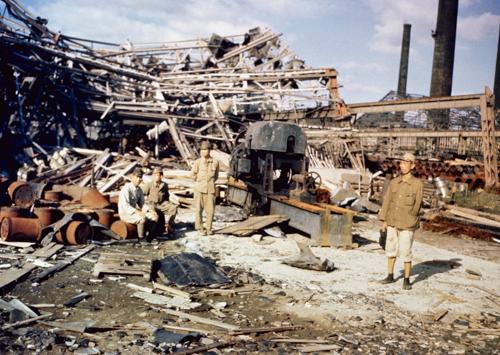
William Craig talks to Studs Terkel
William Craig discusses his book "The Fall of Japan: The Final Weeks of World War II In the Pacific." He speaks mostly on the atomic bombings of Hiroshima and Nagasaki. Includes several excerpts from the book.
-
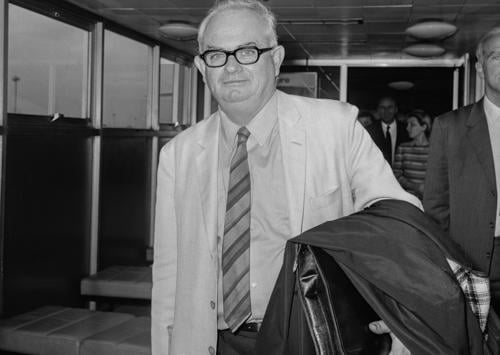
Wilfred Burchett discusses about his career on journalism
Oct. 24, 1977 Wilfred Burchett (an Australian journalist) discusses his journalism career. He was reporting conflicts in Asia (North Korea, Vietnam, China and Japan) and their Communist supporters. He speaks briefly about his experiences in Nazi Germany and concentration camps. Towards the end of the interview he talks about his interest in learning and reporting more about the new euro-communism (prominent in Italy, Spain and France).