Listen to New Voices on Studs Terkel our partnership with 826CHI-here! Read the Story


Showing 141 - 150 of 199 results
-

Jack Nelson discusses his book "Hunger for Justice: The Politics of Food and Faith"
Jan. 31, 1980 Discussing the book, "Hunger for Justice: The Politics of Food and Faith," and interviewing the author Jack Nelson.
-
Studs Terkel continues his interview with Erich Luth in Hamburg discussing the aftermath of the war on Germany's youth ; part 3
1967 There is a silence in the tape from 3:48 to 3:58 due to Studs changing the tape. It should be noted that the word "clever" in this discussion means intelligent. The interview concludes at 35:36 where Studs offers his reflections on his stay. Luth is the retired Press Chief of Hamburg and has also helped with remunerations for the Jewish people in the aftermath of World War II. He has also facilitated detente between Israel and West Germany.
-

Erich Lüth talks with Studs Terkel on life under Hitler and its aftermath ; part 2
1968 Studs continues his interview with Erich Luth in Hamburg, Germany. The audio breaks at 25:23 and continues on a Sat at 25:28 till its conclusion at 35:43. Erich Luth conveys stories of humanity by both German prisoners towards Russian prisoners whose treatment was dictated by the Nazi party to not offer any winter clothing or shoes to provide comfort. The German laborers provided a human solidarity that brought them food, clothes, and soap.
-
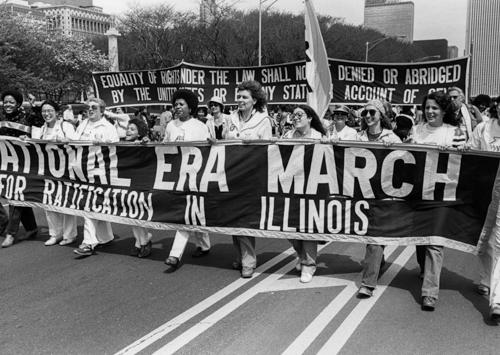
Marianne Bell, Shirley Wallace and Illinois Rep. Susan Catania discuss the Equal Rights Amendment
Jun. 2, 1982 Interviewing Equal Rights Amendment activists, Marianne Bell and Shirley Wallace, who were fasting as a political statement, and Illinois state representative and outspoken advocate of ERA, Susan Cantania.
-
Excerpts from the Division Street recordings Oral Histories, regarding race, religion and humanity
1970 Studs presents excerpts from the Division Street recordings, regarding race, religion and humanity.
-
Jane Kennedy talks with Studs Terkel
Oct. 14, 1971 Jane Kennedy talks about her political views and her view of society as a whole. She also discusses her experience in an all women's prison and how the prison system dehumanizes the inmates.
-
A conversation with Samuel Pisar
Aug. 1, 1980 The Polish-American lawyer, author, and Holocaust survivor reflects on his time in concentration camps during World War II, as depicted in his memoir, Of Blood and Hope.*Please note: some sections have been edited out from the original recording due to copyright considerations
-
Interviewing Lawrence Foster
Aug. 27, 1981 Celibacy, new religions, group marriages, and unorthodox lifestyles are covered in Lawrence Foster's book, Religion and Sexuality: the Shakers, the Mormons, and the Oneida Community. According to the author, these things all came about because people were looking for something that was missing in their lives.*Please note: some sections have been edited out from the original recording due to copyright considerations
-
William Stringfellow discusses politics, race, and theology
Interviewing William Stringfellow, American lawyer and activist. He discusses various topics including religion, social issues, and activism. Includes an interview with Cora Weiss. Content Warning: This conversation has the presence of outdated, biased, offensive language. Rather than remove this content, we present it in the context of twentieth-century social history to acknowledge and learn from its impact and to inspire awareness and discussion.
-
Horace Cayton discusses his book "Long Old Road" ; part 2
Sep. 7, 1966 Content Warning: This conversation has the presence of outdated, biased, offensive language. Rather than remove this content, we present it in the context of twentieth-century social history to acknowledge and learn from its impact and to inspire awareness and discussion. Loneliness and hardships of both fitting in and finding a job are covered in the continuation of Horace Cayton's, "Long Old Road: An Autobiography." By living in a middle class home in Seattle with a full time Japanese servant, Cayton was seen as better off than most people.