Listen to New Voices on Studs Terkel our partnership with 826CHI-here! Read the Story


Showing 11 - 20 of 79 results
-

John Eliot Gardiner discusses his career in Baroque music as conductor of the Monteverdi Choir and the English Baroque Soloist
Feb. 20, 1989 Studs interviews John Eliot Gardiner about his career in baroque music and his background and interests. Studs announces that Gardiner is performing at Orchestra Hall in Chicago. Gardiner explains the instruments that his group uses and how they are different and capture the original sounds of pieces. He also describes the history and time period of baroque music. Gardiner explains various pieces that the choir performs such as Handel's "Israel in Egypt" and Henry Purcell's "King Arthur." The musical numbers are removed from this edited version of the original recording.
-
Phyl Garland discusses themes from her book "Sound of Soul" and the black influence on music ; part 1
Nov. 25, 1968 Studs interviews Phyl Garland about her book "Sound of Soul." They discuss the history of music and how black music influenced white music. Studs reads a quote from her book where she quoted Lerone Bennett. Garland also reads from her book a few times. They discuss how music changed over time for blacks from spirituals to slave songs to the blues because it was a reflection of their lives. Garland explains how blacks used music to help them through their trials and frustrations.
-
Phyl Garland discusses her book "Sound of Soul" and the history of black music in America ; part 2
Nov. 25, 1968 Studs interviews Phyl Garland about her book "Sound of Soul." They discuss various musicians that she mentions in her book and their influence on black music. Garland explains the music of young black artists and how commercialization of music gave blacks an opportunity that they would not have had otherwise. Garland talks about how Fannie Lou Hamer used music to express her message in the Civil Rights Movement and as a women's rights activist. Studs and Garland discuss various black female artists and their music.
-
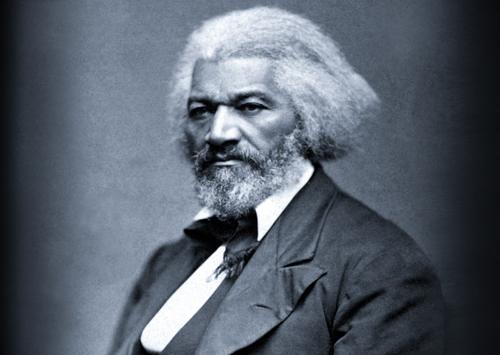
Studs Terkel presents a program in honor of the birthday of abolitionist and African American leader Frederick Douglass
Feb. 15, 1971 Studs Terkel presents a program in honor of the birthday of abolitionist and African American leader Frederick Douglass, including excepts from Terkel's 1964 interview with African-American scholar, author and social historian Lerone Bennett. Terkel reads at length from Douglass' autobiography, "My Bondage and My Freedom," focusing on Douglass' interactions with slave owners Hugh and Sophia Auld.
-
Wolfgang Rubsam discusses his career as an organist and Associate Professor of church music at Northwestern University
Mar. 1, 1984 Studs interviews Wolfgang Rubsam who is performing at the St. Clements Catholic Church in Chicago. They discuss the sounds of the harpsichord, piano, and organ. Rubsam explains how the organ builder and the acoustics in a church affects the sound of the organ. Rubsam talks a little about various teachers he has had and the things he learned from each. The musical numbers are removed from this edited version of the original recording.
-
Hugh Wiley Hitchcock and Stanley Sadie discussing the book "The New Grove Dictionary of American Music"
Nov. 4, 1986 Discussing the book "The New Grove Dictionary of American Music". They talk about American music and musicians of all kinds and from different periods. Includes Charles Ive's song "At the River" sung by Cleo Laine in the middle of the program.
-
Bobby Short discusses his career as a vocalist, pianist, and song writer
Feb. 20, 1974 Studs interviews Bobby Short, an African American composer, vocalist, and pianist. Short describes his performances and interpretations of songs by Ira Gershwin, Cole Porter, Noel Coward, and George Gershwin. Studs reads a letter written to short from Coward requesting that Short sing his songs. Studs and Bobby discuss composer and singer styles. The musical pieces are removed from this edited version of the original recording.
-
Norman Wallace discusses his music career
Jun. 8, 1980 Norman Wallace discusses his music career. Norman Wallace discusses his occupations as a pianist and a songwriter.
-
Thomas Wikman discusses Baroque music and its rise in history
Jun. 30, 1982 Studs interview with Thomas Wikman about MOB (Music of Baroque). Wikman shares historical details of the rise of Baroque music. Studs and Wikman discuss various Baroque pieces and the instruments used. Wikman describes various pieces of his work and members of his group. They discuss Baroque composers, and Wikman describes how acoustics play a role in their music selections for live performances. Studs also explores Wikman's childhood and influences to his music.
-
E.Y. (Yip) Harburg discusses songwriting and "Rhymes for the Irreverent"; part 2
Jan. 1966 E.Y. (Yip) Harburg explains how songwriting needs to use and elevate street language to be successful, why he likes rainbows, and what creators of art and music owe the world. He also reads from his book "Rhymes for the Irreverent". Music is played from Finian's Rainbow: "When the Idle Poor Become the Idle Rich" and "How Are Things in Glocca Morra?", original Broadway cast recording. Part 2. Music has been removed from this recording for copyright reasons.