Listen to New Voices on Studs Terkel our partnership with 826CHI-here! Read the Story


Showing 31 - 40 of 136 results
-

Interview with Dr. Helen Caldicott
Mar. 8, 1984 Discussing the book "Missile Envy: The Arms Race and Nuclear War," (published by Murrow) with the author, humanist and physician Dr. Helen Caldicott. Program also includes the opening of Studs' inaugural address.
-
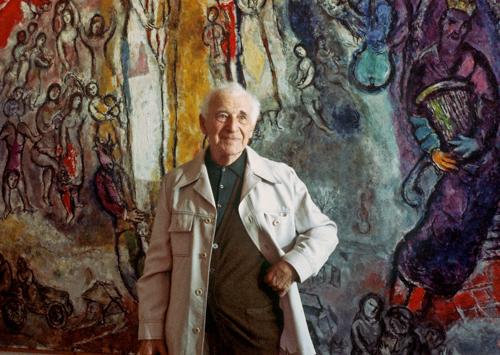
Through an interpreter, Marc Chagall discusses his approach to art and his views on people
1970 Professor John Nef explained that Marc Chagall came from an environment of nothing. From his dreams, Chagall created joy in his pieces of art. Nef lets the audience know that Chagall said he still has a lot of unfinished artwork to complete. The 3rd and last part of this program is a colloquy. Again, through another translator, Chagall’s words are translated. Chagall said his life’s purpose is art. Chagall said any man could be a bad artist but that no man can be an artist unless he is in fact, a good man.
-
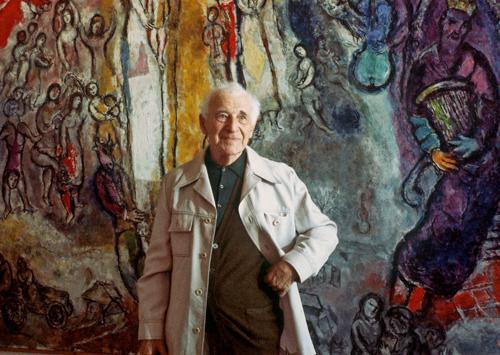
Representatives discuss the Center for Human Understanding ; part 2
May. 5, 1963 Representatives discuss the Center for Human Understanding (part 2 of 2). Center for Human Understanding conference in Washington D.C. Includes interview with [Raghav Heer]. Interviews [Chaumont Hosie]. Note: lengthy interviews in French (translated).
-
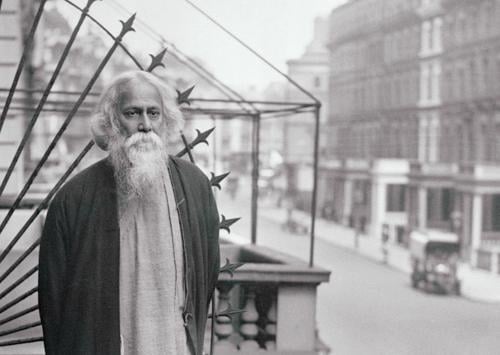
Amiya Chakravarty discusses Rabindranath Tagore
Jun. 11, 1965 Amiya Chakravarty discusses Rabindranath Tagore. Includes song and poem by Rabindranath Tagore.
-
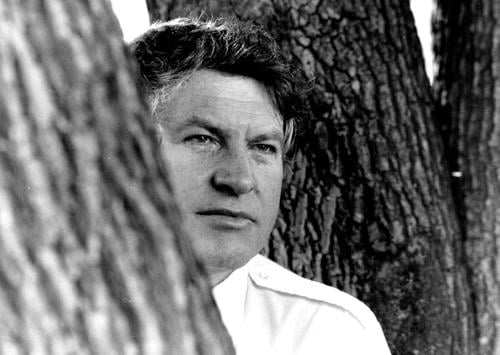
Interview with Dr. Robert M. Bowman
1980 Interviewing the President of the Institute for Space and Security Studies, peace activist Dr. Robert M. Bowman.
-
Robert Cromie reads from and discusses his book "Where the Steel Winds Blow"
1968 "Where the Steel Winds Blow" is Robert Cromie's anthology of 210 war poems. With his book, Cromie wanted to point out the impact of war. There are also war-related songs throughout the program.
-
Father Jose Alas discusses his time spent in El Salvador
Oct. 7, 1985 In 1970, because he was considered a troublemaker when helping the peasants in El Salvador obtain a better life, Father Jose Alas was kidnapped by the National Guard and left for dead. Alas explains if he were to return to El Salvador, he would be killed because he is considered a traitor. Caitriona Ruane talks for a couple of minutes about her work helping the poor in the Latin American countries.
-

Jeannine Honicker discusses the health impacts of radiation and nuclear power plants
Mar. 26, 1980 Jeannine Honicker discusses the health risks associated with radiation and nuclear power plants, details of whose lawsuit was published as, "Shutdown: Nuclear Power on Trial." Topics of discussion include how her perspective on nuclear power and radiation changed after her daughter was diagnosed with leukemia and activism related to protesting nuclear power in the United States.
-
Barbara Blaine, Ruth Graff, and Nina Polcyn-Moore discuss the Catholic Worker Movement
1986 Interviewing Catholic workers Barbara Blaine, Ruth Graff, and Nina Polcyn-Moore. They discuss their lives, Catholic worker houses, and poverty. Includes an interview with Dorothy Day. Content Warning: This conversation has the presence of outdated, biased, offensive language. Rather than remove this content, we present it in the context of twentieth-century social history to acknowledge and learn from its impact and to inspire awareness and discussion.
-
Father Roy Bourgeois discusses why the School of the Americas must be closed down
Mar. 24, 1994 Father Roy Bourgeois travels the country, talking to groups of people who aren't aware that their tax dollars go to fund the School of the Americas. Bourgeois discovered that money provided was for military weapons & for the training of soldiers to torture and to kill people of Latin American countries.