Listen to New Voices on Studs Terkel our partnership with 826CHI-here! Read the Story


-
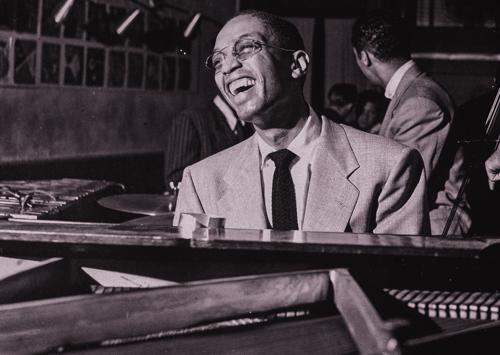
Billy Taylor discusses the role of playing jazz, being creative in your music, and the expansion of the Jazz Mobile
Aug. 28, 1980 Studs interviews Billy Taylor (Jazz pianist and commentator for Jazz Alive radio program), who discusses the creativity of jazz musicians, the Jazz Mobile, and relationships between musicians. Taylor also mentions a large variety of Jazz musician influences. Studs plays various pieces of Jazz from a diverse pool of musicians. Taylor provides details about the Jazz Mobile's traveling show and education of Jazz music. There are no music recordings in this edited version.
-
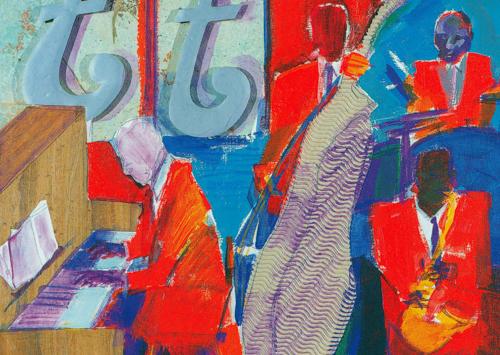
Discussing the book "Jazz Piano: History and Development" with Billy Taylor
Nov. 16, 1982 Studs Terkel and Billy Taylor discuss the book "Jazz Piano: History and Development". They discuss jazz musicians and the history of jazz music. Includes excerpts of drums, piano, and orchestra playing in the background.
-
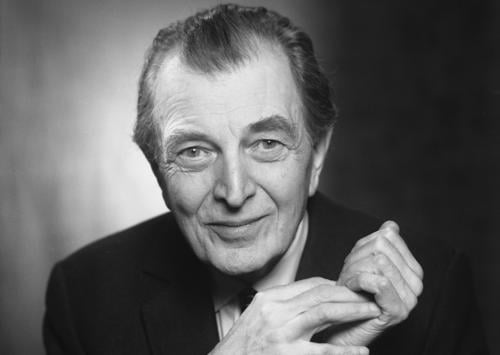
Alexander Tcherepnin discusses his childhood and career as a composer
Mar. 8, 1977 Studs interview with Alexander Tcherepnin about his compositions for opera and a variety of instrumentals. Tcherepnin shares his childhood in Saint Petersburg born into a family with a rich musical background. He also shares his opinion about how Hitler affected the opera in Europe. This edited version does not include the musical recordings played in the original version.
-

Henry Threadgill, Fred Hopkins, and Steve McCall discuss their trio jazz group, Air
Sep. 4, 1981 Studs interview of Air jazz trio with Henry Threadgill - reeds, Fred Hopkins - bass, and Steve McCall - percussion. They discuss their individual careers and the people who have influenced them. Studs quoted Nelson Algren. Studs explores the evolution of their music and how the three came together. They discuss various pieces of their music and the instruments they use. Pauses were taken for musical numbers but none were played on this recording.
-
Brick Top discusses her career, her colleagues, and the jazz scene
May. 6, 1975 Brick Top discusses her career, her colleagues, and the jazz scene.
-
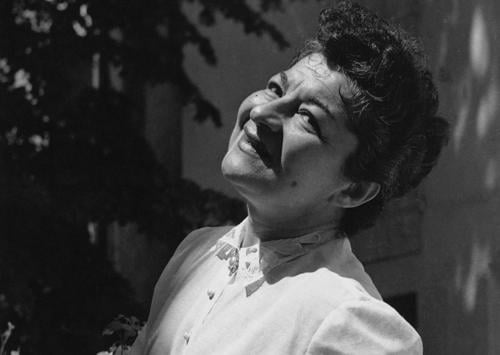
Jennie Tourel discusses her career with some comments by her accompanist Simon Sargon
Nov. 8, 1970 Jennie Tourel discusses her career with some comments by her accompanist Simon Sargon.
-
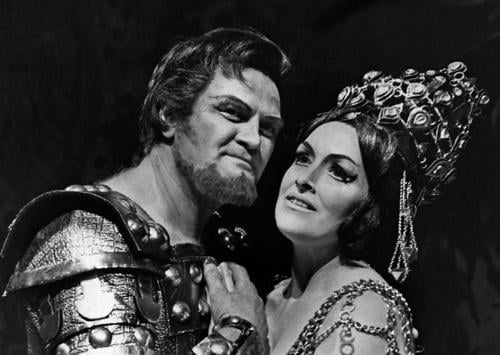
Jon Vickers discusses his career
Oct. 11, 1974 Jon Vickers discusses his career, opera music, and opera singers.
-
Wanda Wilkomirska discusses her life and music as a violinist
Apr. 14, 1981 Studs Terkel interview with Wanda Wilkomirska about her life as a violinist. They discuss her childhood and her musical family. Wilkomirska talks about the people and music that influenced her, and she describes the differences in audiences between large cities and smaller ones. She expresses her deep love for music and her need to play her music with emotion. Music performances are cut from this particular recording with Wanda Wilkomirska. Studs quotes Ray Erickson, critic from the New York Times and discusses other critiques of her work.
-
Jimmy McPartland and Buddy Tate discuss their careers as jazz musicians
Sep. 13, 1977 Jimmy McPartland and Buddy Tate share stories of working with different musicians throughout their career and explain why Kansas City musicians are recognizable from other musicians. Music is played throughout from both of the musicians: "Logan Square"- Jimmy McPartland & Art Hodes, "When I'm Blue"- Buddy Tate, "I'm Coming Virginia"- Jimmy McPartland, "Kansas City Joys"- Buddy Tate, "Singin' the Blues Till My Daddy Comes Home"- Jimmy McPartland, "Tickle Toe"- Buddy Tate, "Riverboat Shuffle"- Jimmy McPartland, "Sunday"- Buddy Tate.
-
Ernst Haefliger discusses his career
1970 Ernst Haefliger discusses the story of the Magelone songs by Brahms. He talks about his upbringing in Switzerland and his path to becoming a singer. He also discusses his interpretations of the roles he has played in various operas, like Tomino in "The Magic Flute". Music is played throughout: "Ruhe, Süssliebchen" by Brahms, "Leb denn wohl, Heimatland"by Janáček, an aria and a recitative from "St. Matthew Passion"by Bach, an aria from "The Magic Flute" by Mozart, and "Dichterliebe, Op.48" by Schumann. Music has been removed from this file for copyright reasons.