Listen to New Voices on Studs Terkel our partnership with 826CHI-here! Read the Story


Showing 1 - 10 of 334 results
-
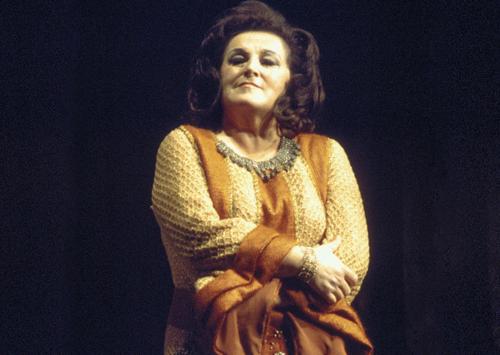
Birgit Nilsson talks about her career and her roles
Oct. 4, 1972 Birgit Nilsson talks about her career and her roles with musical interludes.
-

-
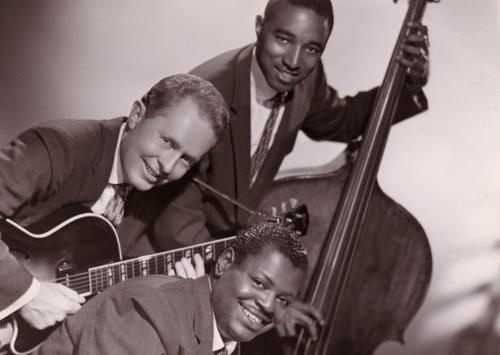
Oscar Peterson plays and discusses jazz
Sep. 8, 1961 Jazz pianist Oscar Peterson sits down with Studs Terkel to discuss historical developments in jazz piano, his own personal development as a pianist, and his experience directing a youth jazz piano school. Includes Peterson playing short excerpts from "Chicago (that toddlin' town)," "Soon," Chopin's Nocturne in E flat Major to demonstrate musical concepts.
-
-
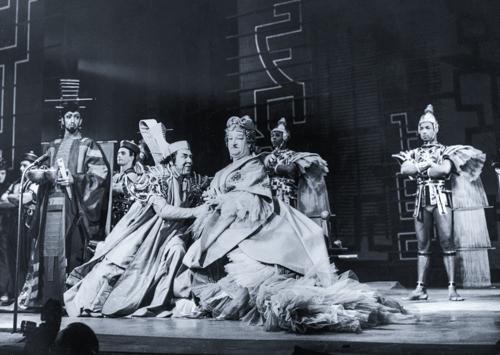
Interview with Ian Wallace
Nov. 16, 1962 British baritone Ian Wallace discusses the Glyndebourne Festival Opera. Recorded while Studs was in England.
-
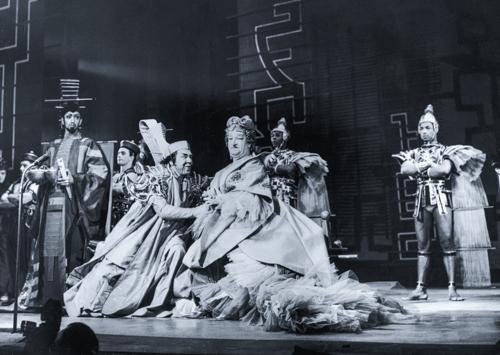
Interview with Ian Wallace
Nov. 16, 1962 British baritone Ian Wallace discusses Glyndebourne Festival Opera. Recorded while Studs was in England.
-
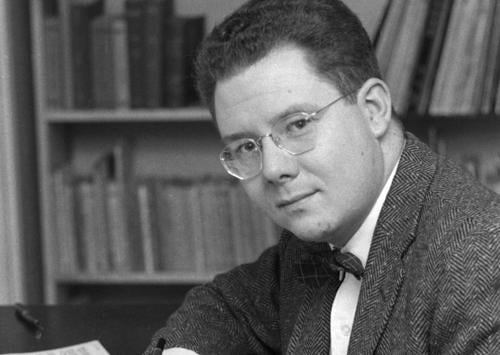
Easley Blackwood, Midwestern composer, pianist and educator at University of Chicago, discusses his music
Mar. 1, 1961 Studs and Mr. Blackwood discuss his musical theory of tonal composition, and Mr. Blackwood plays several excerpts of his piece "Chamber Work for Fourteen Winds" on the piano.
-
Easley Blackwood, Leonard Meyer and Ralph Shapey talk about standards of composition in contemporary music, part 1
1965 The program begins with an excerpt from BBC Radio about a hoax piece of music by Pietorzac (Hans Keller). Hans Keller and a friend went into studio and made noise and presented it as music. In this round table discussion the three gentlemen - all composers, musicians, and educators, discuss with Studs, contemporary music and the standards for defining a composition as music. In the second hour, they discuss what level of knowledge of music a critic should have in order to form a proper opinion of music. All animatedly offer their opinion to both the pro's and the cons.
-
Easley Blackwood, Leonard Meyer and Ralph Shapey discuss the standards of composition in contemporary music, part 2
1965 In this round table discussion the three gentlemen - all composers, musicians, and educators - discuss with Studs contemporary music and the standards for defining a composition in music. In the second hour they discuss what level of knowledge of music a critic should have in order to form a proper opinion of music. All animatedly offer their opinion to both the pro and the con. A movement of both Blackwood and Shapey compositions is played.
-
Sir Georg Solti talks with Studs Terkel
Feb. 1, 1995 Studs engages the former Chicago Symphony Orchestra conductor, Sir Georg Solti, in a wide-ranging conversation about his life and career. From his early studies in Budapest with Béla Bartók, his string of good-luck opportunities before, during, and after World War II, meeting Toscanini in Lucerne, and starting on top conducting in Frankfurt, London, and finally Chicago. He discusses his many German and European musical influences and contemporaries, and stresses the importance of education, arts funding, and hard work.