Listen to New Voices on Studs Terkel our partnership with 826CHI-here! Read the Story


Showing 41 - 50 of 57 results
-

Norman Thomas and Lillian Smith discuss dissenting ; part 2
Nov. 11, 1961 Content Warning: This conversation includes racially and/or culturally derogatory language and/or negative depictions of Black and Indigenous people of color, women, and LGBTQI+ individuals. Rather than remove this content, we present it in the context of twentieth-century social history to acknowledge and learn from its impact and to inspire awareness and discussion. Lillian Smith's father taught her that we're all human beings and that no one was better than another person.
-
Lillian Smith discusses her books; part 3
Nov. 11, 1961 Content Warning: This conversation includes racially and/or culturally derogatory language and/or negative depictions of Black and Indigenous people of color, women, and LGBTQI+ individuals. Rather than remove this content, we present it in the context of twentieth-century social history to acknowledge and learn from its impact and to inspire awareness and discussion. Lillian's Smith first book was "Strange Fruit." Smith said people that were reading that book covered up the book jacket so no one could see the title of the book.
-
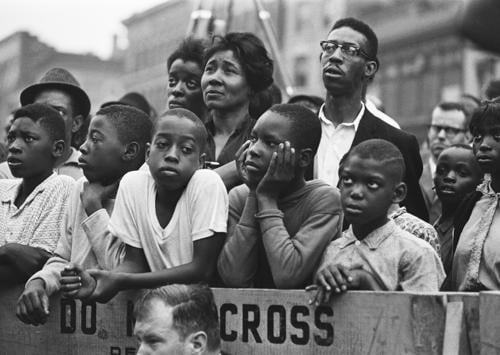
Studs Terkel interviews Professor Charles V. Hamilton on his book written with Stokely Carmichael entitled "Black Power: Politics of Liberation in America" ; part 1
Nov. 21, 1967 Using the backdrop of James Baldwin's "Nobody Knows My Name" and Baldwin's feelings that Blacks were ashamed of where they came from, Terkel interviews Professor and Chairman of the Political Science Department of Roosevelt University on his book coauthored with Stokely Carmichael entitled" Black Power: Politics of Liberation in America". Hamilton states that Blacks were taught to hate themselves and leave school believing that. Institutional racism and the deliberate oppression it creates, holds blacks back. Blacks are left out of crucial decision making processes that concern them.
-
David Halberstam discusses his book, "The Fifties"
Jun. 11, 1993 David Halberstam, writer and historian, talks about his book, "The Fifties." The conversation includes Brown v. Board of Education, atomic weapons, the Cold War, the Korean and Vietnam Wars, consumerism, birth control, suburbs, television and the start of the counterculture. Halberstam reads several passages from his book.
-
Stephen B. Oates discusses his book "Let the Trumpets Sound: A Biography of Martin Luther King"
Sep. 9, 1982 Stephen B. Oates discusses his book "Let the Trumpets Sound: A Biography of Martin Luther King;" 2 short excerpts played during the program: one of Terkel interviewing Martin Luther King and another of E.D. Nixon speaking about MLK.
-
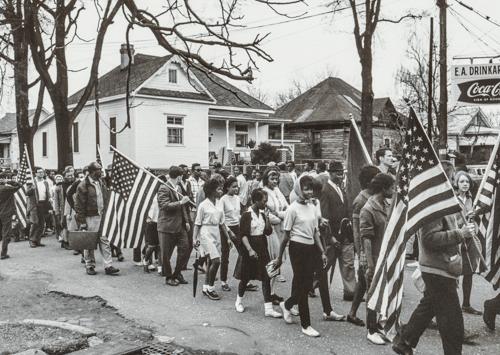
Both Kathy [no last name] and John Beecher discuss their feelings about the South ; part 4
Apr. 1, 1965 Content Warning: This conversation includes racially and/or culturally derogatory language and/or negative depictions of Black and Indigenous people of color, women, and LGBTQI+ individuals. Rather than remove this content, we present it in the context of twentieth-century social history to acknowledge and learn from its impact and to inspire awareness and discussion. After hearing Martin Luther King, Jr.
-

Nancy Milio reads from and discusses her book "9226 Kercheval"
Jun. 13, 1970 Nancy Milio's book, "9226 Kercheval: The Storefront That Did Not Burn," is about community health services offered in a ghetto on the south side of Detroit, Michigan. As a nurse, Milio knew how important it was to offer quality health services to poor and uneducated individuals. With their real names changed, Milio talks about her experiences with Mrs. Watkins, Johhnie West and others at the center.
-
Jessica Mitford discusses her book "Kind and Usual Punishment: The Prison Business"
Sep. 14, 1973 Jessica Mitford an English born author, investigative journalist, and civil rights activist discusses her book "Kind and Usual Punishment: The Prison Business,". Ms Mitford and Studs discuss her finding that prisoners were used as test subjects for drug trials and other medical research, and slave labor. Ms Mitford's book makes the argument that prisons are a governments means to making money from the prisoners they have punished. They speak about reform needed in the laws and decriminalization of many things and the abolishing of prison altogether. Ms.
-
Lillian Smith discusses reactions to her books and writings
Lillian Smith explores the responses she received from her books that address racial prejudice and discrimination, especially in the south.
-