Listen to New Voices on Studs Terkel our partnership with 826CHI-here! Read the Story


Showing 51 - 60 of 78 results
-

Studs Terkel discusses the book " Daughters and Mothers Mothers and Daughters" with author Signe Hammer
Mar. 17, 1976 Studs Terkel discusses the changing role of feminism, women and rights with author, Signe Hammer, also a teacher of a Women's School in New York that caters to women aged 24 through 78 that are seeking information on new ideas of identity. Signe Hammer interviewed three generations of women to explore the importance of supporting womanhood and how Mothers must have a strong sense of self in order to see their Daughters as also having value.
-
Susan Brownmiller discusses her book “Waverly Place” and the Lisa Steinberg child abuse case of 1987
Mar. 1, 1989 Author Susan Brownmiller discusses and reads from her book “Waverly Place”, a fictional story heavily inspired by the Lisa Steinberg child abuse case of 1987. Brownmiller discusses the details of the case and how domestic abuse, law enforcement, and the judicial system affected the outcome of this case. Studs plays "She Sits on the Table" - Tom Paxton (1980).
-
Patrick Murphy discusses the book, "Our Kindly Parent--The State".
Aug. 23, 1974 Studs Terkel discusses the book, "Our Kindly Parent--The State," and interviews the author Patrick Murphy. They discuss the inadequate juvenile justice and reform system extensively. Includes an excerpt from the interview with Lisa Richette, author of "Throw away children."
-
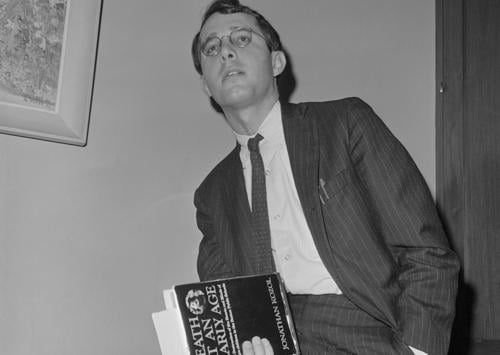
Jonathan Kozol discusses his book "Children of the Revolution: A Yankee Teacher in the Cuban Schools"
Nov. 10, 1978 Studs has a spirited discussion with Jonathan Kozol who shares his adventures and learnings in Cuba that formed the basis of his book "Children of the Revolution: A Yankee Teacher in the Cuban Schools." Kozol explains the ambitious Cuban Literacy Campaign begun in the 1960s that aimed to educate the entire population, tells of children teaching adults in remote villages by lantern light, and the unity and national pride that resulted. He and Studs explore the idea of generative words in literacy education and contemplate Kozol's hope to adapt a similar approach to American education.
-
Newton Minow discusses broadcasting
Jan. 11, 1964 Interviewing Newton Minow, Chicago lawyer and chairman of the Federal Communications Commission. He discusses broadcasting as a public service and spends a great deal of time on the history of commercials and how they changed over time.
-
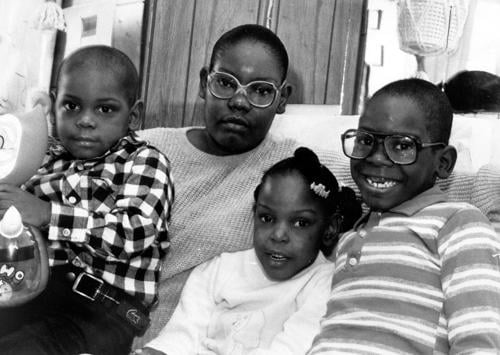
Jonathan Kozol reads from and discusses his book "Rachel and Her Children: Homeless Families in America"
Jan. 16, 1989 The people living at the Martinique feel as though they are a toxic waste substance being compressed in the density living quarters, explains Jonathan Kozol. Rachel of Kozol's book, "Rachel and Her Children: Homeless Families in America" said people don't want to see them. Refering to the song, "We are the World, " Rachel also asks how come people care so much for people they can't see? "We are the world, " says Rachel. "We live here, too".
-
Talking about Children of War, with Roger Rosenblatt
Sep. 22, 1983 After having traveled the world speaking to children in war-torn countries, the American editor and essayist published Children of War. He and Studs discuss the thoughts and lives of these children, from Northern Ireland, Israel, Lebanon, Cambodia, and Vietnam.*Please note: some sections have been edited out from the original recording due to copyright considerations
-
Maria Kuncewicz, Polish writer and novelist, discusses her book, "Don Quixote and the Nannies"
May. 25, 1965 An interview with Maria Kuncewicz about her book of fiction, "Don Quixote and the Nannies" and how this book reflects her travels to Spain and her personal observations, memories, and experiences. The story reflects the freedom and beauty that people want today post WWII. Kuncewicz tells her experience as a child with nannies and a particular event that helped inspire her writing. She speaks about authority and author, Miquel de Cervantes. Kuncewicz also talks about the people of Spain and how they reflect different Don Quixote characters.
-
Jill S. Robinson discusses her book "Perdido"
Feb. 24, 1993 Jill S. Robinson discusses her book "Perdido," her experiences growing up in Hollywood, CA, and how these experiences influenced her novel; reads a passage from the novel at 2:18 and 49:40, and the epigraph of the novel at 55:45.
-
Dr. Robert Coles reads from and discusses his book "The Call of Service"
Sep. 8, 1993 Dr. Robert Coles' book, "The Call of Service; A Witness to Idealism" came as a result of watching of his mother work tirelessly in soup kitchens, helping the less fortunate. Through his stories and experiences, Coles lets his audience know that one must put himself in others' shoes to truly help others.