Listen to New Voices on Studs Terkel our partnership with 826CHI-here! Read the Story


Showing 51 - 60 of 74 results
-
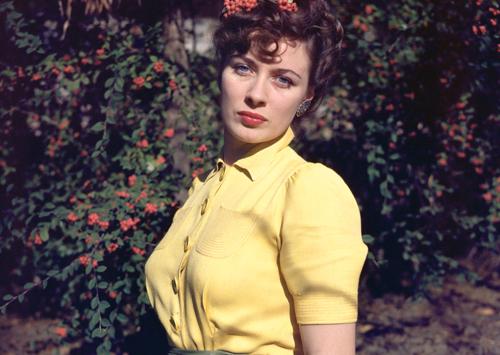
Viveca Lindfors discusses her roles and the roles of women in society
Feb. 2, 1974 Viveca Lindfors discusses her roles and the roles of women in society. Includes Viveca Lindfors reciting lines written by Lillian Hellman.
-

Studs Terkel concludes his interview with Erich Lüth going more in depth on the aftermath of the war on Germany's youth ; part 4
1968 Erich Lüth's discussion with Studs Terkel is similar to part 3 but Luth offers a more in-depth conversation on the role of teachers in schools and how the time of Hitler is taught. There were those teachers that joined the party to continue their love of teaching and those teachers that were brought into the Nazi Party to follow their convictions. This lack of courage to resist influences pupils today because teachers are not saying they were cowards. The relationship is altered out of shame, and embarrassment.
-

Hildegard Knef discusses her book, "The Gift Horse: Report on a Life" and the experiences of her life in Nazi Germany and as an actress in America post World War II
1971 Studs interview with Hildegard Knef, actress and writer. They discuss her life in Nazi Germany during the war and her experience as an actress when she came to America. Studs and Hildegard read together from her book, "The Gift Horse." Knef describes her family, Nazi Germany, survival, and her experience as a German in American post WWII. Her husband, David Anthony Palastanga, also reads an excerpt from her book.
-
Talking about Groucho Marx, with Charlotte Chandler
Jul. 20, 1978 The biographer discusses the early life of comedian Groucho Marx, his stage career, his brothers, and their mother/manager, all further described in the book, Hello, I Must be Going: Groucho & His Friends.*Please note: some sections have been edited out from the original recording due to copyright considerations
-
Dalton Trumbo reads from and discusses his book "Additional Dialogue ; part 1
Nov. 27, 1970 In his book, "Additional Dialogue: Letters of Dalton Trumbo, 1942-1962," Dalton Trumbo gives his audience a better understanding of why he was believed to have been warty, abrasive and stubborn. Trumbo believed people have the right to silence and they have the right to speak. He was angered when a book review was written about one book but another author's book was ignored. Trumbo spent time in prison where he was not allowed to write anything negative about the living conditions.
-
-
Jill S. Robinson discusses her book "Perdido"
Feb. 24, 1993 Jill S. Robinson discusses her book "Perdido," her experiences growing up in Hollywood, CA, and how these experiences influenced her novel; reads a passage from the novel at 2:18 and 49:40, and the epigraph of the novel at 55:45.
-
-
Nelson Algren and Mario De Vecchi discuss "La Dolce Vita," part 1
Jun. 17, 1961 Nelson Algren and Mario De Vecchi discuss the international appeal of Federico Fellini’s film, “La Dolce Vita.” In part one, Algren and Devecchi focus on the film’s main character, journalist Marcello Rubini, and his quest for identity, particularly in relation to his interactions with the film’s intellectual character, Steiner. They discuss the film’s key metaphorical images and its portrayal of the influence of media and the emotional detachment and dehumanization it can create.
-
Nelson Algren and Mario De Vecchi discuss ; part 2
Jun. 17, 1961 In this continued discussion of “La Dolce Vita,” Nelson Algren and Mario Devecchi discuss the film’s critical reception, the contrast it draws between humor and bitterness, and the religious and moral nature of the film. Includes part of the 36th issue of the Fiction Review, featuring host Bob Lefley, a review of the program’s first series of interviews with numerous authors, and a biography of writer Howard Nemerov.