Listen to New Voices on Studs Terkel our partnership with 826CHI-here! Read the Story


Showing 21 - 30 of 205 results
-

John Eliot Gardiner discusses his career in Baroque music as conductor of the Monteverdi Choir and the English Baroque Soloist
Feb. 20, 1989 Studs interviews John Eliot Gardiner about his career in baroque music and his background and interests. Studs announces that Gardiner is performing at Orchestra Hall in Chicago. Gardiner explains the instruments that his group uses and how they are different and capture the original sounds of pieces. He also describes the history and time period of baroque music. Gardiner explains various pieces that the choir performs such as Handel's "Israel in Egypt" and Henry Purcell's "King Arthur." The musical numbers are removed from this edited version of the original recording.
-
Phyl Garland discusses themes from her book "Sound of Soul" and the black influence on music ; part 1
Nov. 25, 1968 Studs interviews Phyl Garland about her book "Sound of Soul." They discuss the history of music and how black music influenced white music. Studs reads a quote from her book where she quoted Lerone Bennett. Garland also reads from her book a few times. They discuss how music changed over time for blacks from spirituals to slave songs to the blues because it was a reflection of their lives. Garland explains how blacks used music to help them through their trials and frustrations.
-
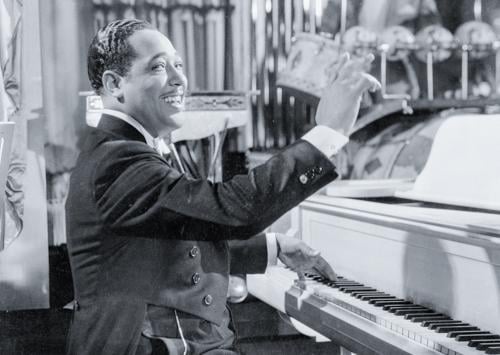
Celebrating jazz composer and musician Duke Ellington's birthday with jazz scholar and historian Richard Wang
Apr. 9, 1991 Celebration for Duke Ellington's birthday
-
John Cage and Merce Cunningham discuss their collaborations, careers, choreography, and music
Mar. 10, 1975 John Cage and Merce Cunningham discuss their collaborations of choreography and music. They discuss their influences and careers. Includes a clip of an earlier interview with John Cage.
-
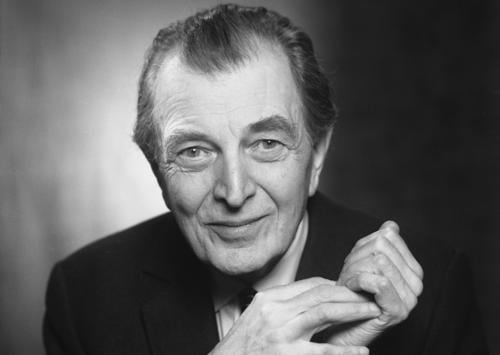
Russian-born composer Alexander Tcherepnin talks with Studs Terkel
Apr. 13, 1965 Studs Terkel and Tcherepnin discuss Tcherepnin's early years in Leningrad, his creative drive and its relation to real-life experiences and the influence of Chicago on his 1953 Op. 87 Suite for Orchestra.
-

Discussing the techniques, philosophy, histories, and instruments of classical Indian music and interviewing Ravi Shankar
Oct. 26, 1961 Discussing the techniques, philosophy, histories, and instruments of classical Indian music with Ravi Shankar. Includes Ravi Shankar playing the sitar, tambura, and tabla among other instruments.
-
Ned Rorem discusses his career
Mar. 22, 1984 Studs Terkel interviews composer Ned Rorem. They discuss Rorem's childhood, music, poetry, languages, and religion.
-
Discussing Soviet avant garde music with Joel Sachs
May. 12, 1982 Joel Sachs discusses Russian avant-garde music and Soviet Union artists.
-
Alan Stone, Steven Larson and Judith Erickson, members of the Chicago Opera Theater, discuss the opera "Regina"
Mar. 29, 1982 Studs interviews Alan Stone, Steven Larson, and Judith Erickson about the opera, "Regina," playing at the Chicago Opera Theater. They describe the variety of music and dances in the opera. Stone, Larson, and Erickson name the cast and their roles and describe the characters. Each share how they came to be in theater. Stone explains how the company started. Larson describes the orchestra and the chorus. Erickson reads some of the lyrics of the aria, "The Best Thing of All," at the end of act one. Stone, Larson, and Erickson read various lines from the opera.
-
Rita Streich discusses her musical performances and the composers
Jul. 19, 1967 Studs interviews Rita Streich, and they discuss the meaning of some of her operas and lieds. Streich names Erna Berger and Maria Ivogun as her best teachers, and she speaks a little about her family. Studs and Streich read part of the poem, "The Nut Tree" by Robert Schuman. Streich reads a part of "Brahms Lullaby" and "Shepherd On the Rock" by Franz Schubert. She also discusses the difference between opera in her day compared to opera at the time of the interview. The musical pieces are removed from this edited version of the original recording.