Listen to New Voices on Studs Terkel our partnership with 826CHI-here! Read the Story


Showing 51 - 60 of 65 results
-

Gilbert Moses discusses "Waiting for Godot" and the Free Southern Theatre with Studs Terkel ; part 1
Aug. 10, 1966 Studs interviews Gilbert Moses about the Free Southern Theatre that performed throughout Mississippi depicting the lives of Southern blacks. Moses describes the audiences and their reactions to the plays and their own participation in acting out their lives.
-
Auburn University student discusses the Civil Rights march on campus and his involvement
1965 Studs interviews a white student on the Auburn University campus after a Civil Rights march. The student explains that he is there to be sure a white face is present and to stand up for democracy. He describes the event and speaks to his family background. The student expresses the experience of black students on the integrated campus and how it has changed. (Tape 6, part 2)
-
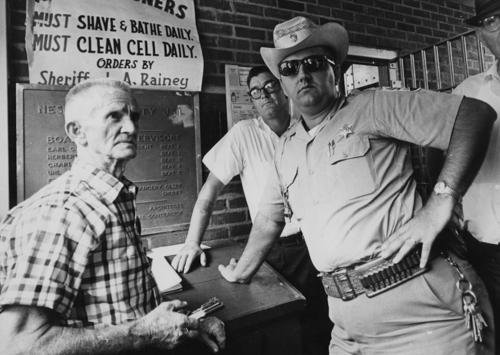
William Bradford Huie discusses his book "Three Lives for Mississippi"
May. 20, 1965 Author William Bradford Huie discusses his book "Three Lives for Mississippi;" reads passages from book.
-
Interview with Elmer Gertz
Jun. 8, 1965 Discussing the book "A handful of clients" and interviewing the author Elmer Gertz.
-
-
Interviewing R. Gibbons, M. Anania, and civil rights worker and self-defense for women advocate Alice McGrath
Sep. 15, 1993 McGrath works in the Los Angeles, California area defending the civil rights of the Mexican American community.
-
Rev. Will D. Campbell in conversation with Studs Terkel
Feb. 1, 1978 The Southern Baptist minister and civil rights activist joins Studs to talk about his book, Brother to a Dragonfly, and to reflect on the loss of his brother Joe.*Please note: some sections have been edited out from the original recording due to copyright considerations
-
Virginia Collins discusses her family and social justice issues
1970 Virginia Collins said her grandfather believed if the parish communities could afford to provide a white teacher for white school children, then the parishes of Black communities must do the same for the Black children. Collins also talks about her son Walter's legal case and his being in jail for violating six counts of induction to the army.*Please note: some sections have been edited out from the original recording due to copyright considerations
-
Morris Dees discusses his latest book "A Season for Justice: the Life and Times of Civil Rights Lawyer Morris Dees"
May. 31, 1991 Southern Poverty Law Center founder and attorney Morris Dees discusses his career and pursuit of ending racism. Some cases associated with Morris Dees include NAACP v. Dothard and Person v. Carolina Knights of the Ku Klux Klan.
-
Richard "Skip" Richeimer discusses the Free Speech Movement
1964 Discussing UC Berkeley's Free Speech Movement with Richard "Skip" Richeimer. There is no free speech at UC Berkeley and the university is no longer concerned with the students and the faculty on this matter. Richeimer says the main problem is whether the administration of the university has the right to control the content of speech.