Listen to New Voices on Studs Terkel our partnership with 826CHI-here! Read the Story


Showing 71 - 80 of 109 results
-
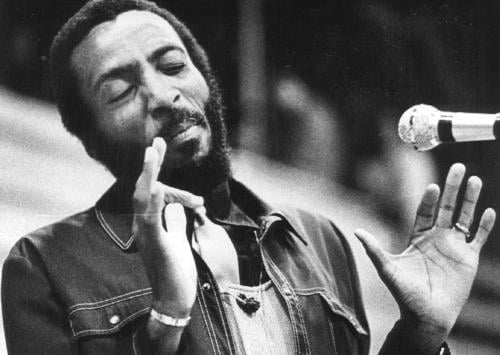
Panel at University of Chicago Law School discuss ending capital punishment, part 2
Feb. 19, 1965 A panel at University of Chicago Law School discuss ending capital punishment (tapes A and B) and with Dick Gregory (tape C). Includes presentations by Father James G. Jones and Norval Morris. (Part 2 of 3)
-
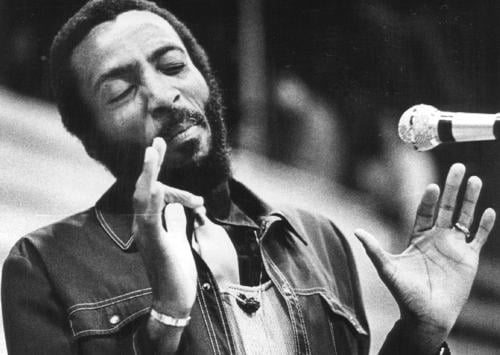
Panel at University of Chicago Law School discuss ending capital punishment, part 3
Feb. 19, 1965 Dick Gregory satirizes capital punishment in the United States, calls for the churches to take action, and talks about potential actions from "demonstrators." Other panel members answer audience questions (Father James Jones, Norval Morris, Hans W. Mattick, and Arthur Wineberg). Hosted by the University of Chicago. (Part 3 of 3)
-

Joseph Collins discusses the book "Food First"
Oct. 28, 1977 Dr. Joseph Collins co-authored the book, "Food First: Beyond the Myth of Scarcity". Among the topics in the book include world hunger, famine, food policies and politics. Collins asks the readers to think about being ok with eating food grown in another country when the workers of that country are so poor, they themselves are starving for food.
-
Rory Gilbert and Nikki Nelson discuss battered wives and family abuse
Jul. 28, 1981 Rory Gilbert of United Charities and family therapist Nikki Nelson discuss battered wives and family abuse. The song "She Sits On The Table" by Tom Paxton is played at the end of the interview (00:49:48-end).
-
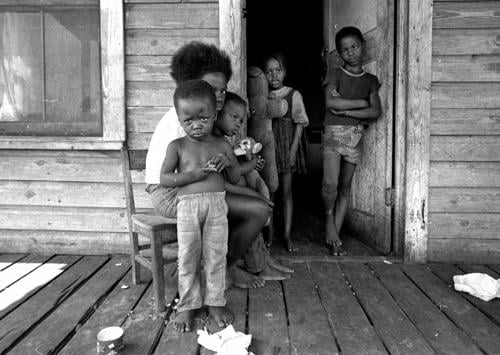
Mitchell Ginsberg, Edward Schwartz and Daniel Thurz discuss poverty in America and War on Poverty legislation
Dec. 8, 1964 Mitchell Ginsberg, Edward Schwartz and Daniel Thurz discuss poverty in America and War on Poverty legislation. Ginsberg is the associate dean of the School of Social Work at Columbia University, Schwartz is the George Herbert Jones professor of social work in the School of Social Service Administration at the University of Chicago, and Thurz is an associate professor of social work at the University of Maryland.
-
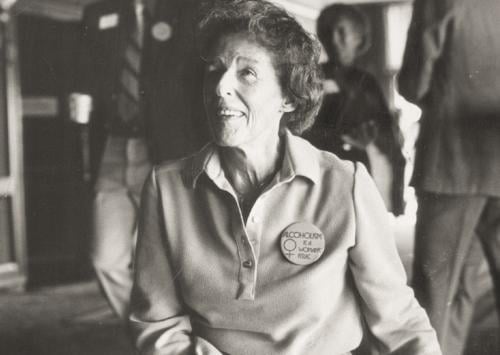
Susan Brownell Anthony discusses her book "The Ghost in My Life"
Oct. 29, 1971 Ms. Anthony, the grand-niece of Susan B. Anthony, comments on the women's liberation movement, her personal political life and her view of Christian life.
-
-
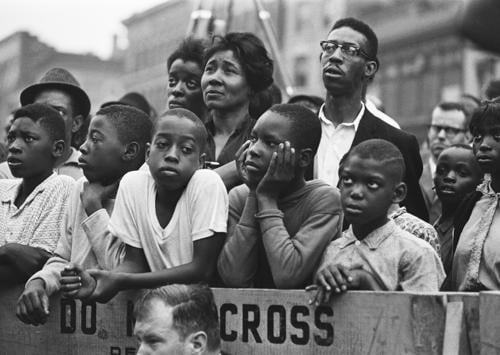
Studs Terkel interviews Professor Charles V. Hamilton on his book written with Stokely Carmichael entitled "Black Power: Politics of Liberation in America" ; part 1
Nov. 21, 1967 Using the backdrop of James Baldwin's "Nobody Knows My Name" and Baldwin's feelings that Blacks were ashamed of where they came from, Terkel interviews Professor and Chairman of the Political Science Department of Roosevelt University on his book coauthored with Stokely Carmichael entitled" Black Power: Politics of Liberation in America". Hamilton states that Blacks were taught to hate themselves and leave school believing that. Institutional racism and the deliberate oppression it creates, holds blacks back. Blacks are left out of crucial decision making processes that concern them.
-
June Terpstra and two women, Ann and Donna, discuss battered women
Oct. 28, 1983 Discussing battered women with the director of the Evanston Shelter for Battered Women, June Terpstra. Two women, Ann and Donna, talk about their experiences of abuse with their husbands.
-
Milton Mayer discusses Quakerism and the impact they have had on society
Dec. 27, 1974 Milton Mayer, journalist and educator, talks with Studs about Quakerism. They talk about how religion relates to society in the times of change. Mr Mayer describes an exchange with a gentleman who asked what is a Quaker. The man had been an SS officer who told Mr Mayer his story. The man had been touched by the anonymous generosity of the Quakers many years before. Mr Mayer speaks of A. J. Musty, clergyman and political activist as his mentor and friend, and the things he learned from him.