Listen to New Voices on Studs Terkel our partnership with 826CHI-here! Read the Story


Showing 11 - 20 of 71 results
-
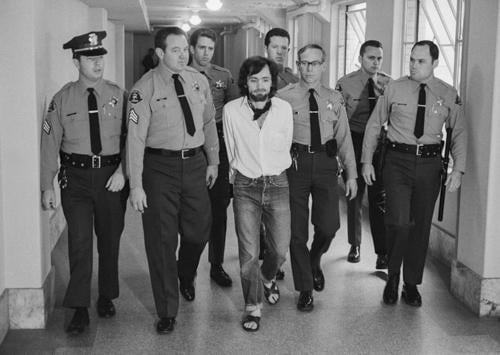
Mr Bugliosi and Mr. Gentry discuss, "Helter Skelter: The True Story of the Manson Murders"
Nov. 6, 1974 Mr Bugliosi and Mr. Gentry discuss, "Helter Skelter: The True Story of the Manson Murders,". Bugliosi was the prosecutor in the case against the Manson "family" for the murders of Sharon Tate and others. The interview opens with "Home is where you are happy" performed by Charles Manson and an excerpt of Catherine Shur Manson's sister talking about her brother. They speak in depth on the Manson "family" and the key players in the murders; Susan Atkins, Steve Grogan, Linda Kasabian, Patricia Krenwinkel, Leslie Van Houten and Charles Watson.
-

Discussing battered women and the Greenhouse Shelter with four Greenhouse Women; women's rights activist Alice Cottingham, attorney Andrea Schleifer, Marva Butler White, and Angie Fields
Apr. 29, 1985 Chicago's Greenhouse Shelter provides 24-hour crisis intervention.
-
Philip M. Stern discusses his new book "Lawyers on Trial"
Dec. 5, 1980 After enrolling in law school at age 49, Stern breaks down the double-standards and monopoly power of the legal profession.
-
Discussing the book "The sharing society" with the author Edward Lamb
Nov. 16, 1979 Discussing the book "The sharing society" with the author Edward Lamb.
-
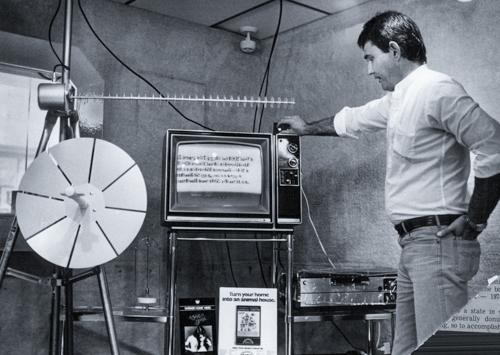
Studs Terkel discusses commercial and public broadcasting Nicholas Johnson of the FCC
Apr. 1, 1971 Studs Terkel discusses television and advertising with Nicholas Johnson, Commissioner at the Federal Communications Commission. Johnson had recently delivered a speech in Dubuque, IA about possibilities for the future of broadcasting, and had released a book a year prior, "How to Talk Back to Your Television Set". Topics of conversation include censorship, the role of advertising and corporate sponsorship of radio and television, and the hope and promise of public television.
-
Lani Guinier discusses her book "Tyranny of the Majority"
Apr. 7, 1994 *Please note: some sections have been edited out from the original recording due to copyright considerations
-
Vine Deloria discusses his book "American Indians, American Justice"
Nov. 17, 1983 Buffalo, land, barbed wire, treaties and legal cases are all topics of Vine Deloria's book, "American Indians, American Justice". A lawyer and a Sioux Indian himself, Deloria points out a tricky question for the courts -- What constitutes Indian country?
-
Leon Depres discusses discrimination, corruption, and segregation in Chicago
Feb. 3, 1975 Interviewing lawyer and alderman, Leon Despres. Depres discusses Richard Daley’s time as mayor of Chicago and political events during his terms. Content Warning: This conversation includes racially and/or culturally derogatory language and/or negative depictions of Black and Indigenous people of color, women, and LGBTQI+ individuals. Rather than remove this content, we present it in the context of twentieth-century social history to acknowledge and learn from its impact and to inspire awareness and discussion.
-
Frank Donner discusses the article he wrote "Theory and Practice of American Political Intelligence" ; part 1
Surveillance, informants, and provocateurs are some of topics covered by Frank Donner with his article, "Theory and Practice of American Political Intelligence". Donner explained that intelligence practices exist so that everyone has something to fear.
-
Frank Donner discusses the article he wrote "Theory and Practice of American Political Intelligence" ; part 2
In his article, "Theory and Practice of American Political Intelligence," Frank Donner brings up the poisonous effect of surveillance on people's invasion of privacy. Donner explained people adjust their lives to it. Donner's last reflection is for people to not just be frightened by surveillance but rather to do something about it like study how much money is spent on surveillance and who is accountable.