Listen to New Voices on Studs Terkel our partnership with 826CHI-here! Read the Story


Showing 11 - 20 of 109 results
-
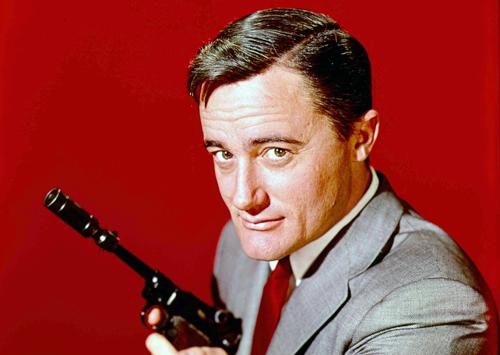
Robert Vaughn talks with Studs Terkel
1970 Robert Vaughn takes time out from his Drury Lane appearance in "Tender Trap" to discuss his new book "Only Victims" with Studs Terkel. The discussion spans the years 1938 when Martin Dies became the first House Committee on Unamerican Activities (HUAC) chairman to Vice President Spiro Agnew's condemnation of the "New York Times" and "Washington Post". Vaughn created the title of his book "Only Victims" from a Dalton Trumbo speech that reflected back on the era of HUAC as being one where there were no heroes, no villains, only victims.
-
Daniel Boorstin discuses his book "The Image: A Guide to Pseudo-Events in America"
1960 Discussing the book "The Image: A Guide to Pseudo-Events in America" and interviewing the author Professor Daniel Boorstin.
-

Henry Steele Commager discusses the history of American ideal
Jul. 4, 1974 Discussing American democracy and interviewing Henry Steele Commager. Commager is an eminent historian who published an annotated version of Alexis de Tocqueville's "Democracy in America".
-
Richard Barnet discusses his book "The Rockets' Red Glare"
Feb. 20, 1990 According to Richard Barnet's book, "The Rockets' Red Glare: When America Goes to War: The Presidents and the People," most people kept to themselves and didn't talk to one another about anything. Barnet talks about how the government would use propaganda to get people interested and thus backing the government with going to war.
-
William Shirer discusses his book “Twentieth Century Journey: 1930-1940: Volume II”
Jun. 1, 1984 Discussing the book "Twentieth century journey: 1930-1940" with the author William Shirer.
-
Marc Pachter discusses his book "Abroad in America"
Jul. 21, 1976 Europeans' opinions about their visits to America - this is the premise of Marc Pachter's book, "Abroad in America: Visitors to the New Nation, 1776-1914." According to Pachter, some people thought America was a moral society but that our manners were dreadful. Charles Dickens liked Boston but thought there were no rules in American society. He also despised the adulation that he received when he first visited.*Please note: some sections have been edited out from the original recording due to copyright considerations
-
Paul Boyer discusses his book "By the Bomb's Early Light"
Jan. 9, 1986 In the book, "By the Bomb's Early Light: American Thought and Culture at the Dawn of the Atomic Age," Paul Boyer covers people's feelings and attitudes after the bomb was dropped in Hiroshima. Boyer admits he, himself, when he was a young boy, he sent away for a free atomic ring that was being advertised. The program includes an excerpt of David Lilienthal talking.
-
Vine Deloria discusses his book "American Indians, American Justice"
Nov. 17, 1983 Buffalo, land, barbed wire, treaties and legal cases are all topics of Vine Deloria's book, "American Indians, American Justice". A lawyer and a Sioux Indian himself, Deloria points out a tricky question for the courts -- What constitutes Indian country?
-
Riane Eisler discusses her book "The Chalice and the Blade: Our History, Our Future"
Mar. 3, 1988 Riane Eisler, anthropologist and historian, discusses the history of gender roles, religious influences, and cultural mythology.
-
David Farber discusses his book "Chicago '68"
May. 16, 1988 David Farber discusses his book “Chicago ‘68” and reflects on the 1968 Democratic Convention in Chicago. Studs plays “I Ain’t Marching Anymore” - Phil Ochs (1965) and “Days of Decision” - Phil Ochs (1965). This interview features a clip of a previous interview Studs had with an unnamed Chicago police officer who describes his opinion on police brutality.