Listen to New Voices on Studs Terkel our partnership with 826CHI-here! Read the Story


Showing 21 - 30 of 31 results
-
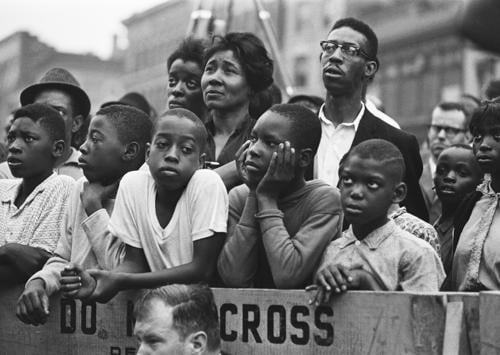
Studs Terkel interviews Professor Charles V. Hamilton on his book written with Stokely Carmichael entitled "Black Power: Politics of Liberation in America" ; part 1
Nov. 21, 1967 Using the backdrop of James Baldwin's "Nobody Knows My Name" and Baldwin's feelings that Blacks were ashamed of where they came from, Terkel interviews Professor and Chairman of the Political Science Department of Roosevelt University on his book coauthored with Stokely Carmichael entitled" Black Power: Politics of Liberation in America". Hamilton states that Blacks were taught to hate themselves and leave school believing that. Institutional racism and the deliberate oppression it creates, holds blacks back. Blacks are left out of crucial decision making processes that concern them.
-

June Terpstra and two women, Ann and Donna, discuss battered women
Oct. 28, 1983 Discussing battered women with the director of the Evanston Shelter for Battered Women, June Terpstra. Two women, Ann and Donna, talk about their experiences of abuse with their husbands.
-
Milton Mayer discusses Quakerism and the impact they have had on society
Dec. 27, 1974 Milton Mayer, journalist and educator, talks with Studs about Quakerism. They talk about how religion relates to society in the times of change. Mr Mayer describes an exchange with a gentleman who asked what is a Quaker. The man had been an SS officer who told Mr Mayer his story. The man had been touched by the anonymous generosity of the Quakers many years before. Mr Mayer speaks of A. J. Musty, clergyman and political activist as his mentor and friend, and the things he learned from him.
-
Herbert Kohl discusses Myles Horton and the book "The Long Haul: An Autobiography"
Apr. 5, 1990 Progressive educator Herbert Kohl discusses educator and founder of the Highlander Folk School Myles Horton and the book about him, "The Long Haul: An Autobiography." The book was written by Herbert Kohl and his wife, Judith Kohl.
-
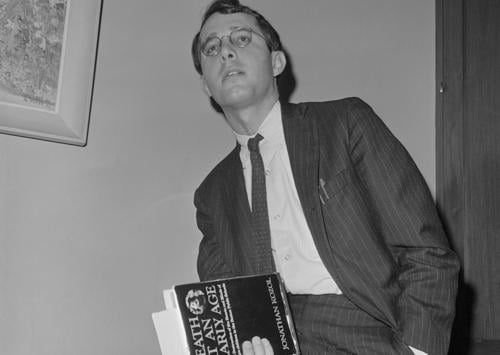
Jonathan Kozol discusses his book "Children of the Revolution: A Yankee Teacher in the Cuban Schools"
Nov. 10, 1978 Studs has a spirited discussion with Jonathan Kozol who shares his adventures and learnings in Cuba that formed the basis of his book "Children of the Revolution: A Yankee Teacher in the Cuban Schools." Kozol explains the ambitious Cuban Literacy Campaign begun in the 1960s that aimed to educate the entire population, tells of children teaching adults in remote villages by lantern light, and the unity and national pride that resulted. He and Studs explore the idea of generative words in literacy education and contemplate Kozol's hope to adapt a similar approach to American education.
-
Bill Ayers discusses his book "To Teach"
Jun. 23, 1993 According to Bill Ayers, in order to be a good teacher, one must 1st become a student of his/her students' lives. New ideas on how to become a better teacher are offered in Ayers' book, "To Teach: The Journey of a Teacher.'
-
June Sochen discusses her book "Movers and Shakers"
Dec. 17, 1973 Northeastern Illinois University professor June Sochen discusses her book "Movers and shakers;: American women thinkers and activists, 1900-1970". Sochen and Studs cover a wide range of female activists and radicals who fundamentally reshaped American society via their efforts in the labor movement and union organizing, the arts and culture, and research.
-
Debra Evenson and Gisela Lopez discuss the U.S. embargo on Cuba
Sep. 1, 1994 Attorney Debra Evenson and Gisela Lopez discuss the U.S. embargo on Cuba, the 1994 Cuban craft crisis, and food shortages and life in Cuba.
-
Allan Evans and Henry Jordan discuss "The Foundation Years" ; part 1
1970 Allan Evans and Henry Jordan, two young man who grew up in Chicago and attended Dartmouth, discuss their childhoods and adolescent dealing with crime. The two also talk about their gang, The Vice Lords, and the police brutality they experienced. Next, the group talks about the The Foundation Years, a project from Dartmouth.
-
Allan Evans and Henry Jordan discuss The Foundation Years ; part 2
1970 Allan Evans and Henry Jordan, two young man who grew up in Chicago and attended Dartmouth, discuss The Foundation Years project. They talk about trying to recruit friends to Dartmouth, their campus experiences, and their coursework. They also talk about their experiences going through the public school system in Chicago, where they point out many of the inequalities for black students.