Listen to New Voices on Studs Terkel our partnership with 826CHI-here! Read the Story


Showing 51 - 60 of 200 results
-
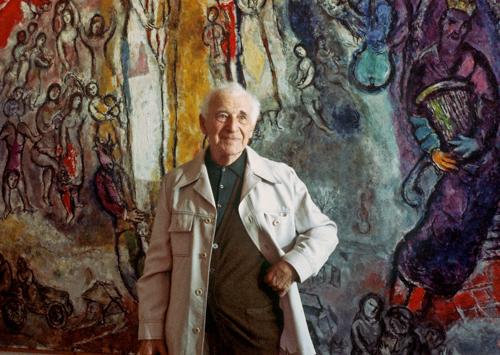
Through an interpreter, Marc Chagall discusses his approach to art and his views on people
1970 Professor John Nef explained that Marc Chagall came from an environment of nothing. From his dreams, Chagall created joy in his pieces of art. Nef lets the audience know that Chagall said he still has a lot of unfinished artwork to complete. The 3rd and last part of this program is a colloquy. Again, through another translator, Chagall’s words are translated. Chagall said his life’s purpose is art. Chagall said any man could be a bad artist but that no man can be an artist unless he is in fact, a good man.
-
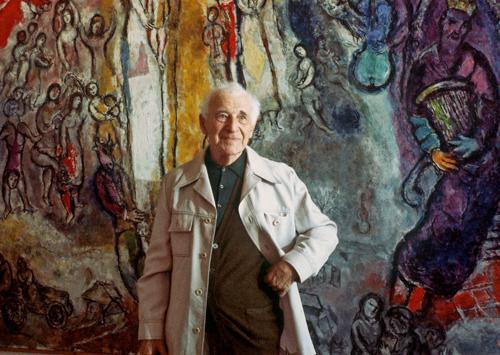
Representatives discuss the Center for Human Understanding ; part 2
May. 5, 1963 Representatives discuss the Center for Human Understanding (part 2 of 2). Center for Human Understanding conference in Washington D.C. Includes interview with [Raghav Heer]. Interviews [Chaumont Hosie]. Note: lengthy interviews in French (translated).
-

-
Discussing the book "Chinese encounters" with the authors Arthur Miller and Inge Morath
Oct. 16, 1979 Discussing the book "Chinese encounters" with the authors Arthur Miller and Inge Morath.
-
Printers John Kailen, Gerri Scott, Russ Wadleigh and Hank Orttinger discuss their shrinking trade
Jan. 13, 1975 Computers and technology may be good for some people, however, printers John Kailen, Gerri Scott, Russ Wadleigh and Hank Orttinger don't see it that way. As members of typographical unions, they have a skilled trade, and their trade and jobs are being threatened by computers. Some felt their livelihoods were stabbed in the back by the computer.*Please note: some sections have been edited out from the original recording due to copyright considerations
-
Eddie Balchowsky talks with Studs Terkel
1970 Eddie Balchowsky tells stories about being an Observation Scout during the Spanish Civil War and marching with a British battalion. He plays and sings several songs of the time.(unknown titles)
-
Harry Jackson discusses his bronze cowboy sculptures
Mar. 19, 1981 Harry Jackson discusses his career as a singer, painter, and sculptor and the inspiration he took from fellow contemporaries and Italian sculpture. Between 10:00 and 11:00, Jackson remarks that Mary Wright "from the south fork of the Shoshone River" is in the studio with them.
-
John Zukowsky and Stanley Tigerman discuss the controversy surrounding their exhibit
Jul. 8, 1993 Curator John Zukowsky and architect Stanley Tigerman discuss their architecture exhibit and the controversy surrounding it.*Please note: some sections have been edited out from the original recording due to copyright considerations
-
Studs Terkel presents a performance of "Feiffer's America"
Apr. 1988 Studs and Jules Feiffer read several of Feiffer’s political cartoons culminating in a performance of “Feiffer’s America.” The performance is preceded by Feiffer’s explanation of the inspiration behind these works. Feiffer attempts to answer what drives him to create these astute observations of political happenings, which are often used as an outlet for his anger regarding social and political events. Studs plays "On the Good Ship Lollipop" - Shirley Temple (1934).
-
Jules Feiffer discusses his cartoonist history and his play "Elliot Loves"
Apr. 12, 1990 Jules Feiffer and Studs read several of Feiffer's previous cartoons as they discuss his history as a cartoonist and his retrospective on display at the Walton Street Gallery in Chicago. Feiffer discusses his attempt to move away from political cartoons and instead shift focus to social commentary. Feiffer also discusses his play "Elliot Loves", a love story that captures the complications of love and the “gap” between the sexes.