Listen to New Voices on Studs Terkel our partnership with 826CHI-here! Read the Story


Showing 41 - 50 of 200 results
-
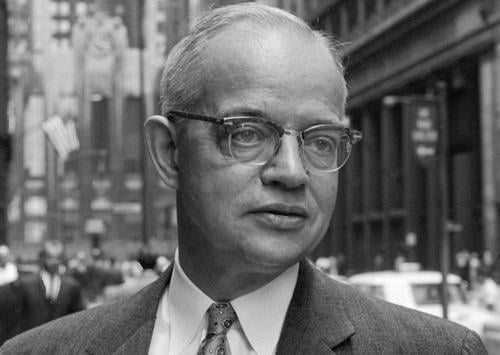
Studs Terkel discusses church architecture with William Cooley and Martin Marty
Apr. 27, 1965 Studs Terkel discusses church architecture William Cooley, a church architect, and Martin E. Marty, a theologian and scholar at the University of Chicago.
-

Interviewing painter and illustrator Al Hirschfeld
Nov. 14, 1997 Hirschfeld is best known for his theatrical images and his long career with the New York Times.
-
-
David Hockney discusses his book "Cameraworks"
Dec. 3, 1984 According to David Hockney, all photographs have perspective in them. With pictures, there is no time and there are no close ups, said Hockney. As for a picture on the television, Hockney said a picture of grief stricken poverty can bring on an emotional toll but then because the next picture of image appears, we immediately forget about the poverty image.
-
David Hockney discusses his career and his recent work with the Lyric Opera
Jan. 20, 1992 When looking at the set design, David Hockney, doesn’t want the viewer to see a tree but to see “tree-ness”. A true fan of music, but Hockney reveals that he is unable to paint if there’s music playing in the background. Hockney said it’s important to stay for more than opening night of “Turandot”. To see the opera on different nights, from different seats in the audience, allows him to make his current work and/or future work better. Program also includes an excerpt of an interview with British poet Stephen Spender 4:56 to 5:51.
-
-
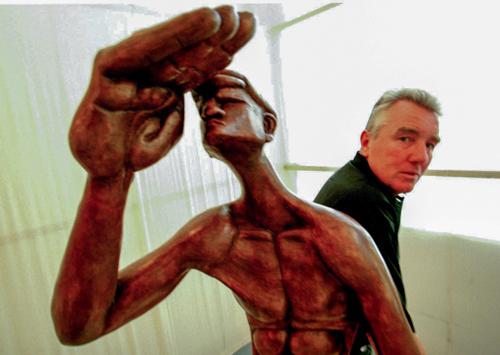
Richard Demarco discusses art and work of Jimmy Boyle
Feb. 5, 1976 Richard Demarco discusses the importance of riding the art experience of snobbery and the importance of art as relevant to everyone. In addition, Richard speaks on the work of Jimmy Boyle, convicted criminal turned successful artist. Demarco prompts the question: "Is art the language that transcends philosophy?"
-
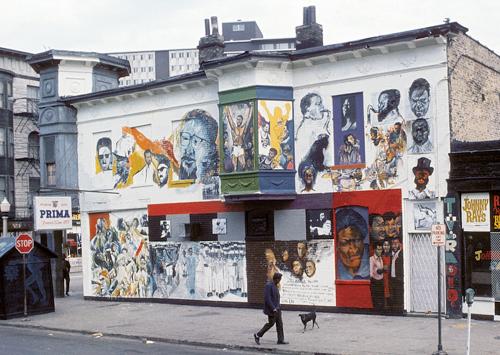
John Weber, Mark Rogovin and Justine DeVan discuss their work on murals and the Wall of Respect in Chicago
1970 John Weber, Mark Rogovin and Justine DeVan discuss their involvement with the mural movement as well as their involvement with the Chicago community and their various art projects. Includes excerpt of an interview with Bill Walker at the Peace and Salvation Wall of Understanding in (near?) Cabrini Green.
-
-
Discussing the book "How it feels when a parent dies" with the author Jill Krementz
Jul. 15, 1981 Discussing the book "How it feels when a parent dies" with the author Jill Krementz.