Listen to New Voices on Studs Terkel our partnership with 826CHI-here! Read the Story


Showing 41 - 50 of 74 results
-
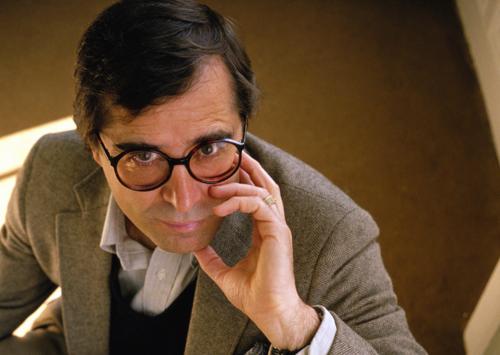
Paul Theroux discusses his book “Picture Palace”
Jun. 23, 1978 Writer Paul Theroux discusses his book “Picture Palace” and the meaning of a photograph with Studs Terkel. Both Theroux and Terkel read excerpts from Theroux’s book, and an audio clip of a photographer discussing what photography means to them is played.
-

-
-

-
-
Interview with Dagmar Wilson
1967 Terkel interviews activist and children's author Dagmar Wilson. She discusses how she goes from a children's author to an activist for anti-nuclear testing.
-
Doug Marlette discusses "There's No Business Like Soul Business"
May. 15, 1987 Reverend Will B. Dunn and Mother Teresa are among the many subjects of Doug Marlette's book, "There's No Business Like Soul Business." Marlette explained his cartoons are either political or they deal with the religious right and race relations. The majority of the interview consists of Marlette and Studs Terkel reading lines from the cartoons in the book.
-
Studs Terkel discusses the global status of theater with Croatian director Vlado Habunek
Apr. 25, 1962 Vlado Habunek, the Director of The Croatian National Theater, also a teacher at the University of Zagreb and board member for the Debrovnik Summer Festival discusses how all arts are seeking new revelations with Studs Terkel. Terkel asks Habunek to compare American Actors with Croatian actors because they are subsidized by the state. He sees Croatian actors as too secure and admires the ambition of American actors. The fact that theater reflects life and life is difficult begins a discussion on the status of theater today.
-
Ralph Caplan discusses his book "By Design"
Nov. 16, 1982 Content Warning: This conversation includes racially and/or culturally derogatory language and/or negative depictions of Black and Indigenous people of color, women, and LGBTQI+ individuals. Rather than remove this content, we present it in the context of twentieth-century social history to acknowledge and learn from its impact and to inspire awareness and discussion. Discussing the book "By Design: Why there are no locks on the bathroom doors in the Hotel Louis XIV, and other object lessons" with designer and author Ralph Caplan. Includes an interview with George Nelson.
-
Dr. Carlo Levi discusses his exile and humanity in southern Italy after WW2; part 1
1962 Dr. Carlo Levi talks about his book "Christ Stopped at Eboli", the human condition, and compassion for those suffering during and after World War 2.