Listen to New Voices on Studs Terkel our partnership with 826CHI-here! Read the Story


Showing 31 - 40 of 154 results
-
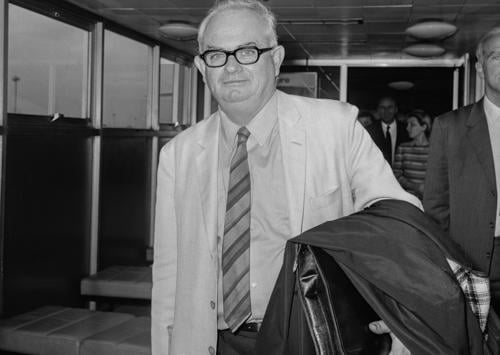
Wilfred Burchett discusses about his career on journalism
Oct. 24, 1977 Wilfred Burchett (an Australian journalist) discusses his journalism career. He was reporting conflicts in Asia (North Korea, Vietnam, China and Japan) and their Communist supporters. He speaks briefly about his experiences in Nazi Germany and concentration camps. Towards the end of the interview he talks about his interest in learning and reporting more about the new euro-communism (prominent in Italy, Spain and France).
-

Discussing the book "Starving in the shadow of plenty" with the author Loretta Schwartz-Nobel
Sep. 3, 1981 Discussing the book "Starving in the shadow of plenty" with the author Loretta Schwartz-Nobel.
-
William Shirer discusses his book “Twentieth Century Journey: 1930-1940: Volume II”
Jun. 1, 1984 Discussing the book "Twentieth century journey: 1930-1940" with the author William Shirer.
-
Discussing the book "With enough shovels: Reagan, Bush and nuclear war" with the journalist-author Robert Scheer
Nov. 30, 1982 Discussing the book "With enough shovels: Reagan, Bush and nuclear war " with the journalist-author Robert Scheer.
-
Discussing the book, "A long time passing: Vietnam and the Haunted Generation," with the author Myra MacPherson
Jun. 15, 1984 Discussing the book, "A long time passing: Vietnam and the Haunted Generation," with the author Myra MacPherson.
-
Interviewing Yehuda Lev
Jan. 17, 1963 Journalist and columnist Yehuda Lev reported on the trial of Holocaust perpetrator Adolph Eichmann for WFMT. Here, he joins Studs to discuss the aftermath of the trial and the importance of covering such issues.*Please note: some sections have been edited out from the original recording due to copyright considerations
-
Sidney Blumenthal discusses his book "The Permanent Campaign: Inside the World of Elite Political Operatives"
Jun. 25, 1980 Author Sidney Blumenthal discusses his book "The Permanent Campaign," touching on topics including political consultants, modern campaigning, and the election process.
-
Todd Gitlin discusses his book "The Sixties"
Mar. 29, 1988 Some people thought the 60's were glorious years and other people thought they were destructive years. "The Sixties: Years of Hope, Days of Rage," is Todd Gitlin's autobiography where he offers his perspective of those years.
-
Raymond Bonner discusses his book "Waltzing with a Dictator: The Marcos and The Making of American Policy"
May. 21, 1987 Interviewing author Raymond Bonner on American foreign policy, America’s relationship with dictators, and the rise of the Marcos family. Includes a test tone lasting about 30 seconds. Content Warning: This conversation includes racially and/or culturally derogatory language and/or negative depictions of Black and Indigenous people of color, women, and LGBTQI+ individuals. Rather than remove this content, we present it in the context of twentieth-century social history to acknowledge and learn from its impact and to inspire awareness and discussion.
-