Listen to New Voices on Studs Terkel our partnership with 826CHI-here! Read the Story


-

Herman and Rick Kogan discuss their book "Yesterday's Chicago"
Oct. 15, 1976 Herman and Rick Kogan give a brief overview of the history of Chicago (1816-1955) by discussing their book "Yesterday's Chicago".
-

Herbert Mitgang discusses his book "Mister Lincoln"
Feb. 11, 1982 Having been a Lincoln biographer for a quarter of a century, Herbert Mitgang felt the importance of writing the play "Mister Lincoln: A Drama in Two Acts". Lincoln's rich language can be heard through Mr. Mitgang''s dramatic interpretation of Lincoln's life.
-
Herbert Kohl, Stan Jones, and Arthur Tobier discuss alternative education
Jun. 3, 1977 Educators and authors Herbert Kohl and Stan Jones, and oral historian Arthur Tobier Discuss alternative education.
-
Herbert Kohl discussing his book "Growing with Your Children"
Feb. 16, 1979 Progressive educator Herbert Kohl discusses parenting, education, and his book "Growing with Your Children."
-
Herbert Kohl discusses Myles Horton and the book "The Long Haul: An Autobiography"
Apr. 5, 1990 Progressive educator Herbert Kohl discusses educator and founder of the Highlander Folk School Myles Horton and the book about him, "The Long Haul: An Autobiography." The book was written by Herbert Kohl and his wife, Judith Kohl.
-
Herbert Block, known as "Herblock," discusses his drawings as an editorial cartoonist and the new book "Straight Herblock"
Nov. 13, 1964 Herblock and Studs talk about his newest book "Straight Herblock." They talk about some of his most acclaimed drawings and the social/political questions they pose.
-
Herbert Blau discusses the play "The Donner Party, Its Crossing"
Aug. 2, 1974 Herbert Blau’s KRAKEN experimental group performed, “The Donner Party, Its Crossing,” at the at the Body Politic Theatre. Blau shares his thoughts on the theatre and his approach to theatre. Blau believed there was always a story to be told, and that an audience would only understand the true story of people’s hardships by telling and re-telling a story over and over again. The program also includes an excerpt of a George Keithly interview at 5:40 to 7:40.
-
Henry Threadgill, Fred Hopkins, and Steve McCall discuss their trio jazz group, Air
Sep. 4, 1981 Studs interview of Air jazz trio with Henry Threadgill - reeds, Fred Hopkins - bass, and Steve McCall - percussion. They discuss their individual careers and the people who have influenced them. Studs quoted Nelson Algren. Studs explores the evolution of their music and how the three came together. They discuss various pieces of their music and the instruments they use. Pauses were taken for musical numbers but none were played on this recording.
-
-
Henry Steele Commager discusses the history of American ideal
Jul. 4, 1974 Discussing American democracy and interviewing Henry Steele Commager. Commager is an eminent historian who published an annotated version of Alexis de Tocqueville's "Democracy in America".
-
Henry Steele Commager discusses America, American history, and American relations; part 1
May. 1, 1967 Henry Steele Commager discusses America, American history, and American relations. He also discusses television, historical figures, and wars. (Recorded at the Orrington Hotel in Evanston, Ill.).
-

Henry Ollendorff discusses refugees and migrants in Europe
Feb. 14, 1974 Content Warning: This conversation includes racially and/or culturally derogatory language and/or negative depictions of Black and Indigenous people of color, women, and LGBTQI+ individuals. Rather than remove this content, we present it in the context of twentieth-century social history to acknowledge and learn from its impact and to inspire awareness and discussion. Henry Ollendorff spent much of his life working as a social worker. Ollendorff talks about the migrant workers in Europe and how there were many job openings.
-
Henry Louis Gates, Jr. discusses race and the magazine "Critical Inquiry"
Jan. 24, 1986 As the guest editor of “Critical Inquiry,” Henry Louis Gates, Jr. covered the importance of Black writers and their contributions. Because there is no color blindness is the western world, explained Gates, pointing out that one is a Black writer or a Black doctor is important to society. Gates also covers the issue of race not being solely about Black and white people but rather it has to do with multi-ethnic and multi-cultural people.
-
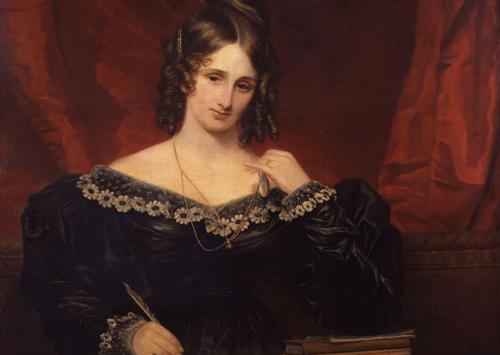
Henry Knepler discusses the role of women in American society
1969 According to Henry Kneplers book, " The Gilded Stage," back in the 1600's, highly regarded women were either actresses on the stage or they were aristocrats or nobility. Knepler said the role of primary grade school teachers were women. Currently, there's some discrimination going on, as Knepler pointed out that one never sees a male airline stewardess.
-
Henry Knepler discusses his book "The Gilded Stage"
1967 Discussing the book "The Gilded Stage: The Years of the Great International Actresses" with the author Henry Knepler.*Please note: some sections have been edited out from the original recording due to copyright considerations